
Last updated September 23, 2026
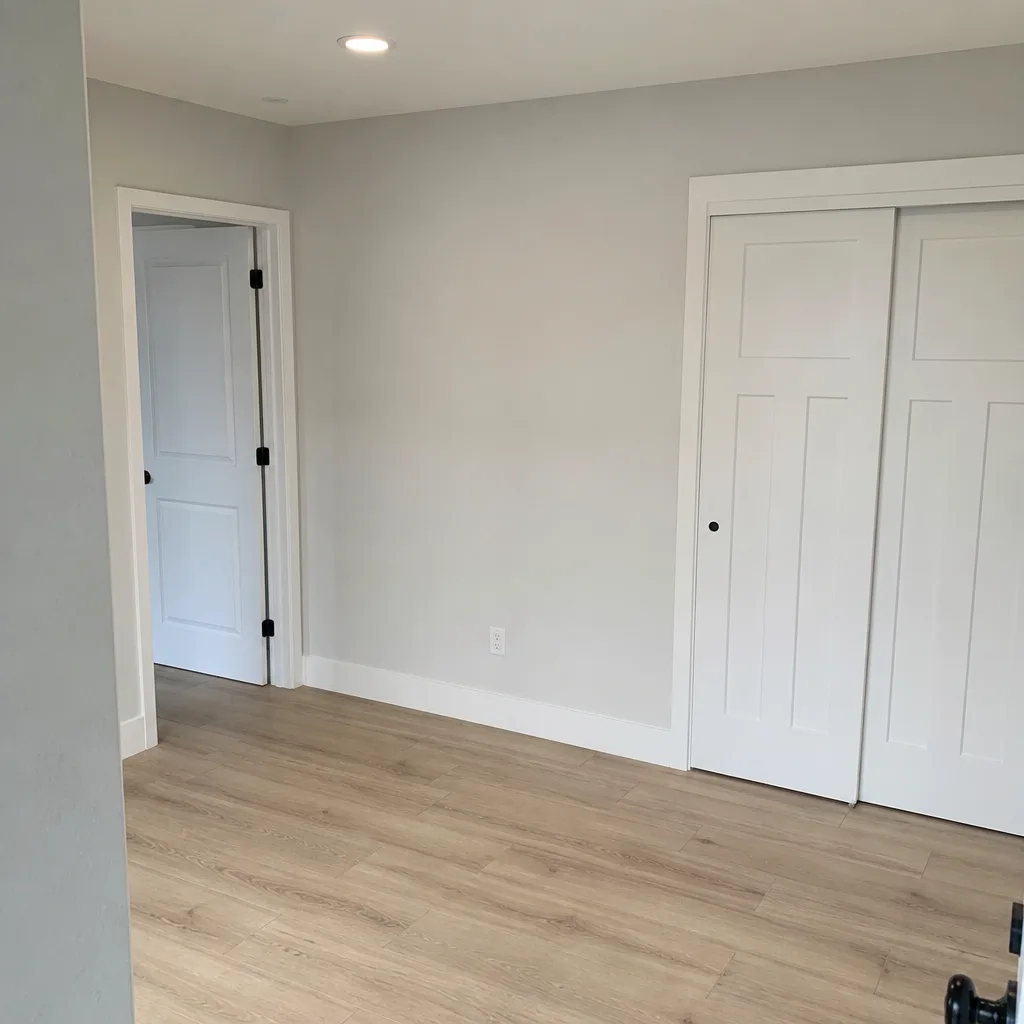
Free visual inspection and a written scope of work before any mitigation begins - photos, moisture readings, and drying logs go in your claim file
The scope we write is the scope we bill. Anything new gets shown to you, in writing, before we touch it.
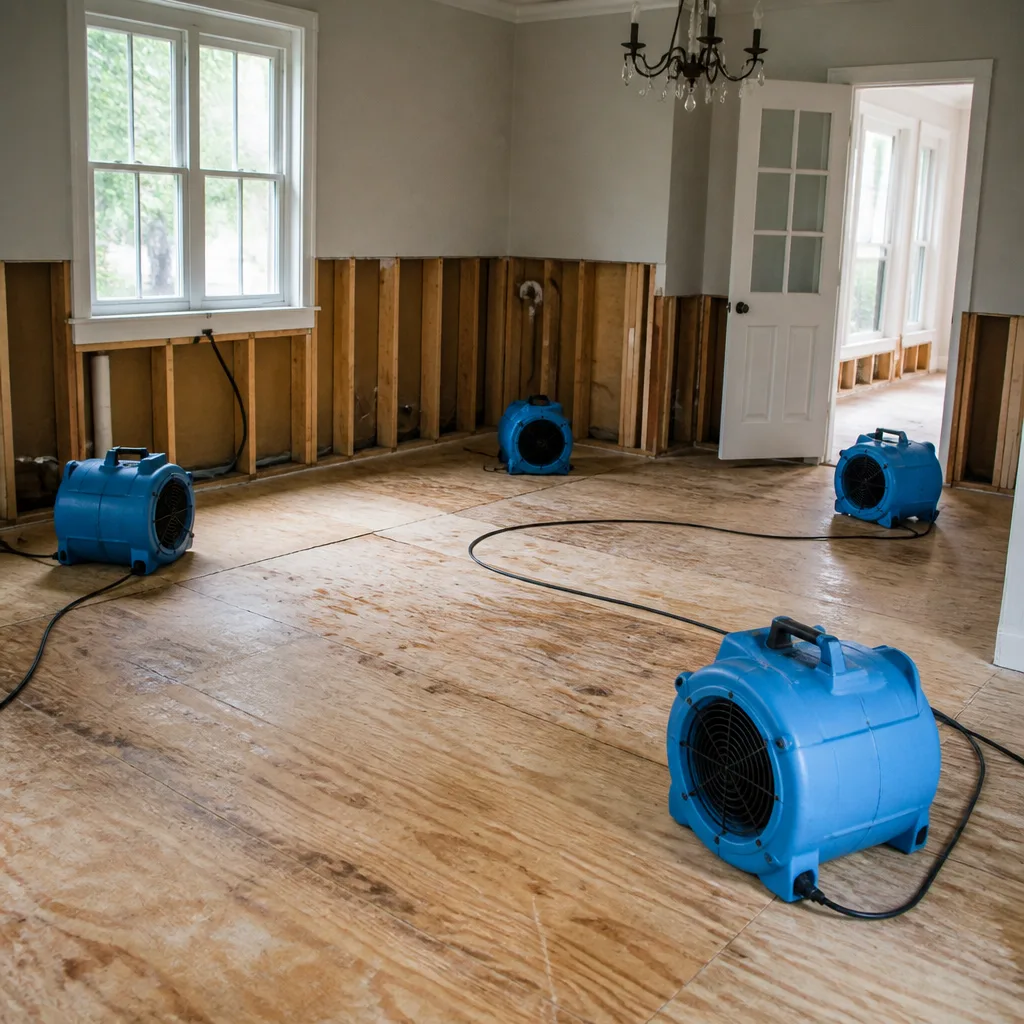

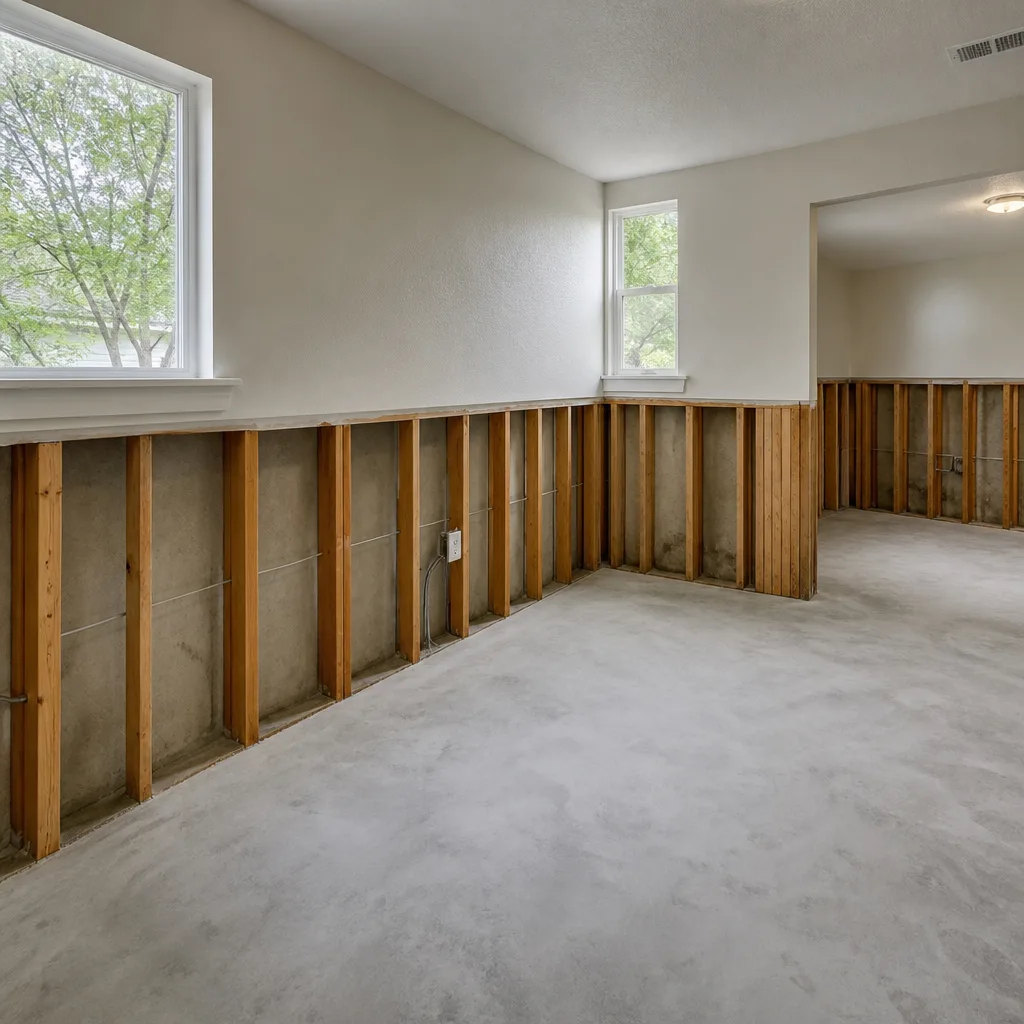

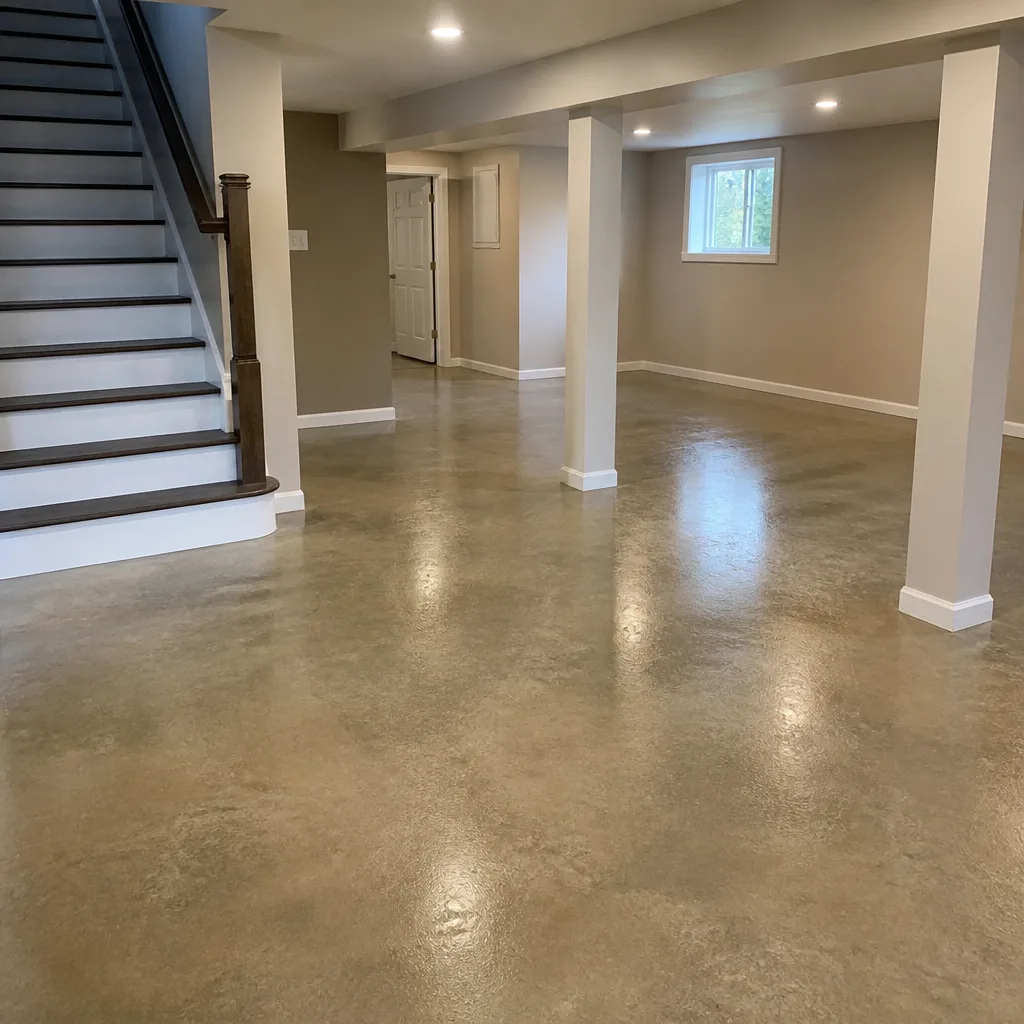

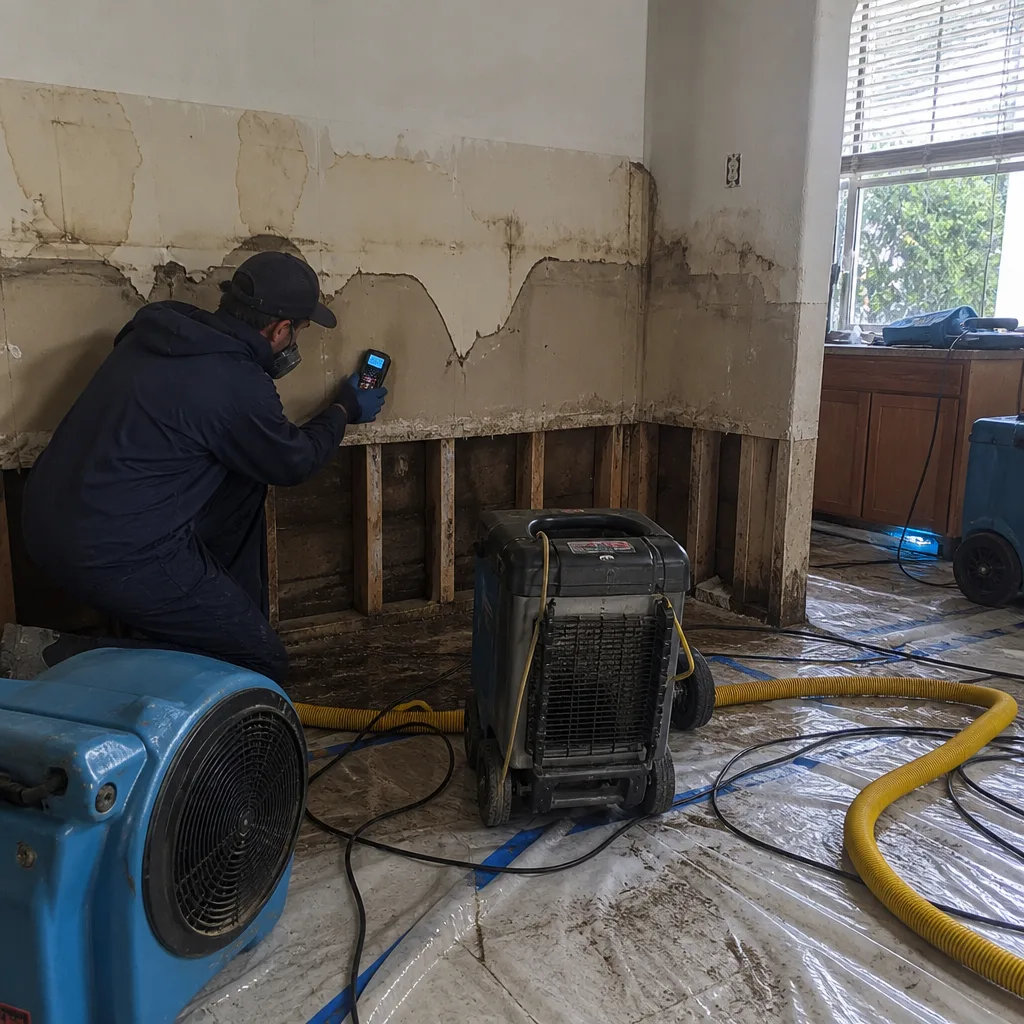 Before
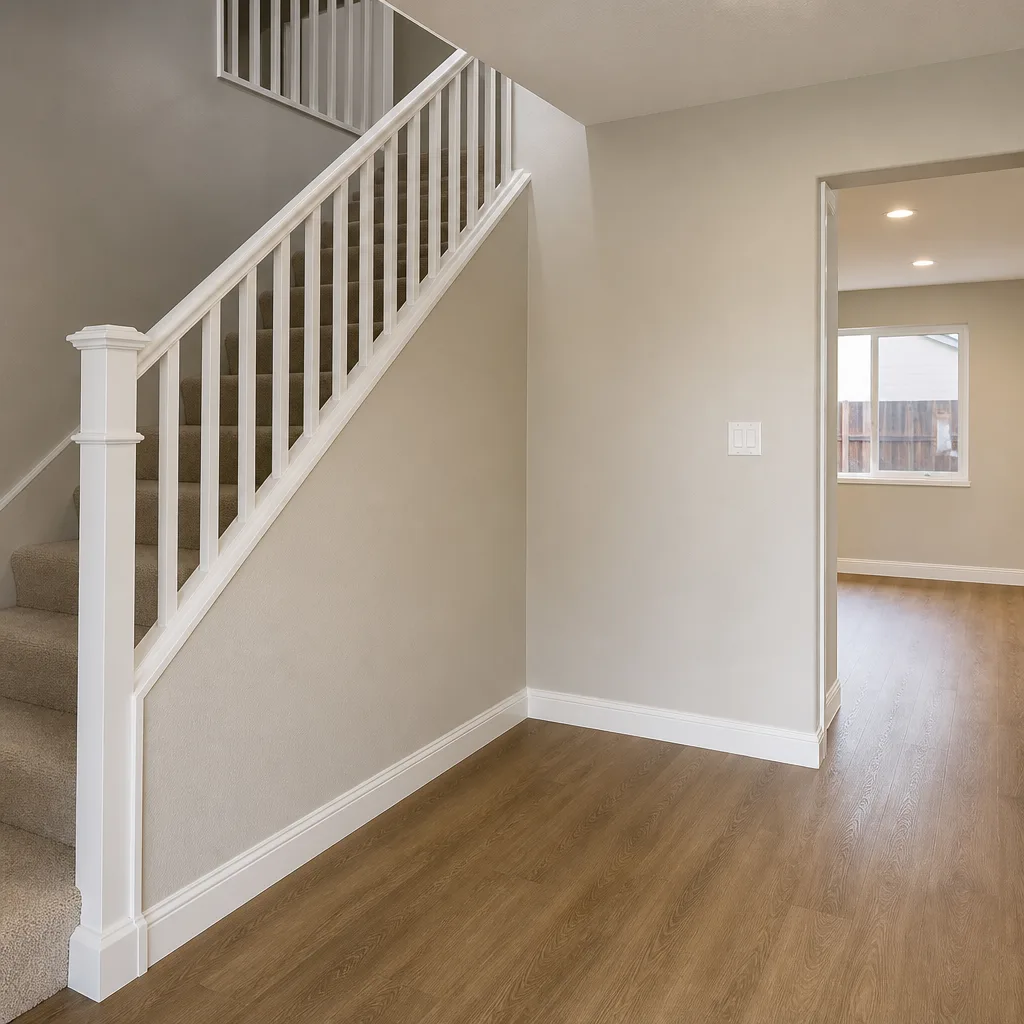 After
After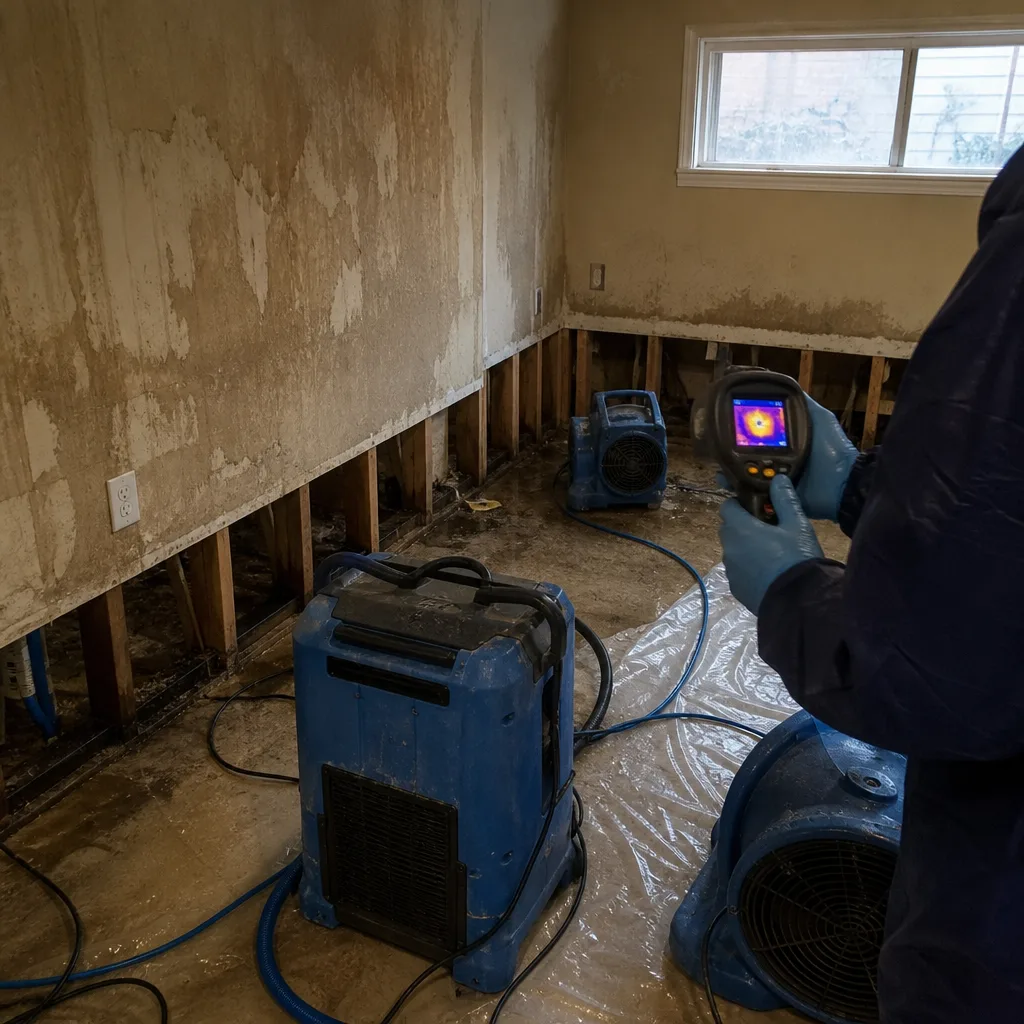 Before
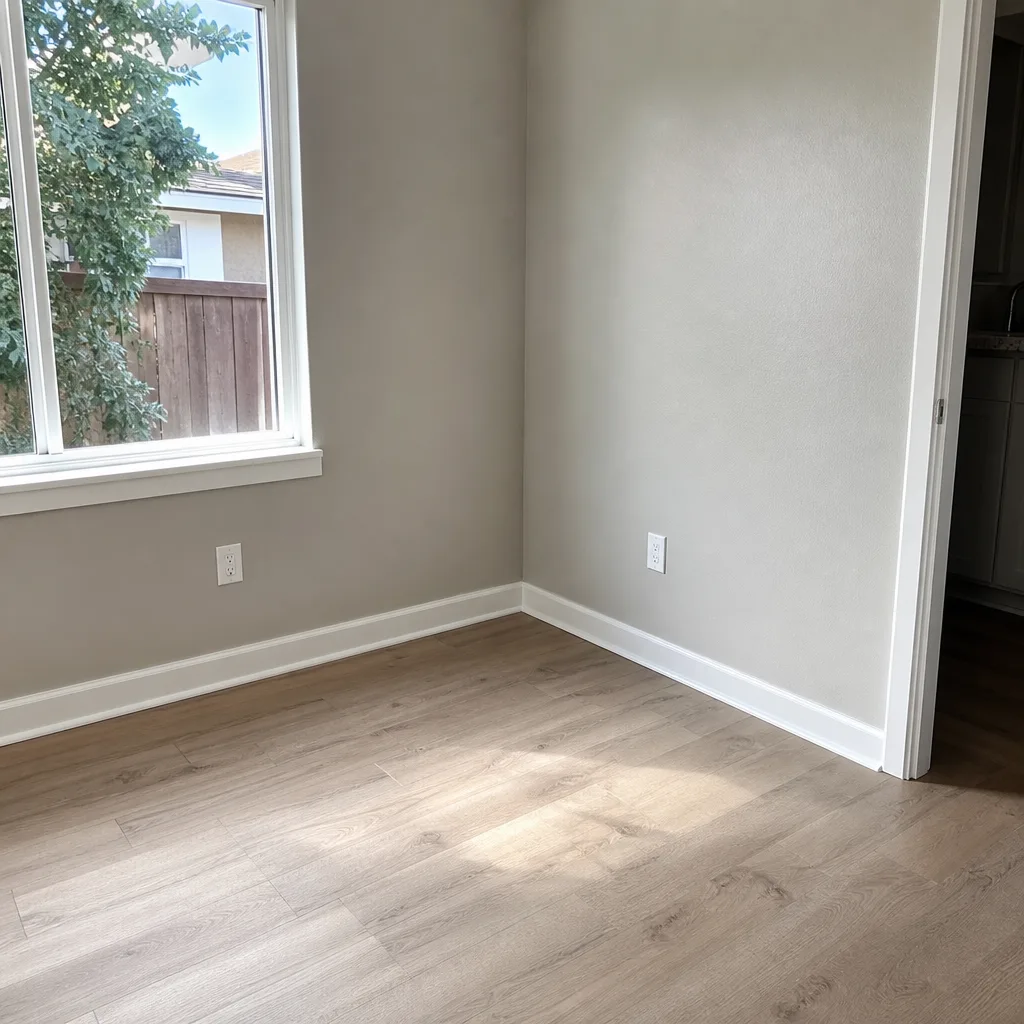 After
After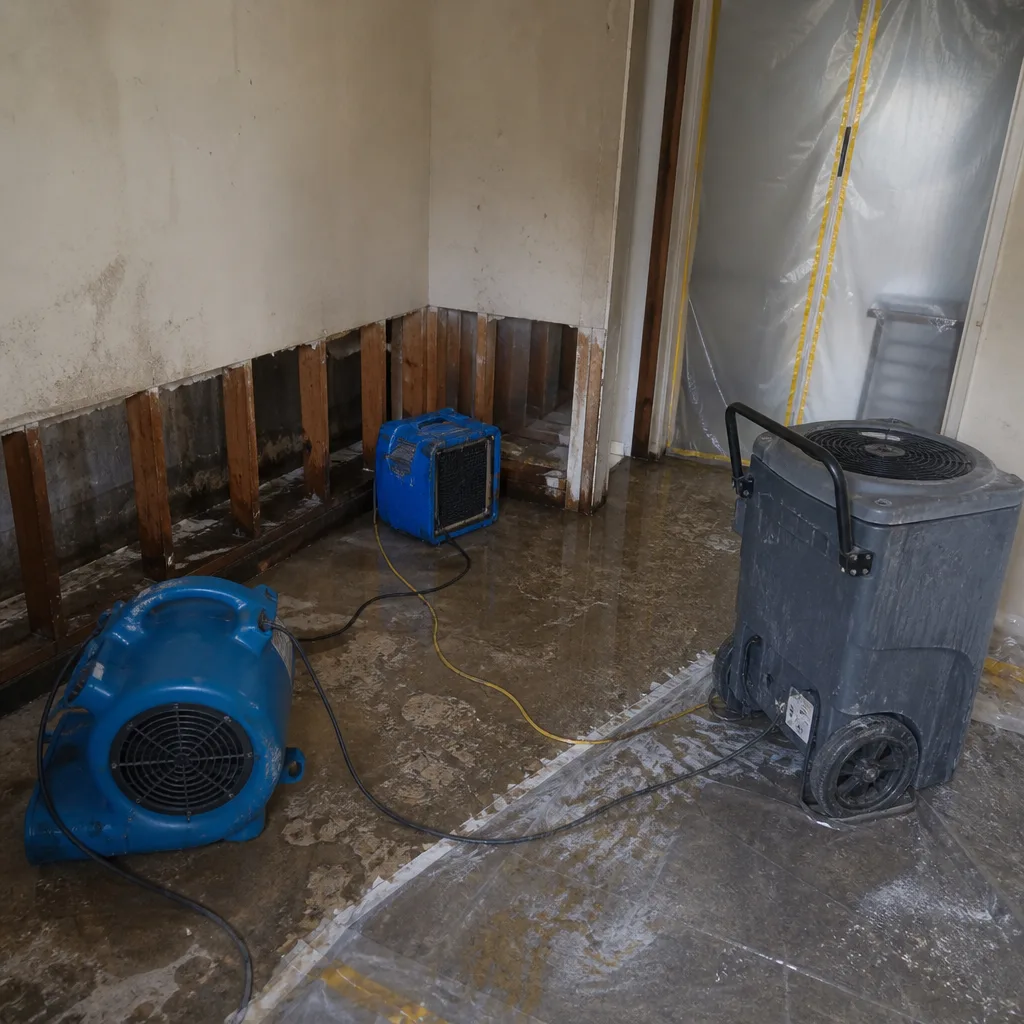 Before
 After
AfterSeasonal Damage Restoration Care for El Cajon: Year-Round Homeowner’s Guide
El Cajon averages only 14 inches of rain per year. That dry reputation leads homeowners to assume water damage is someone else’s problem, usually someone in Seattle or Miami. But concentrated rainfall on dry, compacted soil infiltrates faster and with less warning than the same rain falling on saturated ground. In our experience restoring homes across El Cajon since 2011, the most expensive claims we’ve handled started with a homeowner who skipped a pre-season inspection because “it hardly rains here.” This guide maps the four distinct damage windows El Cajon’s climate produces, the specific inspection points for each, and how to document your findings so an insurer cannot deny your claim as pre-existing damage. For a deeper look at the full process, see our Complete Guide to Damage Restoration in El Cajon.
Quick Answer
El Cajon homeowners should run four distinct seasonal inspections: an exterior point-check in October before the first rains, active moisture monitoring in January through February when clay soils swell, attic humidity tracking from June through September when radiant heat drives moisture into wall assemblies, and post-fire-season HVAC assessment in November after ash and debris infiltration peaks. Document each inspection with dated photos and moisture readings to establish a clear timeline for any future insurance claim. For a printable version of these steps, see our Water Damage Restoration Maintenance Checklist for El Cajon Homeowners.
Table of Contents
- October-November: The Pre-Rain Exterior Inspection
- January-February: Active-Rain Monitoring in Clay Soil Zones
- June-September: Attic Moisture and Heat-Driven Humidity
- October Fire Season: Ash, Debris, and Hidden Air Quality Damage
- Building a Four-Season Inspection Log
- What Seasonal Restoration Costs in El Cajon
- Common Mistakes to Avoid
- When to Call a Professional
- Frequently Asked Questions
 Before
 After
AfterOctober-November: The Pre-Rain Exterior Inspection
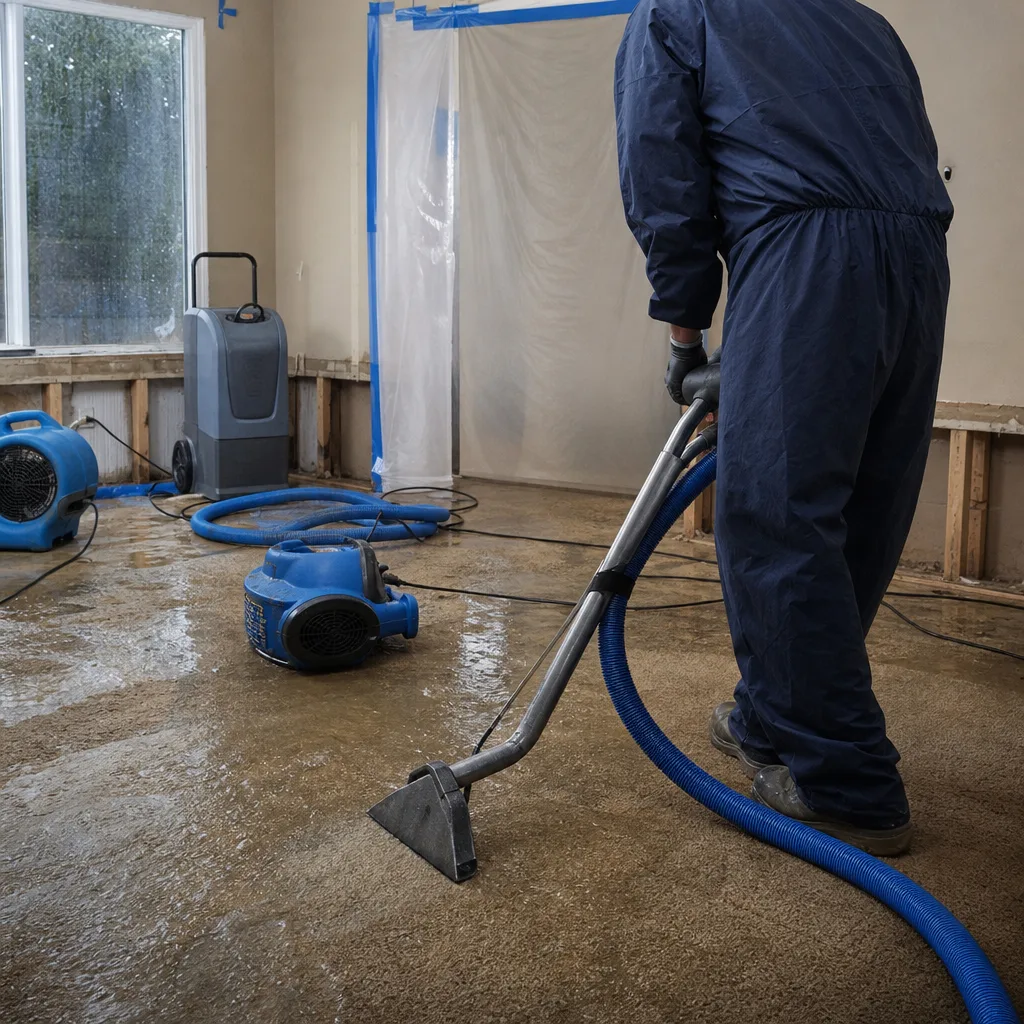
The first rain in El Cajon typically arrives between late October and mid-November. By then, soil has been baking for five months. It sheds water rather than absorbing it. Runoff concentrates at foundation perimeters, roof valleys, and any point where hardscaping meets the house. A pre-rain inspection in October is not a casual walk-around. It is a documented check of seven specific points, with condition rated as acceptable, marginal, or requiring repair.
Point 1: Roof flashing at chimney and vent penetrations. Acceptable: metal flashing seated flat, sealant intact, no daylight visible from attic. Marginal: lifted corners, cracked sealant, or gaps up to 1/8 inch. We photograph marginal conditions with a ruler in frame for scale. In Rancho San Diego and Fletcher Hills, we regularly see premature flashing failure from thermal cycling, summer UV exposure, and winter contraction.
Point 2: Gutter downspout termination. Acceptable: water discharged at least six feet from foundation via rigid extension or underground drain. Marginal: missing extension, splash block displaced, or water pooling within four feet of slab. In El Cajon’s clay-heavy zones around Bostonia and Crest, pooled water migrates laterally along the foundation and enters through slab joints.
Point 3: Window weep holes. Acceptable: visible, unobstructed, no caulk or paint covering them. Marginal: partially blocked, evidence of prior wasp nests, or adjacent staining. Weep holes are designed to drain the window track to the exterior. When blocked, water enters the wall cavity and travels downward, often appearing as baseboard staining weeks later.
Point 4: Stucco-to-ground clearance. Acceptable: minimum 4 inches of exposed foundation between stucco termination and soil or hardscape. Marginal: stucco buried or within 2 inches of grade. Wicking occurs silently in this condition. We’ve pulled moisture readings above 20% wood moisture equivalent from framing behind buried stucco in El Cajon homes that showed no interior symptoms.
Point 5: Patio door track drainage. Acceptable: track drains freely, no debris in weep slots, threshold seal continuous. Marginal: standing water in track after hosing, compressed or torn seal. Track systems in 1990s and 2000s El Cajon builds are particularly prone to seal degradation from UV exposure.
Point 6: Hose bib and irrigation backflow preventer. Acceptable: no corrosion, vacuum breaker intact, shutoff operates smoothly. Marginal: calcified threads, cracked vacuum breaker, or weeping when pressurized. A failed backflow preventer can introduce contaminated water into the domestic supply during pressure fluctuations, a documented cause of Category 2 water damage claims.
Point 7: AC condensate line termination. Acceptable: line discharges to exterior drain or dry well, no standing water at termination, no algae buildup visible. Marginal: line buried in mulch, termination in planter bed, or evidence of prior backup. Secondary drain pans with float switches are required by current California code but missing in many older El Cajon homes.
We photograph each point with date stamp, note condition, and store the file in a folder named by address and year. This is not excessive. It is the documentation that distinguishes a covered sudden event from excluded long-term damage. Water Damage Restoration in El Cajon often begins with a call from a homeowner who has no record of pre-existing condition.
January-February: Active-Rain Monitoring in Clay Soil Zones
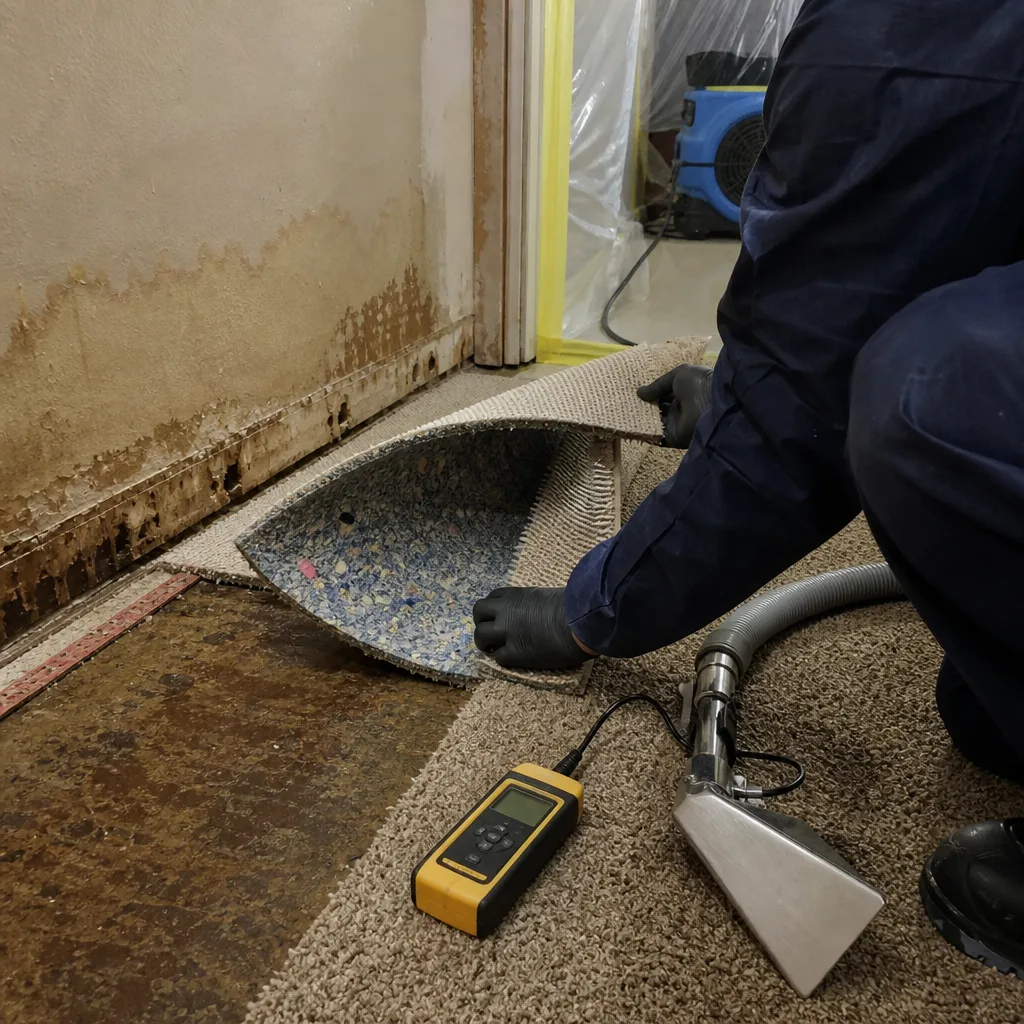
El Cajon’s winter rainfall is concentrated. January and February account for roughly half the annual total. The soil in neighborhoods from Bostonia to Harbison Canyon is heavy in expansive clay. When dry, it shrinks and cracks. When saturated, it swells and exerts hydrostatic pressure against slab foundations. This pressure forces moisture through slab joints, cold joints, and any breach in the vapor barrier beneath.
The early signs of slab moisture intrusion are subtle. Homeowners should monitor three indicators weekly during active rain periods.
- Baseboard staining at exterior walls. Look for darkening at the bottom edge, particularly on north and east exposures where evaporation is slowest. A moisture meter reading above 12% on painted drywall at the baseboard warrants investigation. Readings above 16% indicate active water migration and require professional assessment.
- Tile grout darkening or efflorescence. On slab-on-grade floors with ceramic or stone tile, moisture migrating through slab joints deposits salts at the grout surface. This appears as white powder or persistent darkening that does not clean off. It is often the first visible sign of a slab leak or vapor barrier failure.
- Musty odor in closets and cabinets on exterior walls. These spaces have minimal air circulation. Moisture accumulates, organic material in dust supports microbial growth, and odor precedes visible mold by days or weeks. A homeowner who waits for visible mold has already crossed into remediation territory.
We recommend investing in a pin-type moisture meter, not a pinless surface scanner. Pin-type meters penetrate the material and measure at depth. Surface scanners can be fooled by paint, wallpaper, or metallic backing. Take readings at the same six points each week: two baseboard locations on each exterior wall, one interior wall as control, and one floor location near a plumbing chase. Log the readings with date and recent rainfall total from the nearest CIMIS station.
What moisture readings prompt action? At 16% wood moisture equivalent on drywall, microbial growth becomes possible. At 20%, it becomes probable within 72 hours under typical indoor conditions. At these thresholds, we recommend a professional assessment with thermal imaging and psychrometric data, the measurement of temperature, humidity, and vapor pressure that determines whether ambient conditions support continued drying or continued damage.
In El Cajon’s winter of 2023, we documented a home in Fletcher Hills where baseboard readings climbed from 11% in early January to 23% by late February. The homeowner had noted efflorescence in the guest bathroom but delayed calling because “it wasn’t that bad.” The eventual remediation required 14 days of controlled drying with Injectidry and Phoenix dehumidification systems, removal of 340 square feet of drywall, and reconstruction of the bathroom vanity wall. A call at 16% would have required three days of drying and no reconstruction.
June-September: Attic Moisture and Heat-Driven Humidity
Summer in El Cajon brings average highs above 85°F from June through September, with attic temperatures routinely exceeding 140°F. This radiant heat does more than tax air conditioning. It drives a moisture dynamic that most homeowners never consider.
Here’s the mechanism. Air conditioning maintains interior temperatures in the low 70s. The temperature differential between conditioned space and attic creates vapor pressure differential, the force that drives water molecules from areas of high vapor pressure to low. Warm air holds more moisture than cool air. When warm, humid attic air contacts the cool underside of roof decking or the top plate of exterior walls, condensation occurs. This is not roof leak water. It is atmospheric moisture that has migrated into the attic and found a surface below dew point.
The risk is compounded in El Cajon by two local factors. First, many homes built between 1980 and 2010 have inadequate attic ventilation for modern insulation depths. Second, the shift to tighter building envelopes for energy efficiency has reduced the natural air changes that once flushed attic moisture. A well-sealed house is efficient but unforgiving. Moisture that enters stays until mechanically removed.
Homeowners should monitor attic conditions with a simple wireless temperature and humidity sensor, available for under $40. Place it near the ridge, not at the soffit where outside air influence skews readings. Check it weekly during summer months. What you’re looking for:
- Ambient attic humidity consistently above 60% relative humidity (RH)
- Temperature at ridge more than 15°F below peak outdoor temperature (indicates inadequate ventilation)
- Any reading of 70% RH or higher, which supports mold growth on organic substrates
If your attic sensor reads above 60% RH while the home is closed and air conditioning is running, you have a moisture imbalance. Possible causes include bathroom or kitchen vents terminating in the attic rather than exterior, a disconnected dryer duct, or insufficient exhaust ventilation relative to intake. Each requires correction, not monitoring.
In our work across El Cajon, we see the worst summer attic damage in homes with whole-house fans installed in the 1970s and 1980s. These units create negative pressure that pulls conditioned air upward, and with it, moisture from showers, cooking, and respiration. When the fan is off, the pathway remains. Sealing the fan opening or converting to a modern insulated assembly eliminates this bypass.
Documentation matters here too. Photograph your attic sensor installation, screenshot the app readings weekly, and note any corrective actions. If mold develops and an insurer questions whether the condition was pre-existing, your logged data establishes a timeline of awareness and response.
October Fire Season: Ash, Debris, and Hidden Air Quality Damage
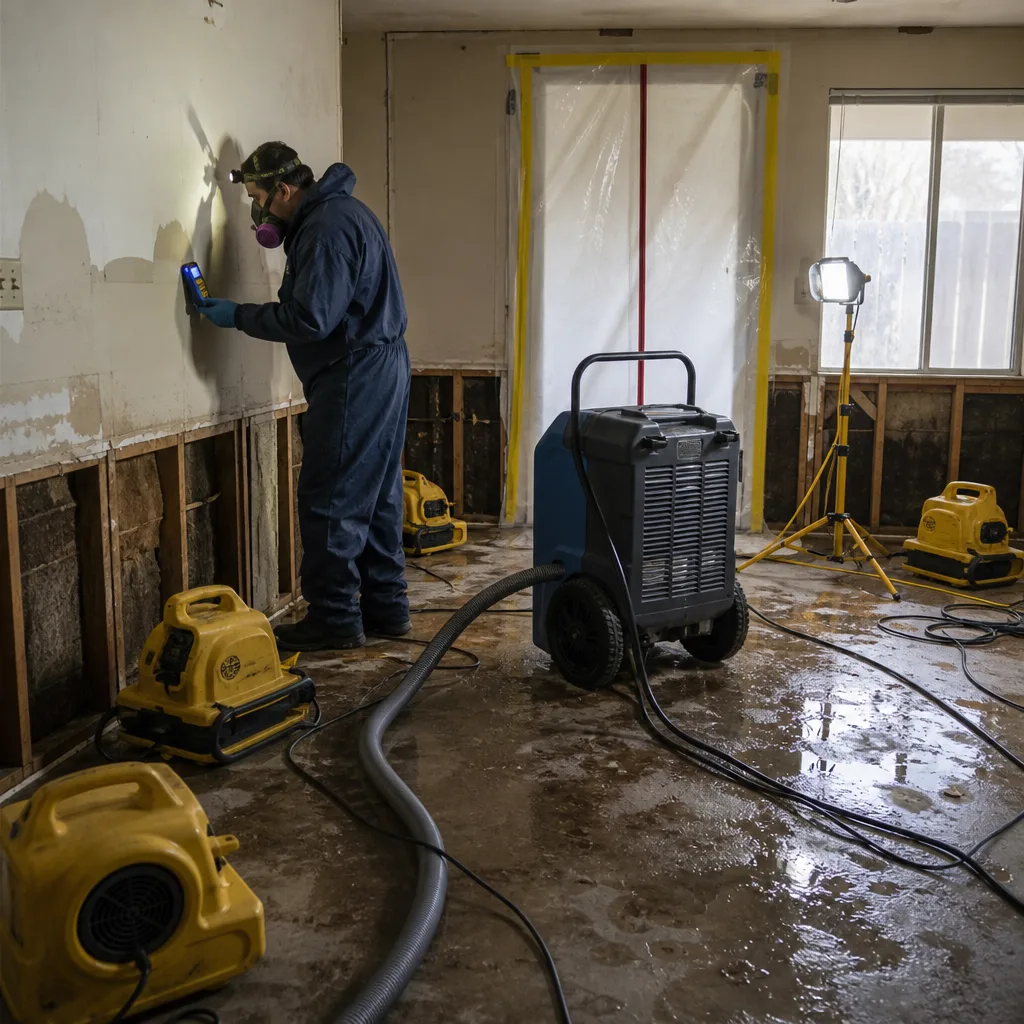
El Cajon’s position east of San Diego places it downwind of wildfire zones in the Cleveland National Forest and rural eastern county. October brings the peak of Santa Ana wind conditions, low humidity, and the highest fire risk. Even when flames never reach city limits, smoke, ash, and particulate matter travel tens of miles and infiltrate structures through pathways homeowners cannot see.
The damage from wildfire season is not always visible char. More commonly, it is the accumulation of acidic ash and particulate in HVAC systems, crawlspaces, and wall cavities. This residue is hygroscopic, meaning it attracts moisture from air. In humid conditions or after winter rains begin, the ash activates and produces corrosive byproducts that damage metal components and support microbial growth on organic surfaces.
A post-fire-season inspection in November should focus on four areas:
- HVAC filter and coil condition. Remove and photograph the filter. Ash-laden filters load faster than standard dust filters and restrict airflow, causing coil frosting and compressor stress. Inspect the return air plenum with a flashlight for ash accumulation on surfaces. If visible residue is present, professional duct cleaning with HEPA filtration and negative air containment is warranted, not a shop-vac approach.
- Crawlspace ventilation screens and interior surfaces. Ash enters crawlspaces through foundation vents, then settles on joists, subflooring, and vapor barriers. In El Cajon’s older homes near downtown and Magnolia Avenue, unsealed crawlspaces are particularly vulnerable. Look for gray film on surfaces, particularly horizontal ones. Swab a small area with a white cloth. Discoloration indicates residue requiring professional cleaning.
- Window and door weatherstrip integrity. Ash infiltration during high-wind events occurs at perimeter seals. Inspect weatherstrip for compression set, cracking, or gaps. The threshold seal at sliding doors is a common failure point. Replacement is inexpensive; the alternative is residue accumulation in the track and wall cavity below.
- Exterior condenser unit. Ash accumulation on condenser fins acts as insulation, reducing heat rejection efficiency and raising head pressure. Fin damage from improper cleaning is common and expensive. Professional cleaning with low-pressure foaming agents and directional rinse protects the aluminum fins.
We recommend a documented indoor air quality assessment after any significant regional fire event, even without visible damage. Particulate levels, volatile organic compounds (VOCs), and pH of settled dust can be measured and recorded. This establishes a pre-loss baseline. If a future claim involves respiratory symptoms or property damage attributed to fire season exposure, your documentation proves the event and your timely response.
Fire & Smoke Damage Restoration in El Cajon typically begins with a homeowner who smelled smoke days after the visible event passed. By then, residue has bonded to surfaces and requires more aggressive cleaning. Early documentation and assessment prevent this progression.
Building a Four-Season Inspection Log
An inspection without documentation is testimony without evidence. Insurers deny claims for pre-existing damage, gradual deterioration, and homeowner negligence. A four-season inspection log defeats each of these defenses by establishing a timeline of due diligence and prompt response.
The log need not be complex. A digital folder per property, with subfolders by year and season, suffices. Each inspection entry should include:
- Date and inspector name (self or professional)
- Weather conditions and recent precipitation total
- Seven exterior point photographs from October inspection, with condition ratings
- Weekly moisture meter readings from January-February, with locations noted
- Screenshot of attic sensor readings from June-September
- Post-fire-season HVAC and crawlspace photographs from November
- Any corrective actions taken, with contractor name and invoice number
Store this in cloud format with automatic backup. A homeowner who provides this record to an adjuster demonstrates that damage was not pre-existing, not ignored, and not caused by deferred maintenance. In our experience, claims with documented inspection histories settle faster and with less dispute over scope.
The Haven Standard requires this documentation on every job we perform. Our customers receive the photo record, the drying log with daily moisture readings, and the written scope before work begins. We recommend homeowners adopt the same discipline for their own inspections. The investment is time. The return is claim integrity.
What Seasonal Restoration Costs in El Cajon
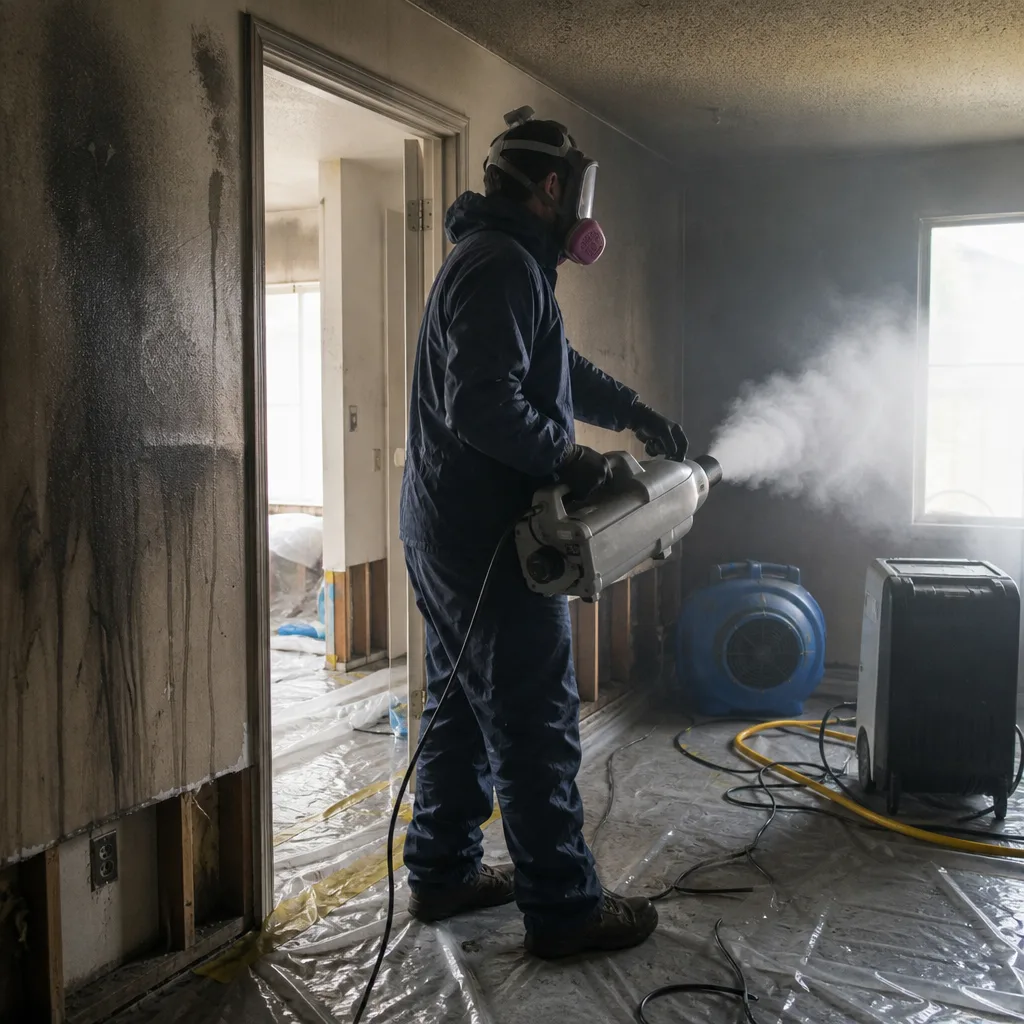
Pricing restoration work requires site-specific assessment. Material costs, access conditions, and extent of damage vary. However, El Cajon homeowners should understand typical ranges for the seasonal conditions this guide addresses, so they can evaluate estimates against market reality. See our Damage Restoration Cost Breakdown: The El Cajon Homeowner’s Reference for 2026 for detailed pricing guidance. Haven Standard, Clause 1: a written price before work begins. We provide this on every job. The ranges below are drawn from our 12,000+ restorations since 2011 and current regional material costs.
| Service Category | Typical Range in El Cajon | Factors Affecting Price |
|---|---|---|
| Pre-season inspection with documentation | $150 - $350 | Property size, accessibility, number of outbuildings |
| Slab moisture assessment with thermal imaging | $275 - $495 | Area to be scanned, need for core sampling, report detail |
| Controlled drying (3-day minimum, equipment only) | $895 - $1,850 | Affected square footage, dehumidifier count, air mover count |
| Attic mold remediation, limited area (<100 sq ft) | $1,200 - $2,400 | Access difficulty, insulation removal/replacement, containment needs |
| HVAC duct cleaning with HEPA filtration | $450 - $890 | System size, number of returns, contamination level |
| Crawlspace ash/debris cleaning | $890 - $1,650 | Crawlspace height, vapor barrier condition, disposal requirements |
| Written scope and moisture documentation for insurance | No charge with assessment | Included standard with all DryMark Restoration El Cajon services |
These ranges reflect professional-grade equipment and trained technicians, not rental dehumidifiers and general labor. Our drying systems include Phoenix and XPOWER dehumidifiers, B-Air air movers, and Injectidry cavity drying systems, documented to IICRC, RIA, and IFA standards. The daily drying logs we produce are the documentation that converts restoration invoices into payable claims.
We offer a Free Second Opinion on any competitor’s written estimate. Bring the scope and we will review it against current pricing, required documentation standards, and appropriate equipment specifications at no charge. This is not a sales tactic. It is a service we provide because inaccurate estimates lead to denied supplements and unpaid balances that homeowners ultimately bear.
Common Mistakes to Avoid
- Assuming dry climate means no water risk. El Cajon’s infrequent rain falls on hardened soil and runs to the foundation. The concentration matters more than the annual total. We’ve restored more slab-adjacent damage from El Cajon’s winter storms than from sustained rain in Portland.
- Waiting for visible mold before calling. Mold requires moisture, organic material, and time. Visible growth means all three have been present long enough for colonization. By then, remediation replaces simple drying. The cost multiplier is typically 3-5x.
- Using bleach on mold-affected porous materials. Bleach kills surface growth but leaves root structures intact in drywall, wood, and grout. It also adds moisture to the material. Proper remediation removes affected material or treats with EPA-registered biocides followed by HEPA vacuuming.
- Neglecting attic monitoring in summer. Homeowners check smoke detectors seasonally but never consider attic conditions. A $40 sensor and five minutes weekly would prevent most of the attic mold remediation we perform in August and September.
- Failing to document pre-existing condition. Without dated photographs and moisture readings, an insurer can attribute any discovered damage to long-term maintenance neglect. Your documentation is your defense. Store it where you won’t lose it in a disaster.
- Accepting verbal estimates or scope changes. Haven Standard, Clause 1 exists because scope creep is the most common complaint in restoration. A written price before work begins, with no additions once the crew is inside, protects both parties. Any contractor who cannot provide this is not operating to professional standard.
- Ignoring post-fire air quality. Ash and particulate infiltration does not announce itself with odor or visible residue. By the time respiratory symptoms appear, corrosive residue has bonded to HVAC components and wall cavities. Documented assessment after regional fire events is preventive, not reactive.
When to Call a Professional
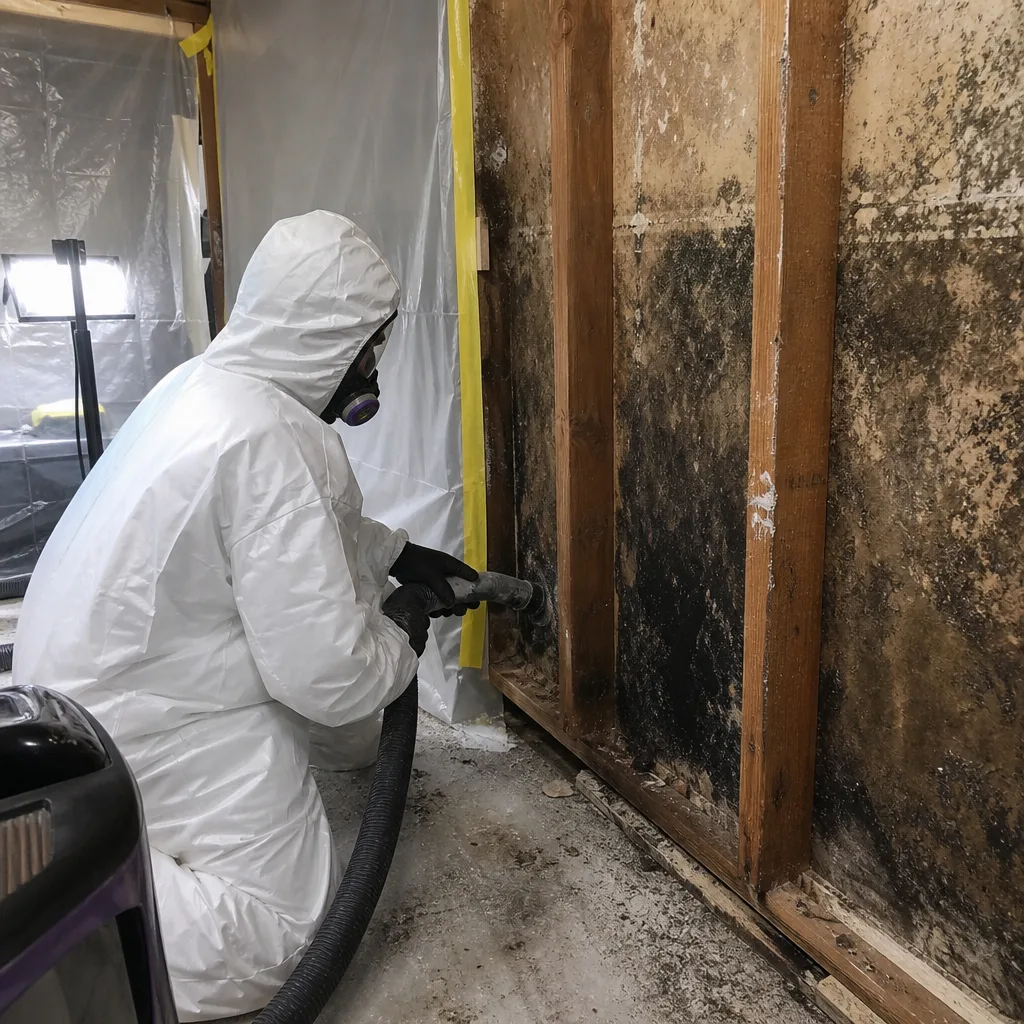
Call for professional assessment when moisture meter readings exceed 16% on interior materials, when attic humidity sustains above 60% RH for more than one week, when any fire-season event produces visible residue in HVAC components, or when you detect musty odor without identifiable source. These are threshold conditions where homeowner monitoring ends and professional documentation begins.
Mold Remediation in El Cajon requires containment, negative air pressure, and proper disposal. Water damage restoration requires psychrometric calculation to establish drying goals and equipment sizing. Fire and smoke damage requires residue identification before cleaning method selection. Each is a technical discipline with health and financial consequences for improper execution.
DryMark Restoration El Cajon offers free estimates in El Cajon. Call (858) 428-2364. For more guides & resources on protecting your home, visit our blog. A live person answers every call, 24 hours a day, 7 days a week. No voicemail trees. No next-business-day callbacks while water is still moving. Every estimate is delivered in writing before work begins, with a documented photo record on every visit and the 365-Day Done Right Promise backed by The Haven Standard.
Frequently Asked Questions
A professional seasonal inspection with full documentation typically runs $150 to $350 for a standard single-family home in El Cajon, depending on property size and accessibility. This includes the seven-point exterior check, moisture readings at accessible locations, and a written report with photographs. DryMark Restoration El Cajon applies this inspection fee toward any restoration work if damage is found. Call (858) 428-2364 to schedule.
Insurance covers sudden and accidental damage, not gradual deterioration or maintenance issues. The purpose of seasonal inspection documentation is to prove that damage was sudden and not pre-existing. If your October inspection shows acceptable condition and January readings spike after a storm, your documentation establishes the event and timeline. Without it, the insurer may classify the same damage as long-term neglect. We coordinate directly with adjusters and provide the photo records and moisture logs that support covered claims.
Our live dispatch answers every call immediately, 24 hours a day, 7 days a week. For active water intrusion, we prioritize same-day assessment because moisture migration continues until the source is controlled. Reconstruction and non-emergency work is scheduled and scoped in writing, not dispatched for immediate start. The distinction matters: speed belongs to mitigation, not to remodeling.
Remediation is required when mold growth exceeds 10 square feet of contiguous area, involves HVAC systems, or occurs in conditions where moisture source cannot be immediately eliminated. Cleaning suffices for limited surface growth on non-porous materials where the moisture source has been corrected. We determine this through visual inspection, moisture mapping, and air sampling when indicated. The written scope specifies which approach applies and why, with no upgrade pressure once work begins.
We do. Our documentation, including the photo record on every visit, daily drying logs with psychrometric data, and written scope with line-item pricing, is formatted for direct adjuster submission. We have handled claims with every major carrier operating in San Diego County and understand their documentation requirements. You are not left to translate technical reports into claim language.
El Cajon’s combination of extended dry periods, clay-heavy expansive soils, concentrated winter rainfall, and downwind exposure to regional wildfires creates four distinct damage windows rather than a single seasonal risk. The dry climate hardens soil and desiccates building materials, making them more absorbent when moisture finally arrives. The thermal mass of summer heat drives humidity into wall assemblies. The Santa Ana wind pattern transports fire-season contaminants across the urban boundary. Each requires specific monitoring, not generic year-round advice.
The Bottom Line
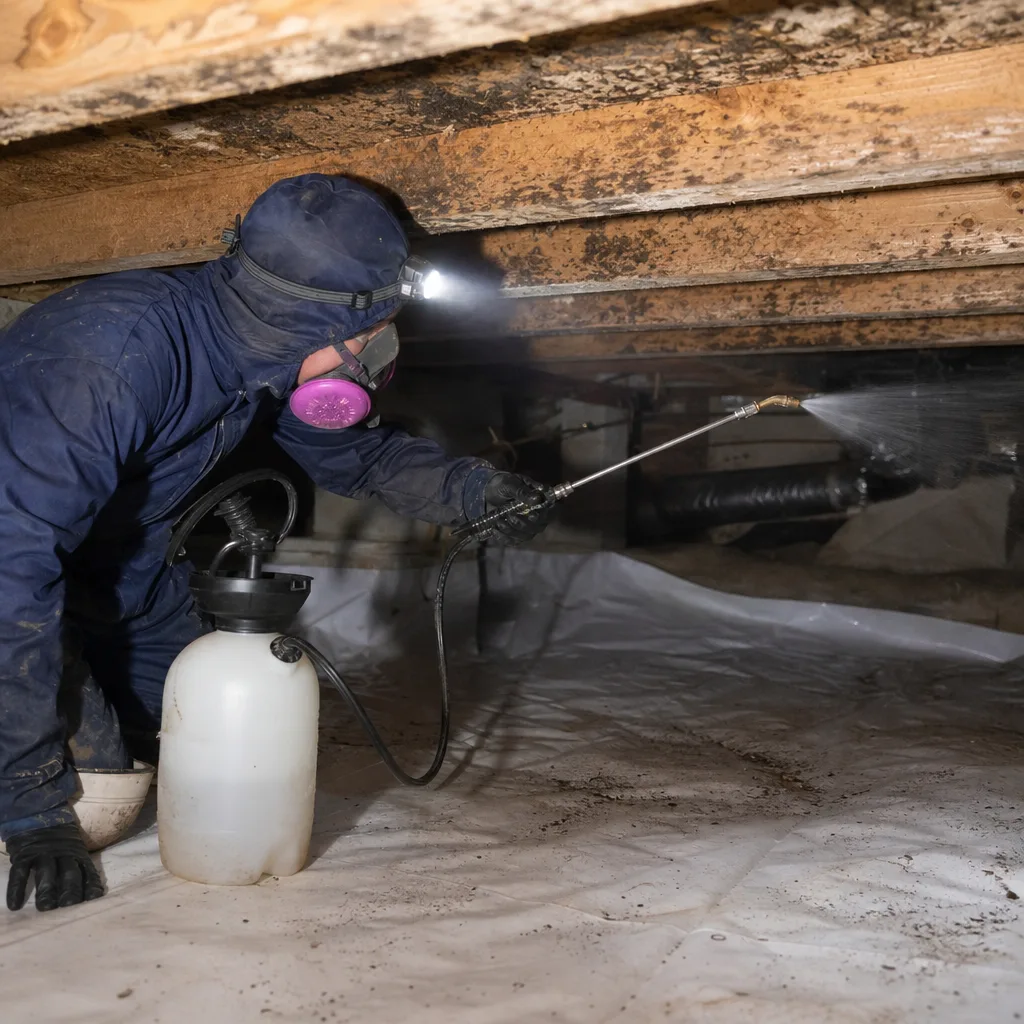
El Cajon’s climate produces concentrated, predictable damage windows. The homeowner who recognizes each window and inspects specifically for it, with dated documentation, converts potential disasters into manageable maintenance. The homeowner who assumes “it hardly rains here” becomes the restoration case study we reference when explaining why documentation matters. The seven-point October inspection, weekly moisture monitoring in January and February, attic sensor tracking through summer, and post-fire-season HVAC assessment take perhaps six hours annually. The return is claim integrity, cost avoidance, and the confidence that your home’s condition is known, not assumed. DryMark Restoration El Cajon home provides the professional assessment, written scope, and documented record that turns awareness into action.
Written by Alicia Brennan, Owner at DryMark Restoration El Cajon, serving El Cajon since 2011.