
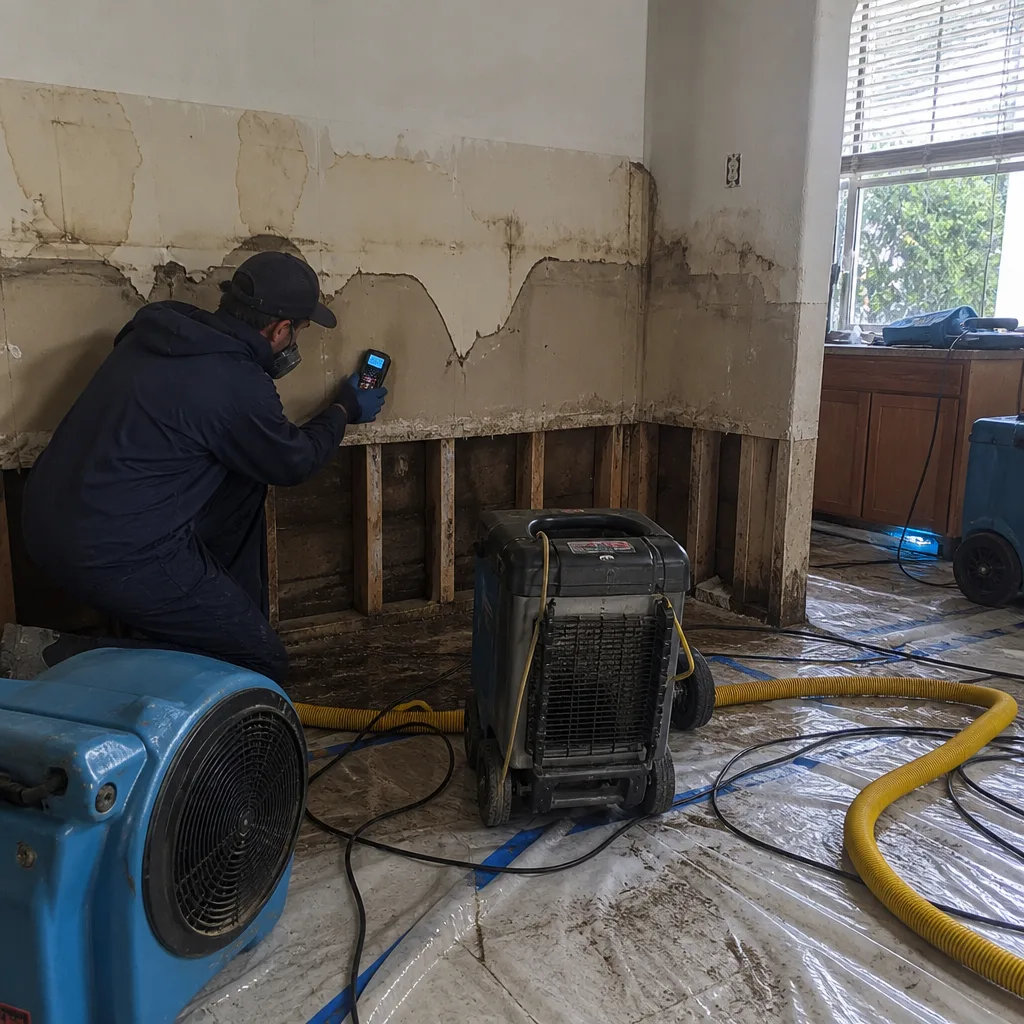
Free visual inspection and a written scope of work before any mitigation begins - photos, moisture readings, and drying logs go in your claim file
The scope we write is the scope we bill. Anything new gets shown to you, in writing, before we touch it.
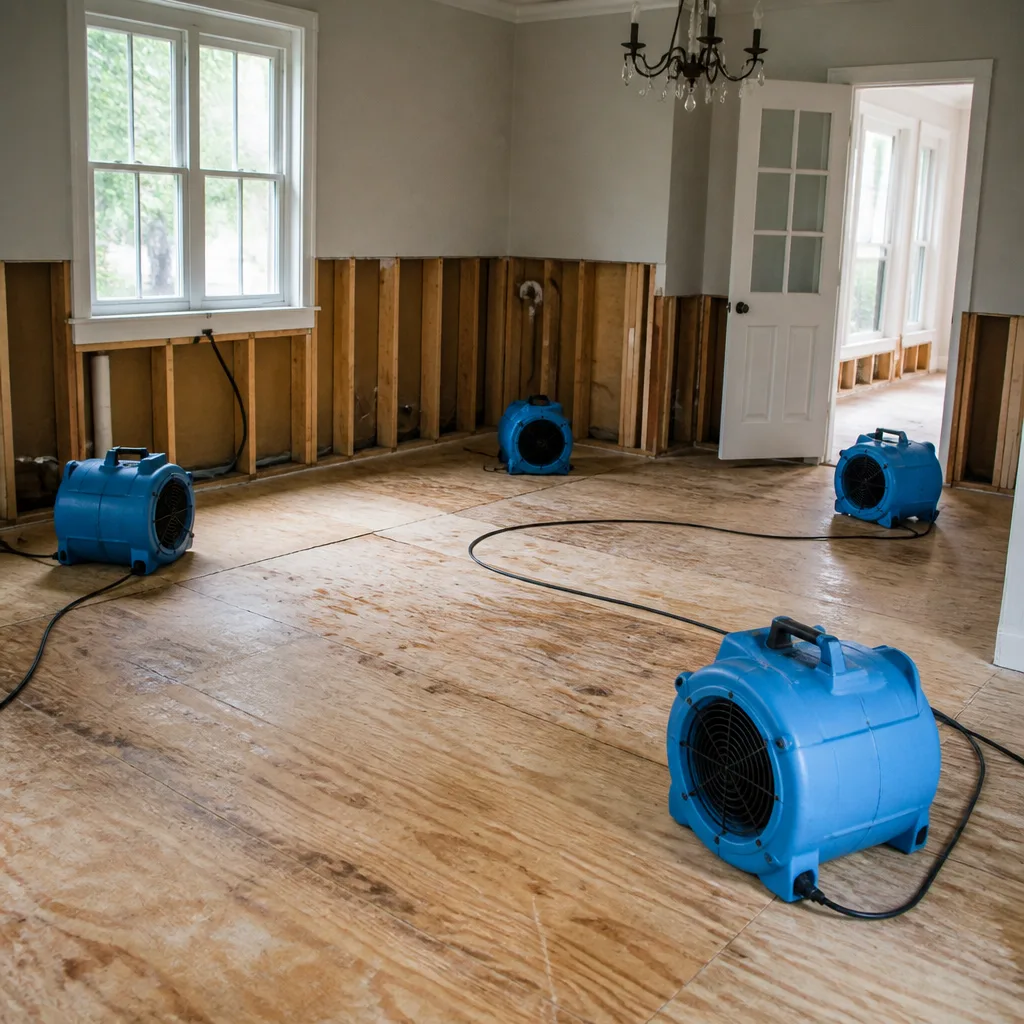
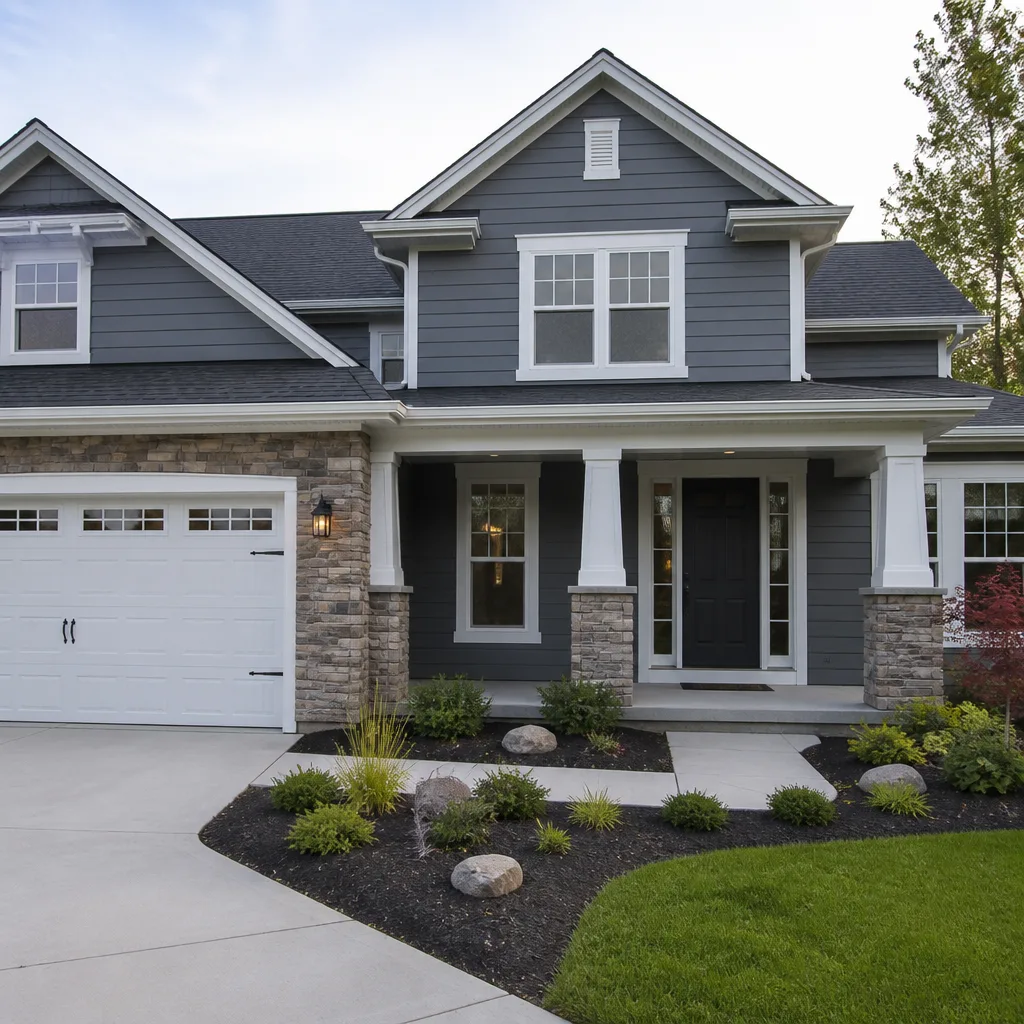
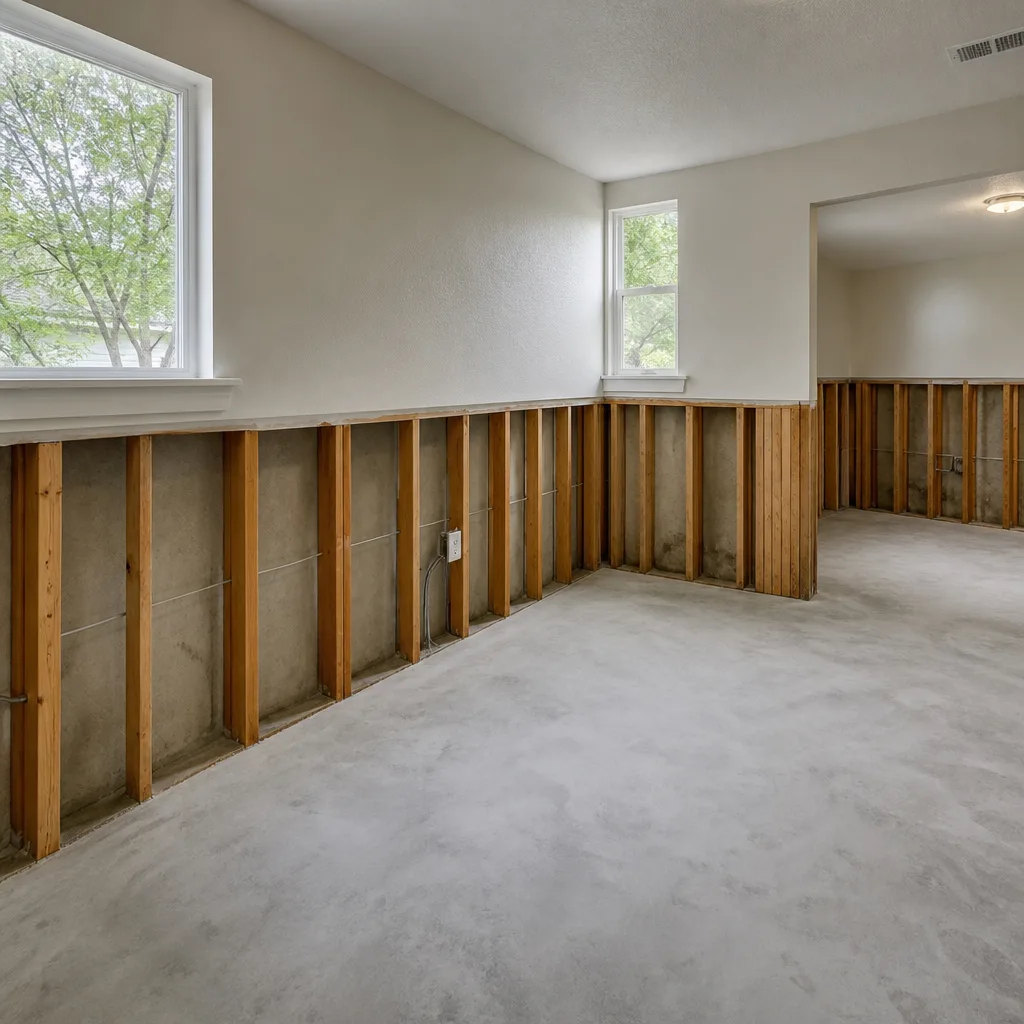
 Before
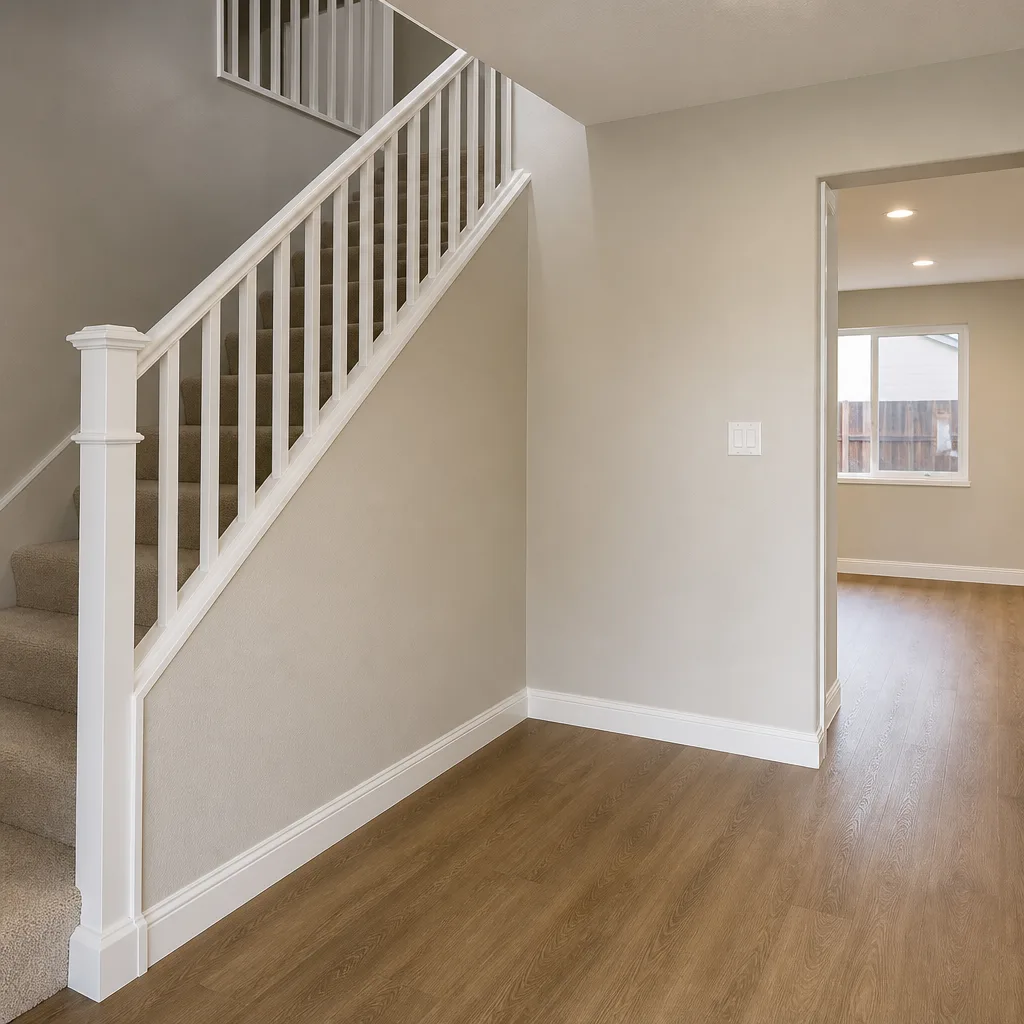 After
After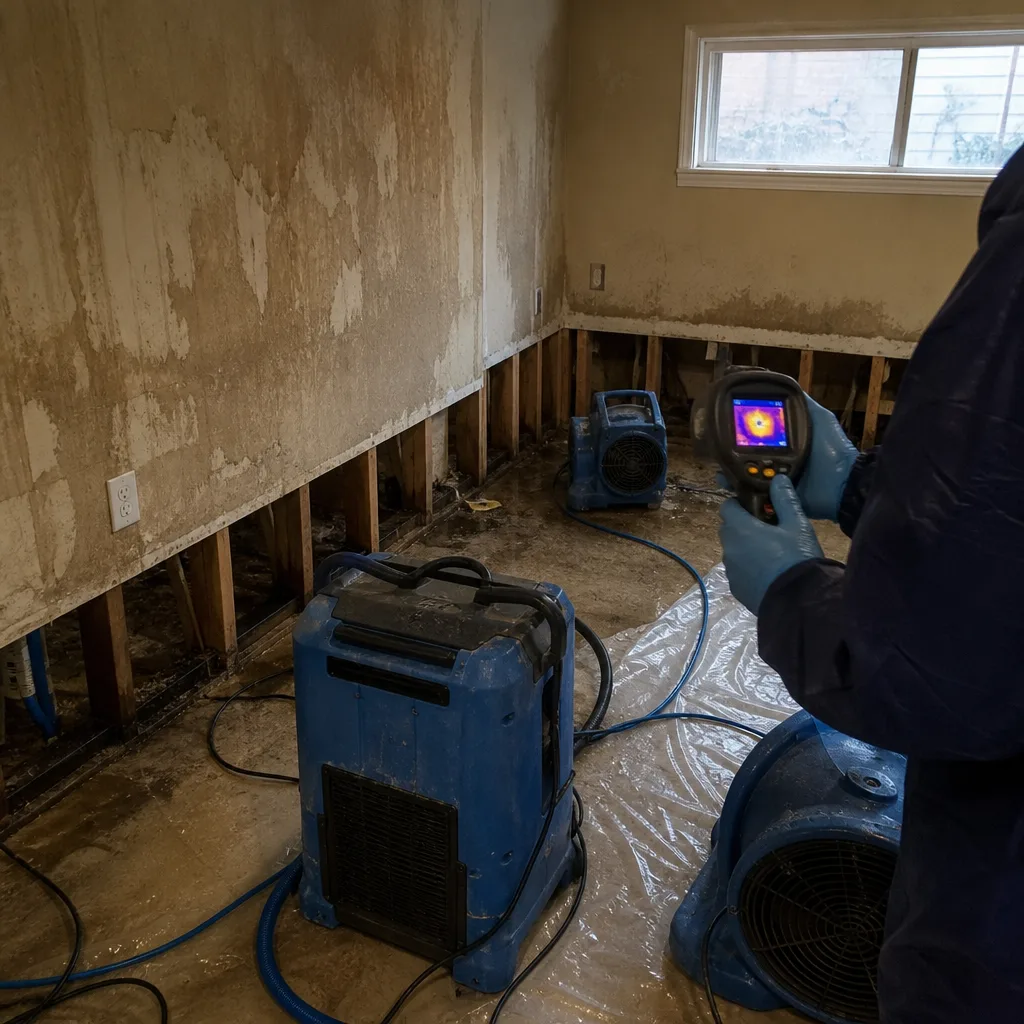 Before
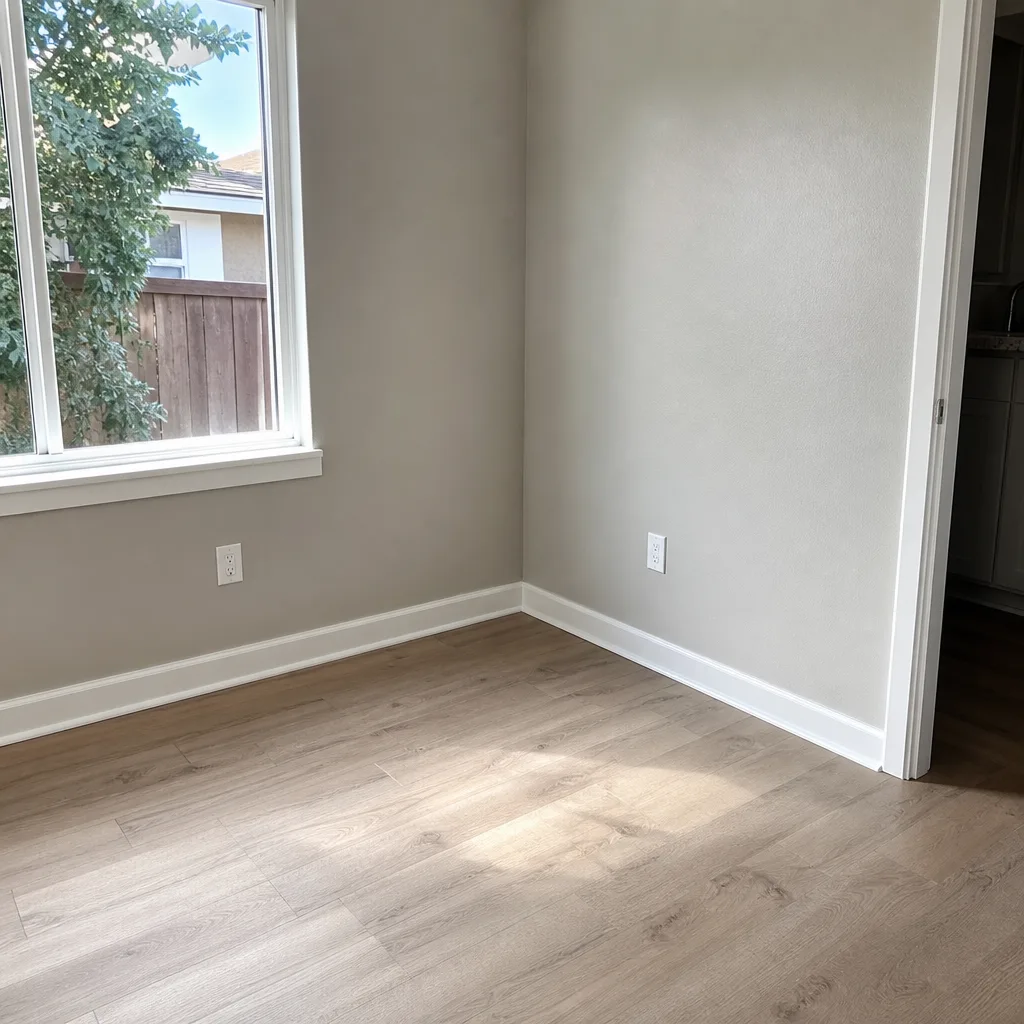 After
After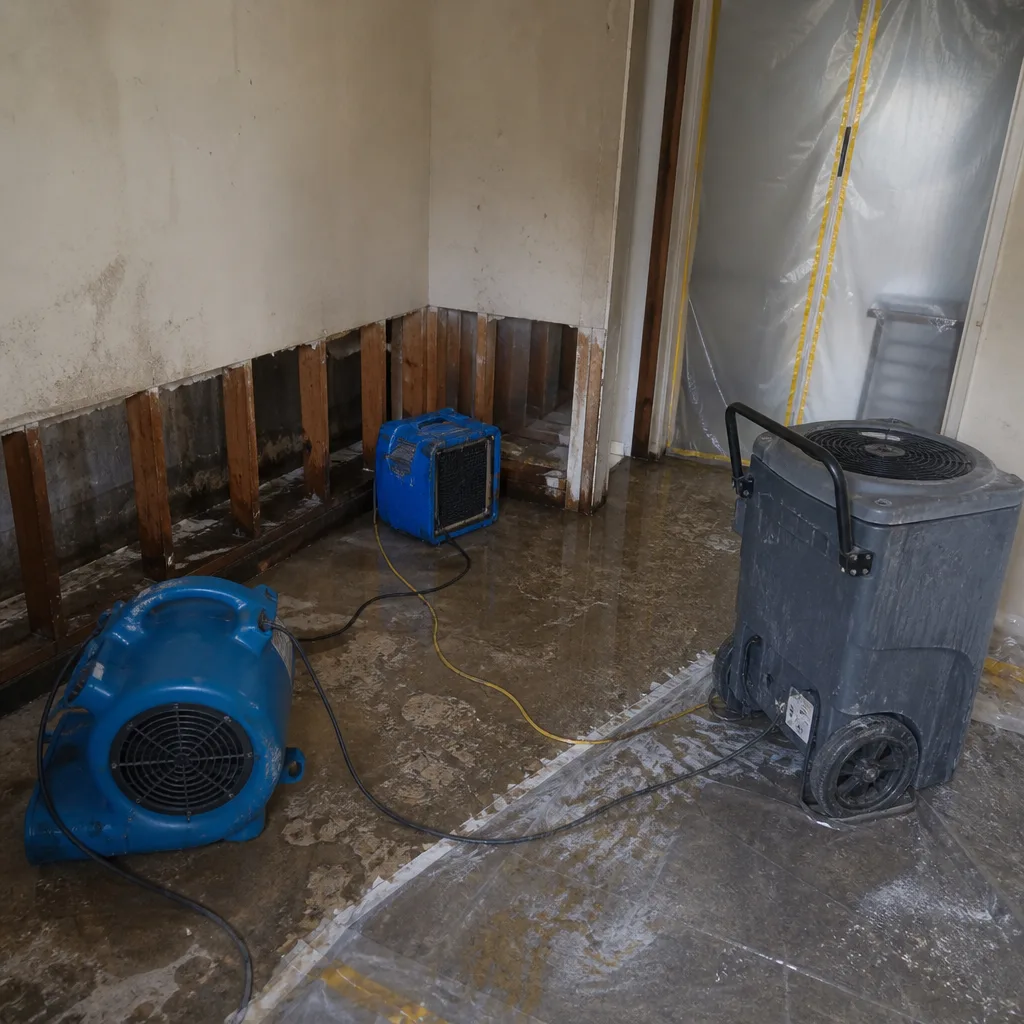 Before
 After
After24/7 Emergency Fire & Smoke Damage Restoration in Lakeside
Fire and smoke damage restoration in Lakeside typically costs $3,200-$18,500 depending on structural involvement, with emergency board-up and stabilization available within 45 minutes of your call. Our crews answer live at (858) 428-2364 around the clock, every day of the year, because fire damage does not wait for business hours. The first hour after a fire is controlled determines whether smoke residues set permanently into porous surfaces, whether water from suppression efforts migrates into wall cavities, and whether your insurance claim documents the full scope of loss or leaves you fighting for coverage six months later.
We dispatch from our San Diego coordination office to Lakeside properties along Wildcat Canyon Road, Lake Jennings Park Road, and the San Diego River corridor. Every arrival includes a free visual inspection, a written price before any work begins, and a photo record that starts the moment our truck stops. Haven Standard, Clause 1: no exceptions.
Understanding Fire & Smoke Damage Restoration Severity in Lakeside Properties
Fire damage in Lakeside falls into three severity bands that dictate equipment, timeline, and cost. Light smoke infiltration, common when wildfire pushes particulate through attic vents and window gaps, leaves dry soot residue (primarily carbon particulate under 10 microns) on surfaces without structural charring. Moderate damage involves direct flame contact or significant heat distortion, typically affecting roofing, siding, or interior finishes, plus water intrusion from suppression. Heavy damage compromises structural members, requires engineering assessment, and triggers full reconstruction scopes.
Lakeside’s housing stock amplifies these distinctions. Post-WWII ranch homes along Julian Avenue and the Eucalyptus Hills corridor often feature tongue-and-groove cedar ceilings and pre-code wood-shake roofs that absorb smoke odor compounds deeply. Manufactured homes on the valley floor use lighter-gauge materials that distort faster under heat but may show hidden damage behind vinyl siding. Rural equestrian properties frequently have detached structures with separate electrical feeds, meaning one building can suffer total loss while another needs only smoke remediation. Our crews classify each structure by construction era, material assembly, and exposure path before selecting cleaning agents or demolition boundaries.
Soot residue types matter. Dry soot, from fast-burning wildfire, responds to HEPA vacuuming and dry-chem sponges. Wet soot, from smoldering synthetic materials, requires alkaline cleaning and often abrasive blasting on masonry. Protein residue, from kitchen fires, presents as nearly invisible varnish-like film that demands enzyme-based cleaners. Misidentification leads to smearing, odor lock-in, and failed clearance.
Why Lakeside Property Owners Choose DryMark Restoration El Cajon
- 45-minute response commitment to Lakeside addresses, measured from dispatch confirmation to truck arrival, because smoke damage compounds with every minute of delay.
- 24/7 live answer - a real person, never an automated system or voicemail tree, on emergency lines every hour of every day.
- IICRC-certified crews holding FSRT (Fire and Smoke Restoration Technician) and WRT (Water Damage Restoration Technician) credentials, with license numbers verified before dispatch.
- Free visual inspection and written estimate with no obligation, delivered on-site or within four hours for complex losses.
- Direct insurance billing with photo-documented scopes, daily drying logs, and adjuster coordination that turns restoration invoices into payable claims.
- One team from board-up to reconstruction - no handoffs between mitigation and rebuild contractors, no gaps in documentation, no disputed overlap.
 Before
 After
AfterOur Fire & Smoke Damage Restoration Process
1. Inspection & Assessment
We document pre-loss condition room by room, photograph all visible damage, and test soot residue type on representative surfaces. Thermal imaging identifies hidden heat damage in wall cavities and roof assemblies. In Lakeside’s older ranch homes, we pay particular attention to attic spaces where ember intrusion through wood-shake roofing often leaves damage invisible from living areas.
2. Emergency Board-Up & Stabilization
Broken windows, compromised doors, and breached roofing get same-day securing with plywood, tarps, and temporary weatherproofing. For Lakeside properties backing open chaparral, this security step is immediate, not scheduled. We also deploy temporary fencing where structural integrity is uncertain.
3. Water Extraction & Structural Drying
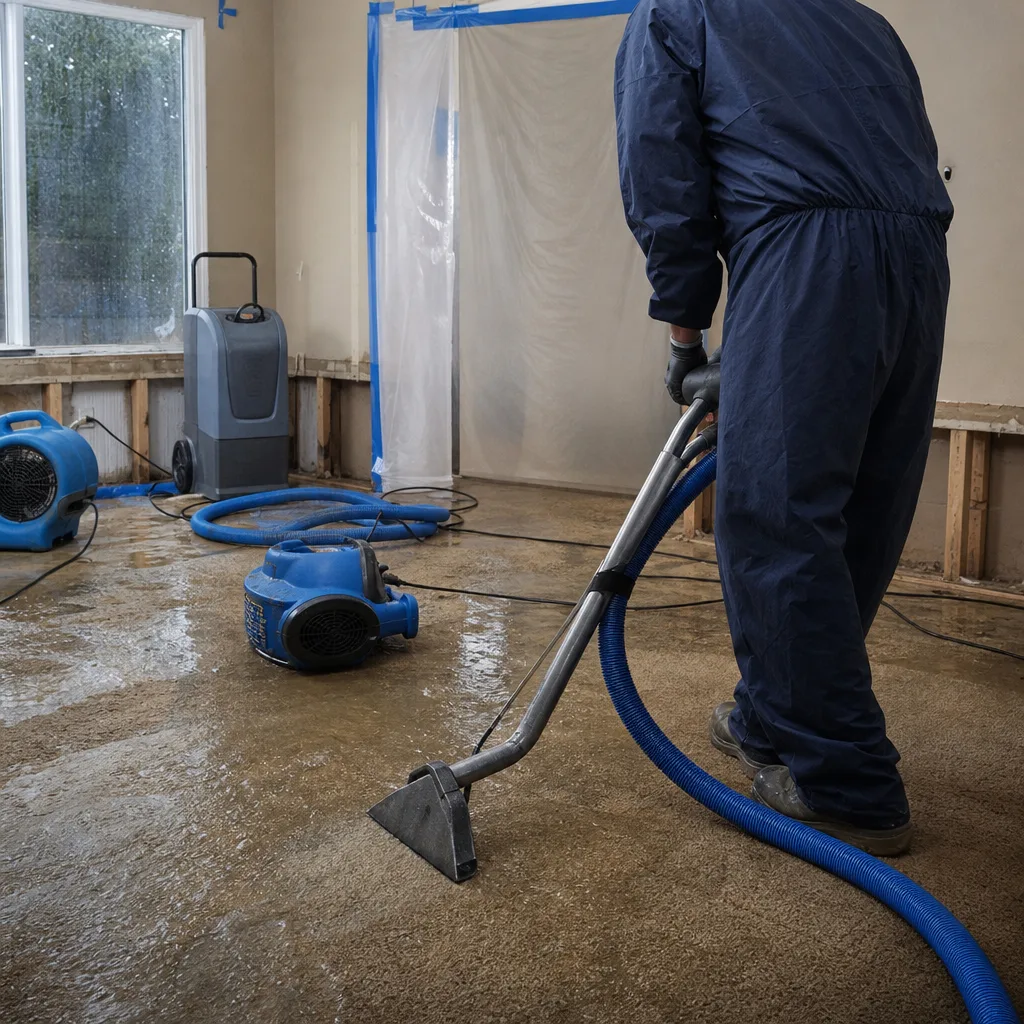
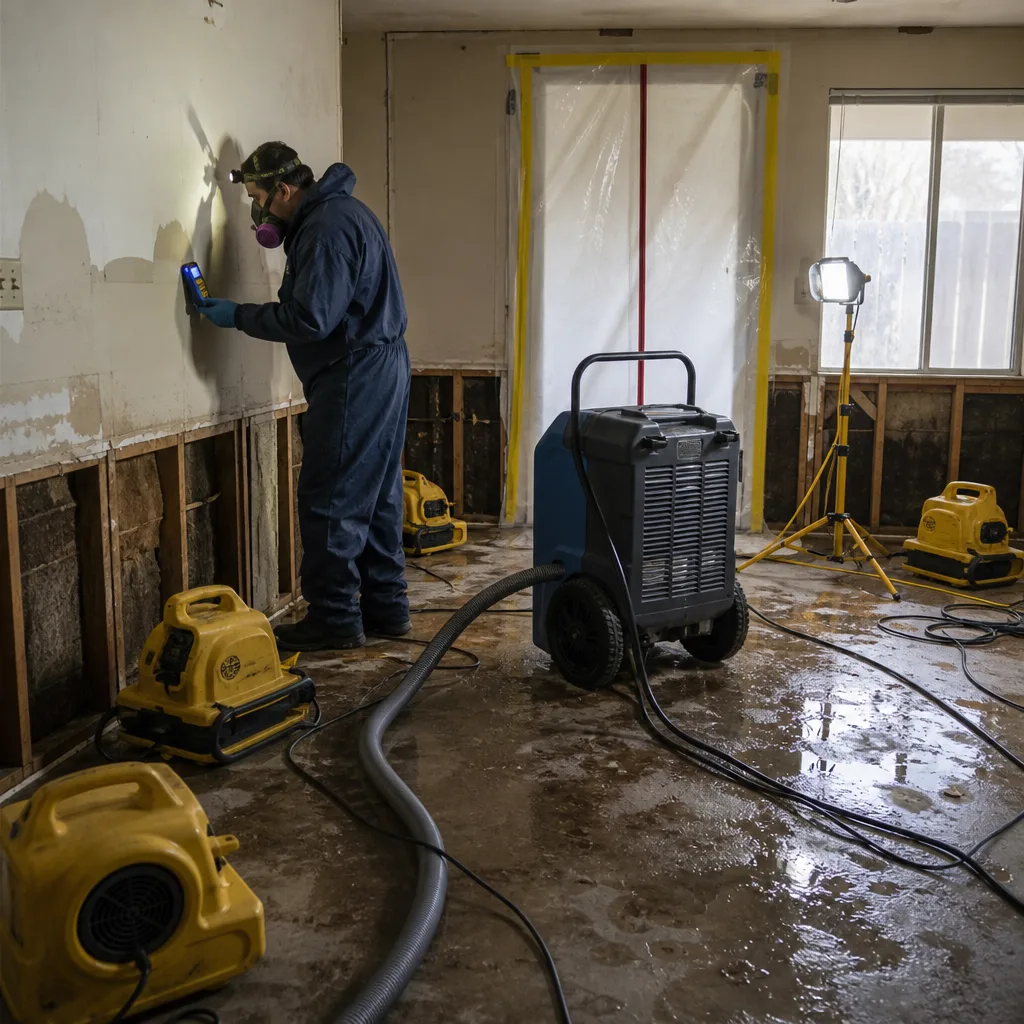
Fire suppression leaves Category 2 or 3 water in wall cavities, subfloors, and insulation. We extract standing water, then deploy Dri-Eaz and Phoenix dehumidifiers with air movers positioned for psychrometric control. Lakeside’s Santa Ana-driven low humidity can accelerate surface drying dangerously fast; we monitor with calibrated hygrometers to prevent over-drying of salvageable wood framing.
4. Smoke & Soot Removal
HEPA vacuums, dry-chem sponges, and ultrasonic cleaning remove particulate from surfaces and contents. For deeply embedded smoke in tongue-and-groove ceilings or porous masonry common in Lakeside’s pre-code construction, we apply thermal fogging or ozone treatment after source removal.
5. Odor Removal & Deodorization
Surface cleaning alone fails on fire damage. We deploy hydroxyl generators and activated carbon filtration for occupied spaces, and sealed ozone treatment for unoccupied structures. Vapor pressure differential testing confirms that odor molecules have been neutralized, not masked, before we sign off on this phase.
6. Repairs & Restoration
Structural repair, finish replacement, and final reconstruction follow the documented scope. Every invoice references the original written price, the photo record, and the drying log. Haven Standard, Clause 1 applies from first contact to final walkthrough.
Need Emergency Fire & Smoke Damage Restoration in Lakeside Now?
Crews minutes away, answering live 24 hours a day. The sooner we start, the less it costs.
Working With Your Insurance Company
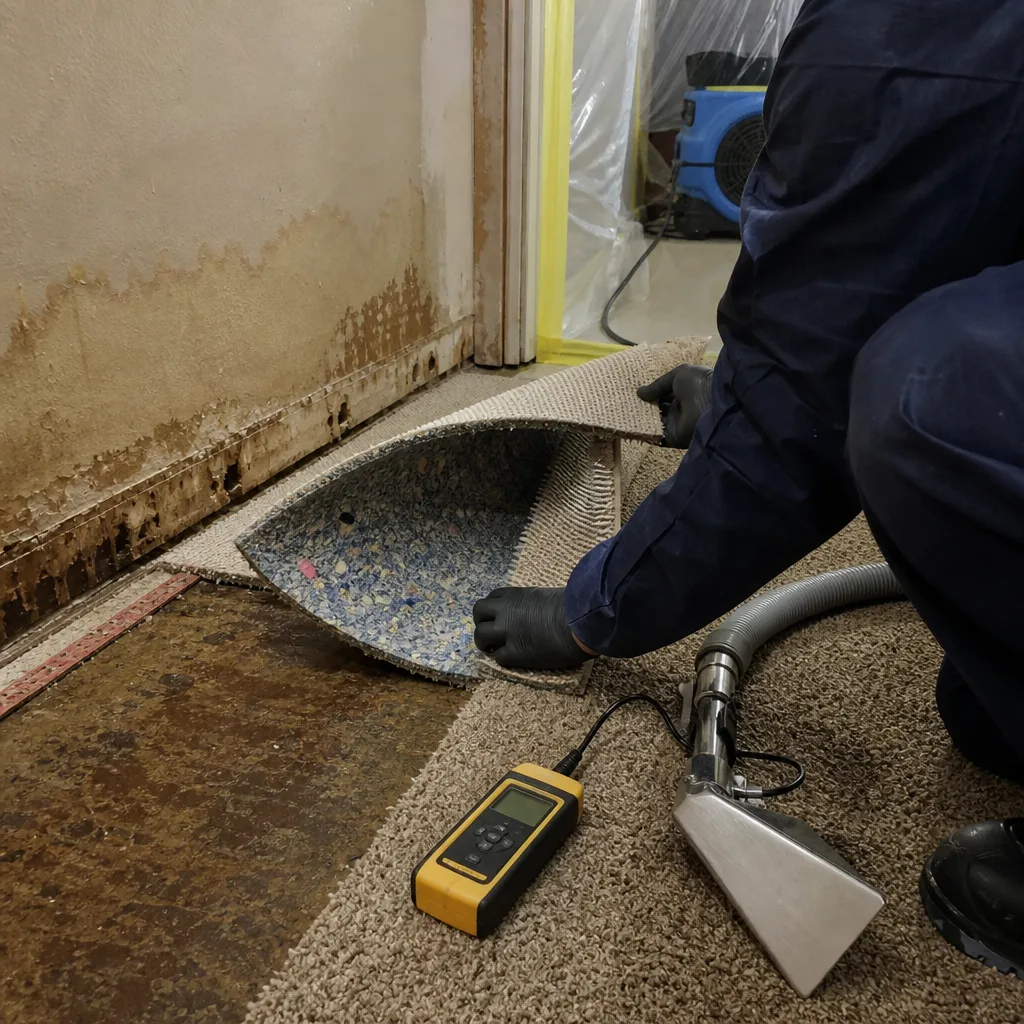
Fire claims fail on documentation gaps more often than on coverage disputes. Our process produces the evidence your adjuster needs from hour one: timestamped photos, moisture readings with equipment serial numbers, material classifications by trade name, and a line-item scope tied to industry-standard pricing databases. We coordinate directly with your carrier’s assigned adjuster, attend joint inspections when requested, and provide supplemental documentation if hidden damage emerges during demolition.
The photo record is standard, never an upsell. Every visit generates dated images of all affected areas, equipment placement, and progress milestones. For Lakeside properties facing the fire-then-flood sequence, this documentation is critical: pre-rain photos of crawlspace and garage conditions establish that subsequent mud intrusion relates to the original fire loss, not a separate event with a separate deductible.
What We Provide Your Insurer
- Thorough documentation of the loss
- Photos of all damage, room by room
- Moisture readings and drying logs
- A detailed, line-item scope of work
- Direct coordination with your carrier
Built for Lakeside’s Loss Calendar
Lakeside’s fire damage calendar runs on two clocks that other San Diego County cities do not share. August through November brings Santa Ana wind events, extreme low humidity, and the highest wildfire risk in Southern California. The Cedar Fire of 2003 established this pattern in living memory, and subsequent fires have reinforced it. During these months, our Fire & Smoke Damage Restoration crews operate on standby for rapid dispatch to brush-fire perimeter zones.
December through March brings the second phase: winter rains on fire-denuded chaparral slopes above the El Monte Valley. Hardened soil sheds water almost instantly, sending debris flows into valley-floor homes along the San Diego River corridor. Properties that suffered smoke damage in October may face mud intrusion through crawlspaces and garages by January. Restoration crews who treated only the fire loss without documenting pre-rain conditions leave homeowners fighting claim denials for the flood component.
April through July offers lower fire risk but higher temperature differentials. Lakeside runs 10-15°F hotter than coastal San Diego, accelerating off-gassing of residual smoke compounds in poorly ventilated attic spaces. We schedule follow-up odor testing during these months for winter fire losses that may have seemed resolved.
Fire & Smoke Damage Restoration Across Lakeside’s Neighborhoods
Our response routes cover the full Lakeside service area with equipment staged for local conditions.
Eucalyptus Hills and the rural eastern corridor present equestrian properties and larger-lot ranch homes with detached barns, shops, and guest structures. Multiple structures on one parcel mean multiple potential ignition points and complex scope documentation. Septic systems and well water are common here, requiring coordination with county environmental health for any water damage component.
The Lake Jennings area and Wildcat Canyon Road corridor feature denser post-WWII subdivisions with smaller setbacks and shared driveway access. Tight clearances limit large equipment placement; we deploy compact XPOWER air movers and portable Phoenix dehumidifiers that fit through standard residential gates. Alley-load garages and carport structures are frequent fire damage points from vehicle or electrical ignition.
Julian Avenue and the central Lakeside commercial-residential mix include older retail with residential units above, requiring containment strategies that protect neighboring businesses during restoration. Parking constraints mean our crews arrive with modular equipment rather than trailer-mounted systems.
Manufactured home communities on the valley floor use construction assemblies that respond differently to heat and smoke than site-built framing. Vinyl siding distorts at lower temperatures, hiding damage to underlying OSB sheathing. We inspect behind finish materials as a standard practice, not an add-on.
Specialized Fire & Smoke Damage Restoration Services We Offer in Lakeside
Fire Damage Cleanup
Structural debris, charred materials, and compromised contents are inventoried, photographed, and disposed of per San Diego County hazardous waste protocols for fire-damaged materials. For Lakeside properties in the Very High Fire Hazard Severity Zone, we coordinate with county fire officials on debris removal timing and access restrictions.
Smoke & Soot Removal
Dry, wet, and protein soot residues each demand distinct cleaning chemistry and mechanical action. In Lakeside’s pre-code ranch homes with wood-shake roofs, smoke frequently infiltrates attic spaces through vent gaps and remains undetected until odor complaints emerge weeks later. Our inspection protocol includes attic void testing as standard.
Odor Removal & Deodorization
Hydroxyl generators, ozone treatment, and thermal fogging neutralize odor compounds at the molecular level. We verify results with vapor pressure differential measurements, not nose tests. Lakeside’s Santa Ana wind pattern can reintroduce outdoor smoke particulate during treatment; we schedule final verification on calm days when possible.
Contents Cleaning & Pack-Out
Salvageable items are inventoried, photographed, and transported to our cleaning facility for ultrasonic, dry-cleaning, or deodorization treatment. Non-salvageable items are documented for replacement-cost claims with manufacturer, model, and condition notes.
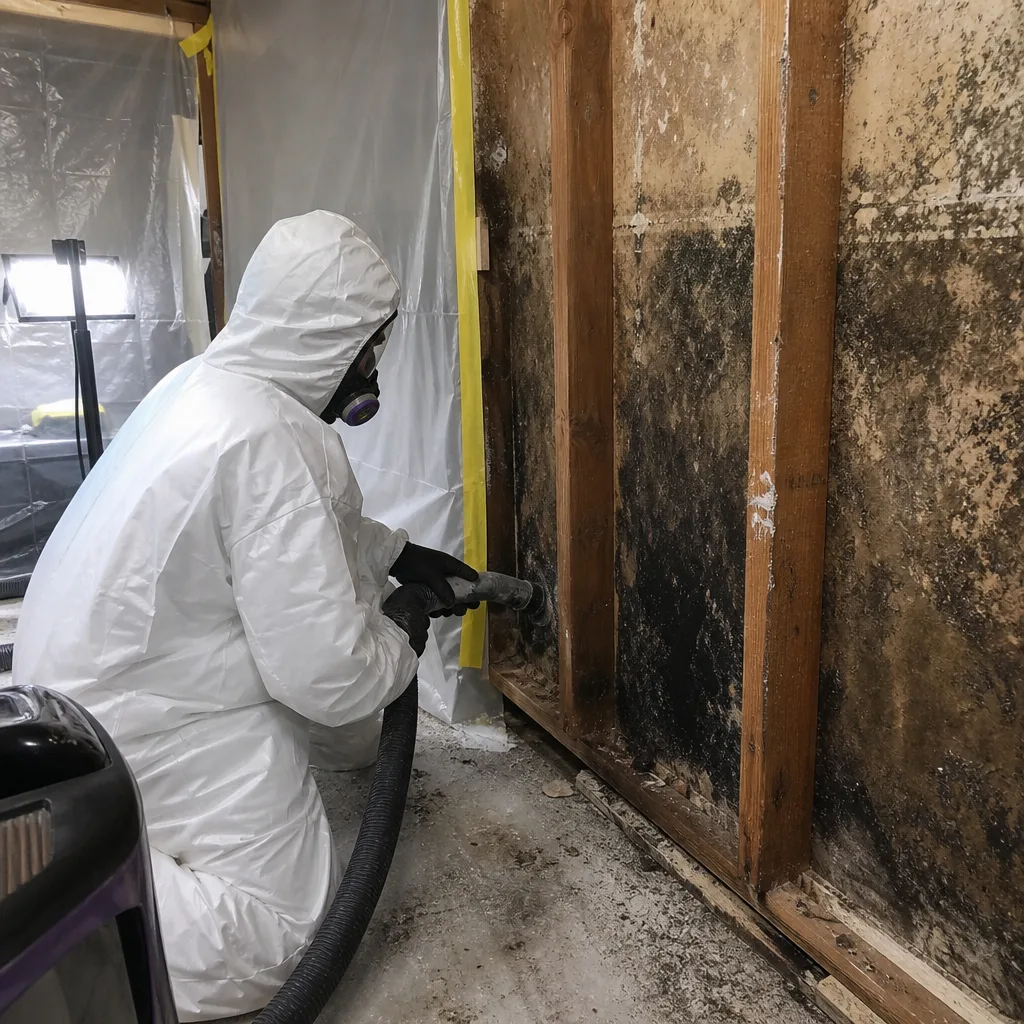
Emergency Board-Up & Tarping
Same-day securing of breached openings with plywood, roof tarps, and temporary weatherproofing. For Lakeside properties adjacent to open chaparral, security and weather protection are immediate priorities, not next-day scheduling items. We maintain 4×8 and 5×8 plywood inventory for standard residential openings plus custom cuts for irregular ranch-home window sizes.
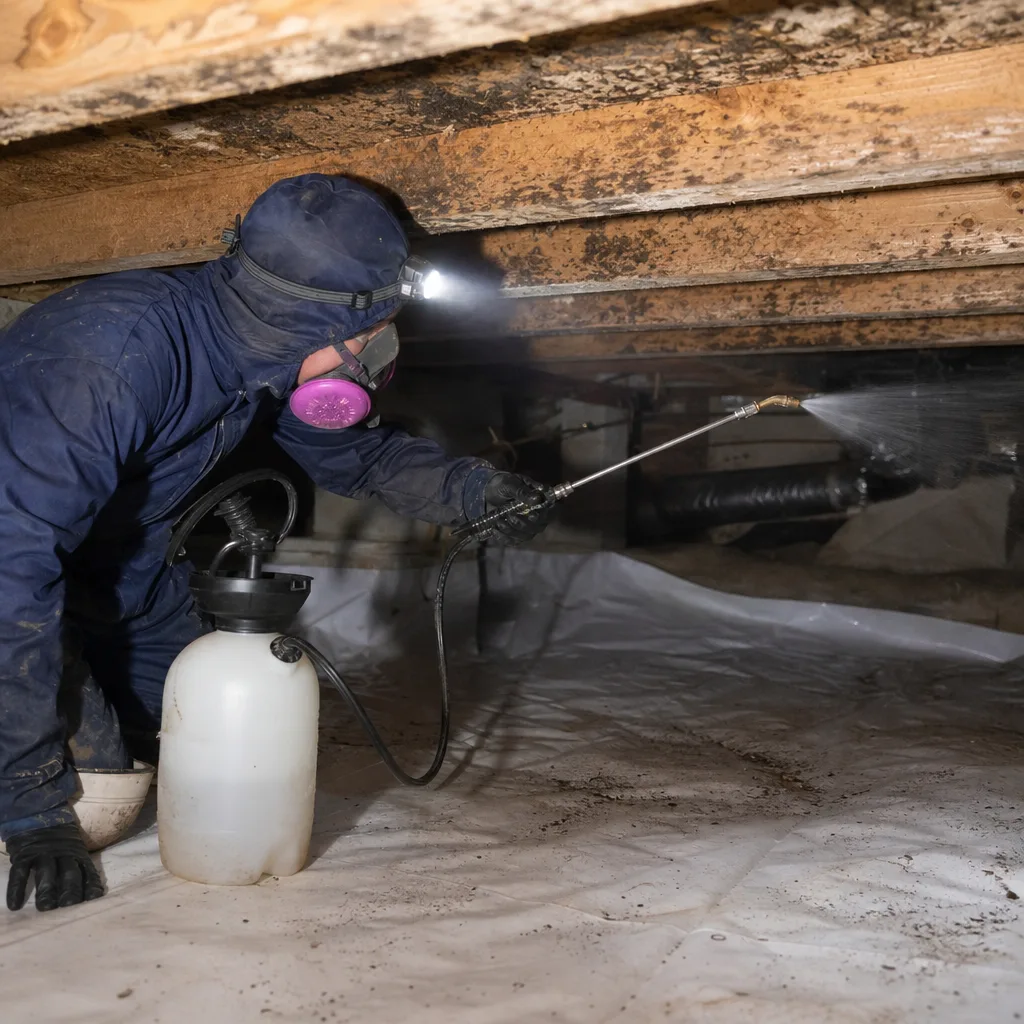
What happens when you call
- 1
A real person answersNo phone trees - you reach a local pro.
- 2
You get an upfront price rangeHonest numbers before anyone is dispatched.
- 3
A background-checked tech heads outLicensed & insured, dispatched right away.
- 4
You approve before work beginsNothing starts until you say go.
Fire & Smoke Damage Restoration Costs in Lakeside, CA
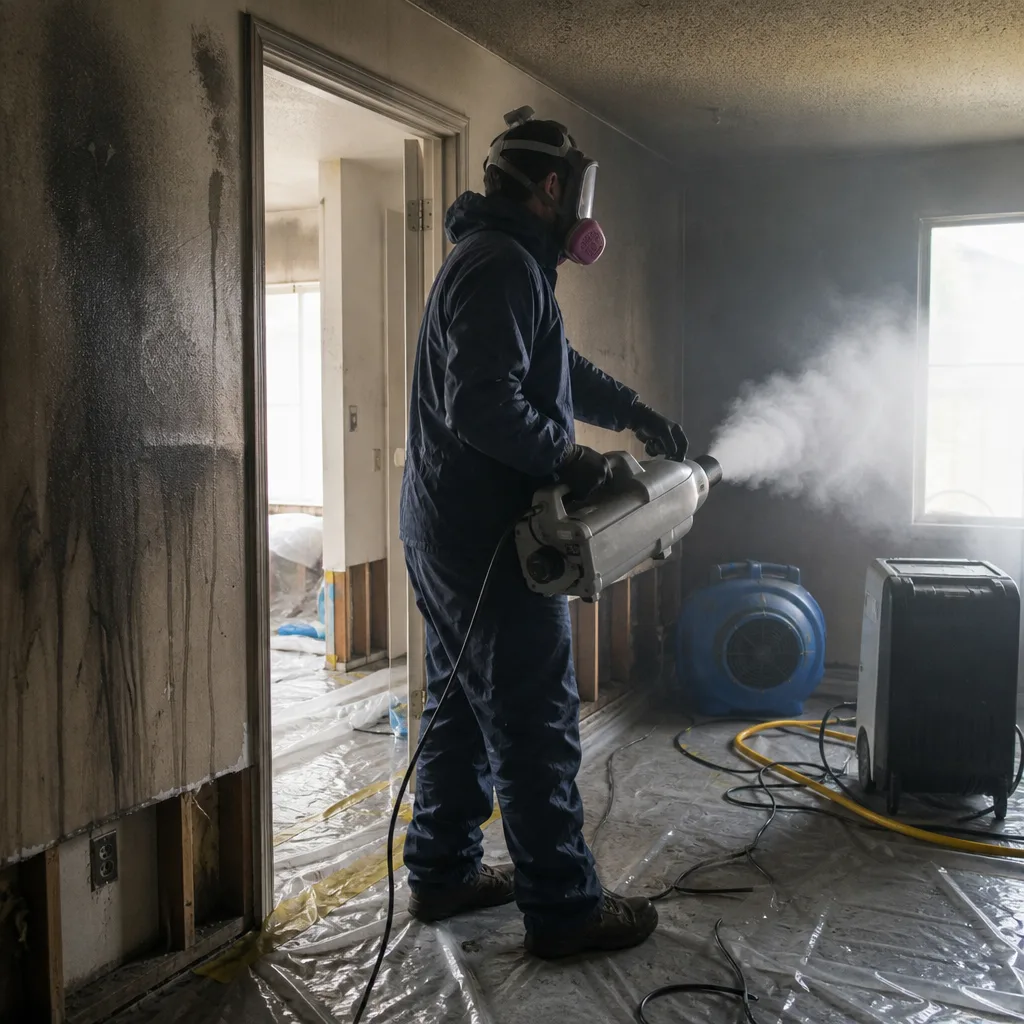
Light smoke infiltration remediation in Lakeside runs $3,200-$6,800 for a standard single-family home, covering HEPA cleaning, surface treatment, and odor neutralization. Moderate damage with structural charring and water intrusion from suppression typically ranges $8,500-$14,000, including selective demolition, drying, and rebuild of affected assemblies. Heavy damage with structural compromise starts at $15,000 and extends to $45,000+ for full reconstruction.
What moves the price: square footage affected, soot residue type (protein residue requires more labor hours than dry carbon), accessibility for equipment (steep chaparral lots cost more in labor), and whether the fire-then-flood sequence has introduced secondary water and mud damage. Insurance typically covers direct fire and smoke damage plus reasonable mitigation; our written scope identifies coverage-eligible vs. non-covered items before work begins. Haven Standard, Clause 1: the price you approve is the price you pay.
Call (858) 428-2364 for a free visual inspection and written estimate. We also review competitor quotes at no charge.
We Also Serve Cities Near Lakeside
Our crews respond throughout eastern San Diego County, including Lakeside neighbors: Santee to the west, El Cajon to the south, La Mesa to the southwest, and Spring Valley to the southeast. Each city’s building stock, fire risk profile, and claim documentation requirements differ; our estimates reflect those local conditions.
Serving Lakeside, CA - Our Local Coverage Area
We’re based in the Lakeside area and know this community well. Use the map below to see our service coverage - if you’re nearby, we can almost certainly help.
Lakeside Fire & Smoke Damage Restoration Questions, Answered
Why do Lakeside homes need a different smoke-damage approach than coastal San Diego properties?
Lakeside’s combination of pre-code wood-shake roofing, Santa Ana wind-driven wildfire smoke, and 10-15°F higher temperatures creates smoke infiltration patterns that coastal properties rarely experience, making professional Mold Remediation in Lakeside essential when moisture follows smoke damage. Smoke pushes deep into attic spaces through vent gaps, then re-emerges weeks later as temperatures rise. Our protocol includes attic void testing and vapor pressure verification that coastal templates often skip. Call (858) 428-2364 for an inspection that addresses Lakeside-specific conditions.
What is the ‘fire then flood’ cycle I keep hearing about in Lakeside?
It’s a sequential loss pattern unique to Lakeside’s El Monte Valley geography. A wildfire denudes chaparral slopes above the valley; winter rains then hit hardened soil that sheds water instantly, sending debris flows into homes that survived the fire. We document pre-rain crawlspace and garage conditions during fire restoration so that subsequent mud intrusion is classified as part of the original claim, not a new loss with a separate deductible. Call (858) 428-2364 if your property has experienced either phase.
Can you board up my Lakeside home quickly if a wildfire damages windows and leaves it open to the elements?
Yes, same-day board-up is standard on every fire response, typically completed within two hours of arrival. For Lakeside properties backing open chaparral, security and weather protection are prioritized immediately. We carry plywood inventory for standard and irregular window sizes common in older ranch construction. Call (858) 428-2364 for emergency dispatch.
My Lakeside house is on a septic system and well water-does that change how you handle fire-damage restoration?
It affects water-damage components of fire restoration, particularly when suppression water or subsequent debris-flow intrusion enters the system. We coordinate with San Diego County environmental health for any septic system assessment needs and document well-water testing requirements in our scope. This does not change our fire-damage cleaning protocols, but it does affect how we classify and document water-related losses for your insurer. Call (858) 428-2364 for a scope that addresses your property’s specific systems.
How do you prevent smoke odor from coming back after you’ve cleaned a fire-damaged Lakeside home?
We verify neutralization with vapor pressure differential testing, not visual inspection or smell tests. For Lakeside’s wood-shake roof homes, we inspect and treat attic spaces where smoke compounds hide in insulation and framing. If odor reappears within 365 days, Haven Standard warranty coverage applies. Call (858) 428-2364 for documentation of our verification protocol.
How fast can your crew actually get to my Lakeside property?
Our commitment is 45 minutes from dispatch confirmation to truck arrival at Lakeside addresses, measured and documented. Live answer 24/7 means no voicemail delays. During major Santa Ana wind events with multiple simultaneous losses, we maintain priority queue by life safety and structural stability. Call (858) 428-2364 to confirm current availability.
Will my insurance cover the full cost of fire and smoke restoration?
Direct fire and smoke damage is almost always covered under standard homeowners policies, with deductibles applying. Coverage disputes arise from documentation gaps, not policy exclusions. Our photo record, drying logs, and line-item scope are built to prevent those disputes. We coordinate directly with your adjuster and provide supplemental documentation if hidden damage emerges. Call (858) 428-2364 for a free inspection and written scope that supports your claim.
What should I do in the first 30 minutes after a fire is extinguished?
Do not enter until fire officials clear the structure. Call (858) 428-2364 for immediate board-up and stabilization. Do not attempt to clean soot yourself; improper cleaning drives residues deeper and can void insurance coverage for subsequent professional remediation. If safe to do so from outside, photograph visible damage through windows for initial documentation. Our crew will handle systematic photo documentation upon arrival.
Fire damage in Lakeside demands a restoration approach shaped by this community’s specific geography, housing stock, and loss patterns. We responded to a post-Cedar Fire-era ranch home off Julian Avenue in Lakeside where a fast-moving brush fire had pushed smoke through the attic vents and cracked two window panes from radiant heat. Our crew set up containment, used air movers and a Dri-Eaz dehumidifier to stabilize the interior while we performed soot removal on the tongue-and-groove ceiling and treated the charred sill with an antimicrobial. The homeowner was especially relieved that we boarded up the broken windows the same afternoon, since the property backs up to open chaparral and security was a concern.
That documentation-first approach, built by a former claims adjuster who founded Back to Dry Restoration in 2011, is what separates payable claims from denied ones. Twelve thousand homes restored. Every one with a written price before work started. Every one with a photo record when the crew left.
Call (858) 428-2364 for emergency dispatch or to schedule a free inspection. Estimates are free. Second opinions on competitor quotes are free. The Haven Standard applies to every job.
Written by Alicia Brennan, Owner at Back to Dry Restoration, serving Lakeside since 2011.