

Free visual inspection and a written scope of work before any mitigation begins - photos, moisture readings, and drying logs go in your claim file
The scope we write is the scope we bill. Anything new gets shown to you, in writing, before we touch it.
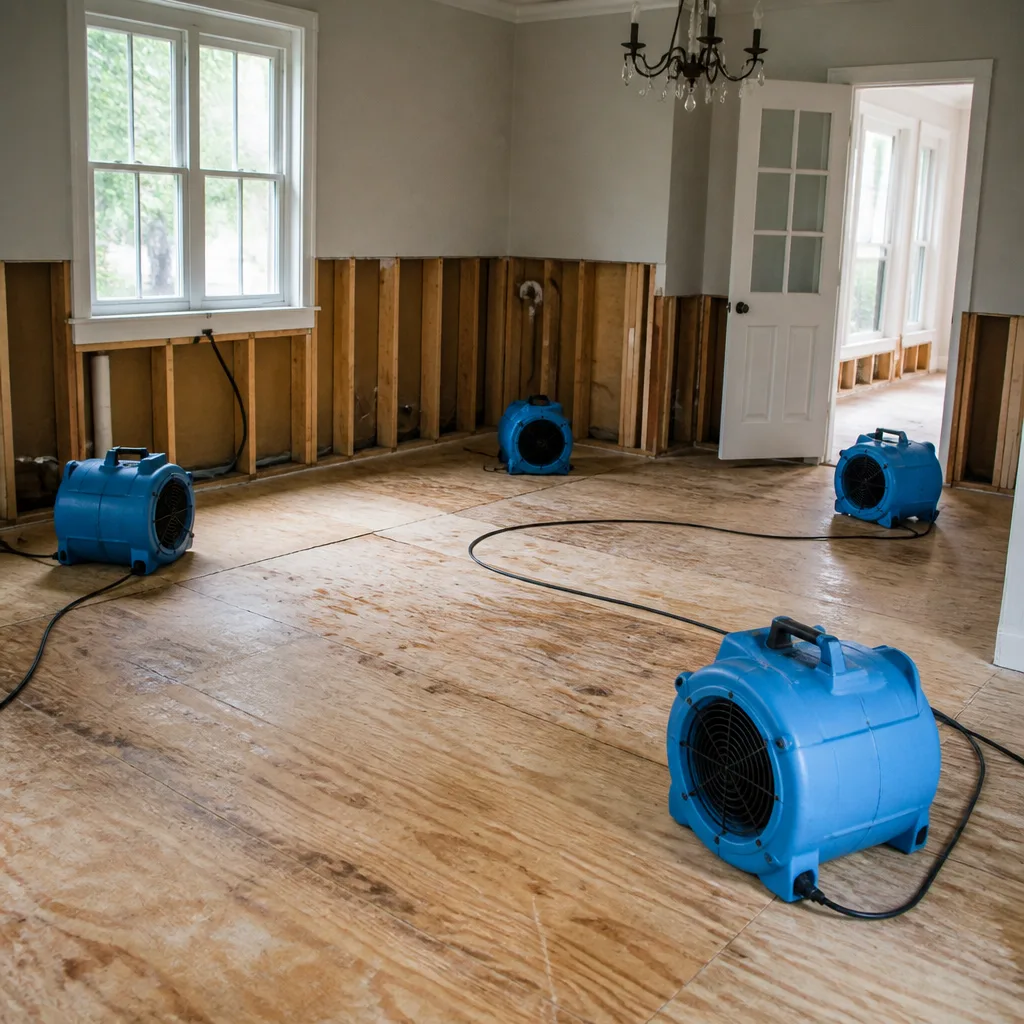
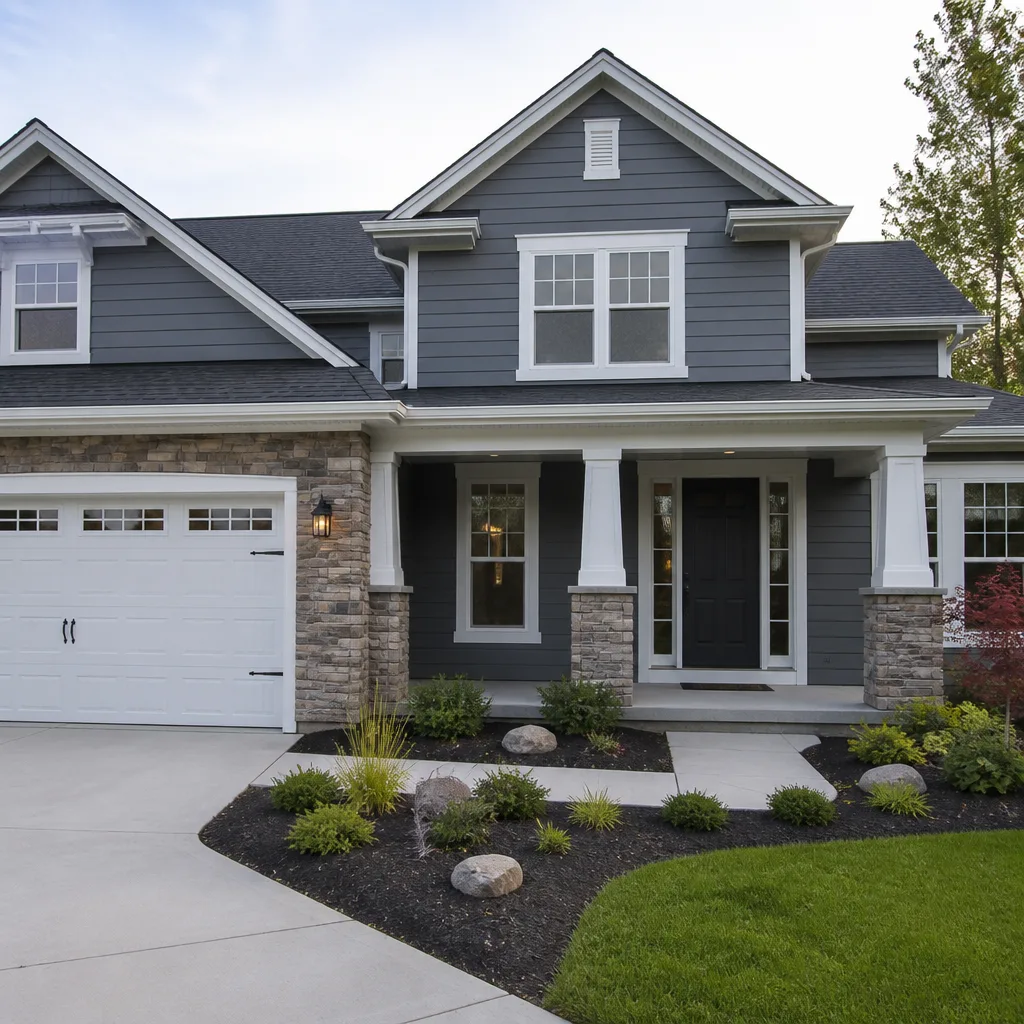
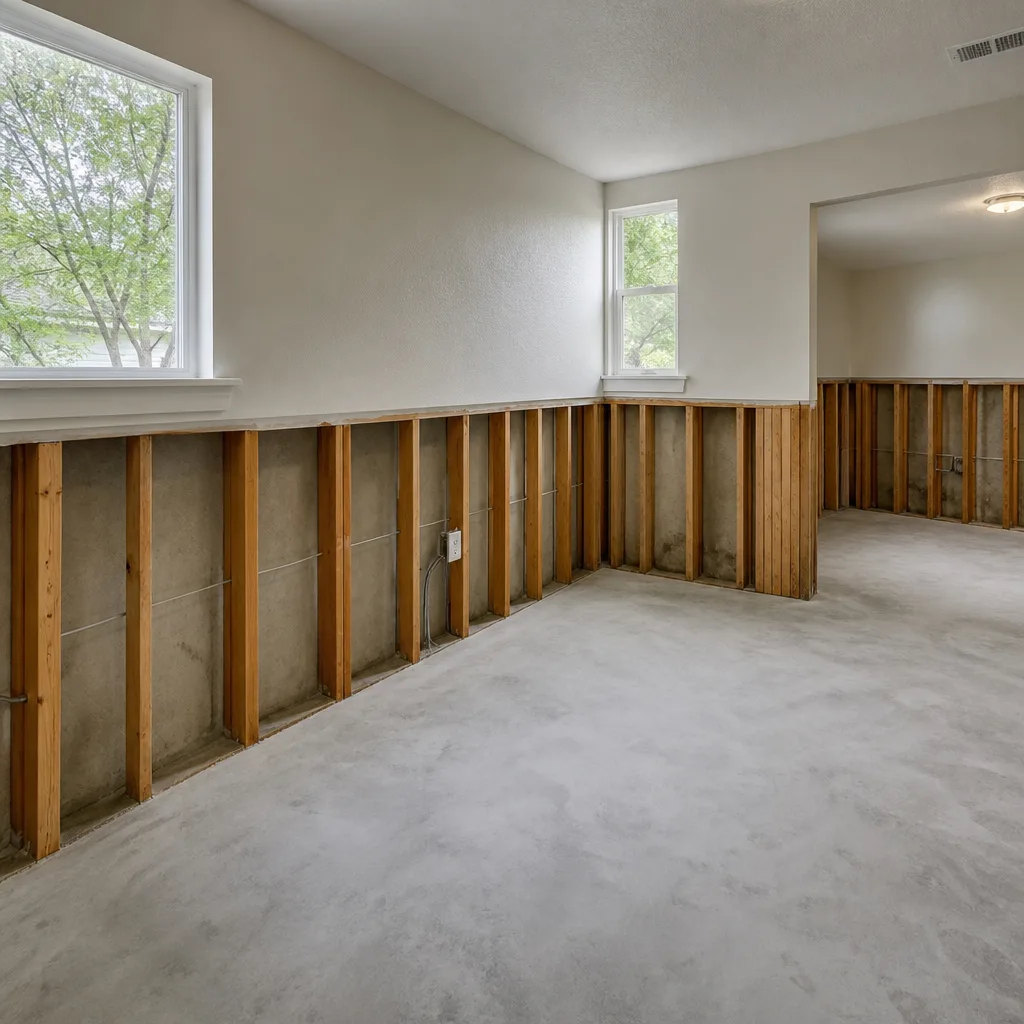
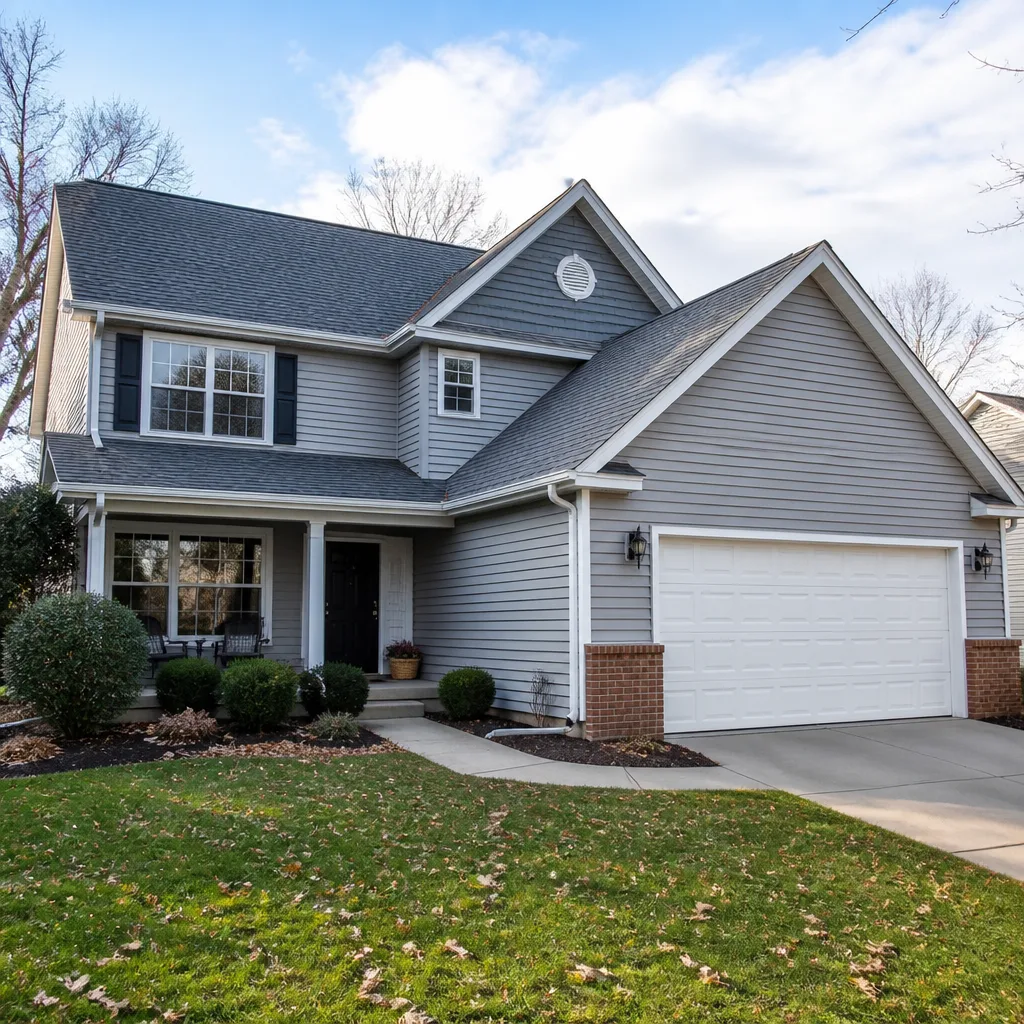
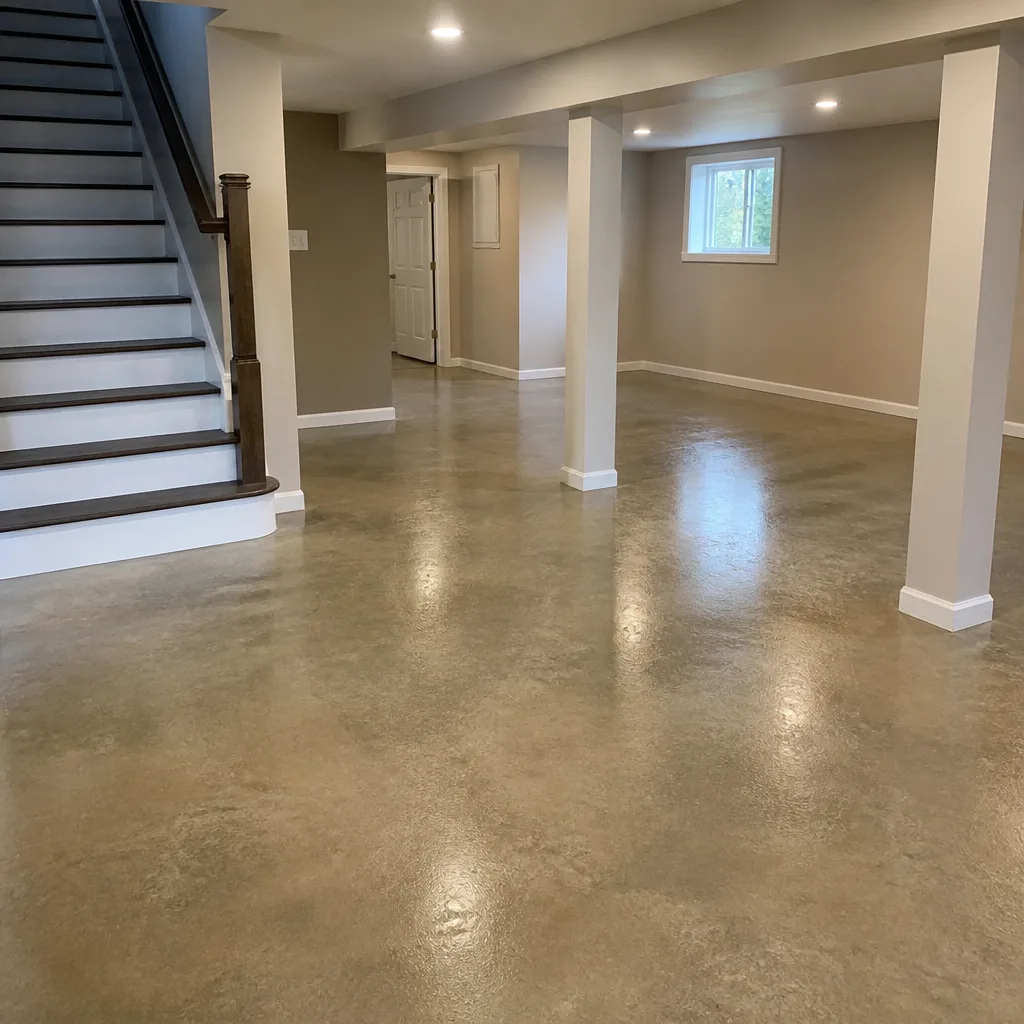

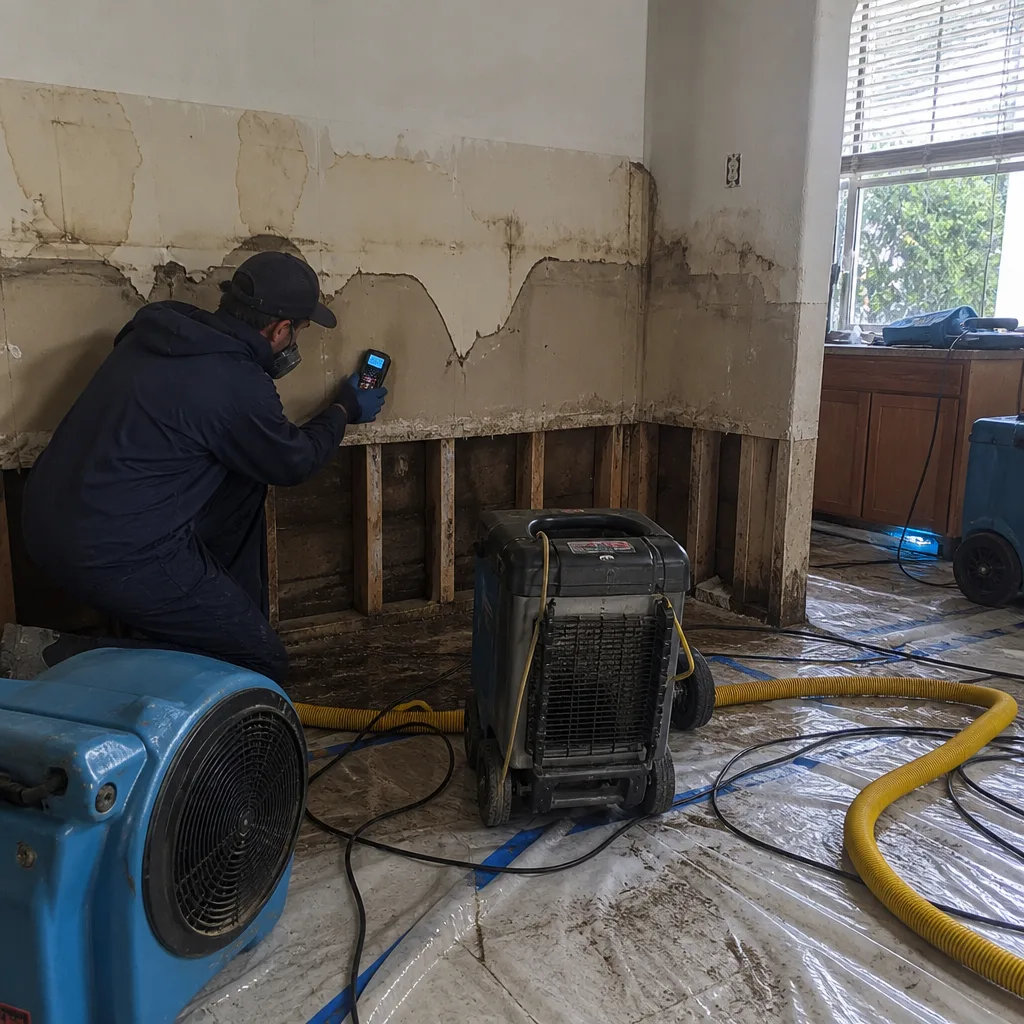 Before
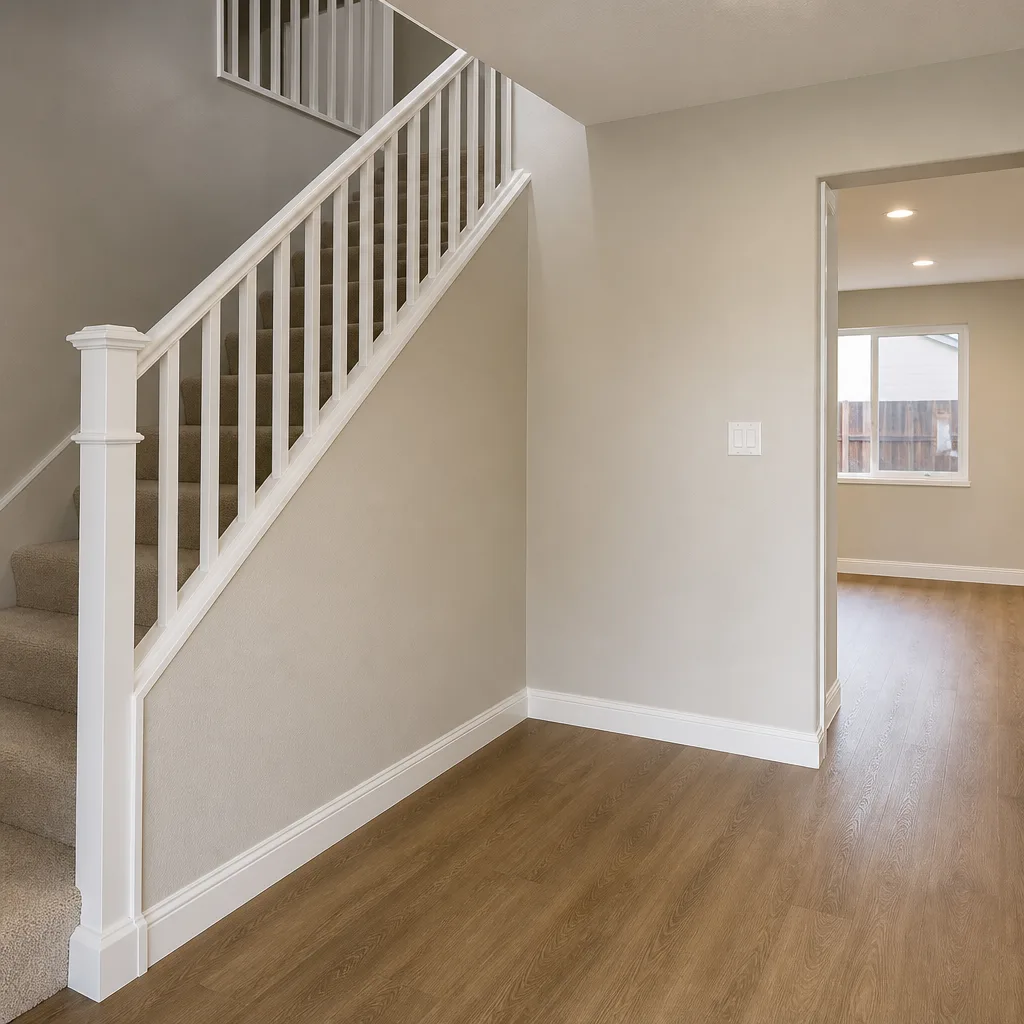 After
After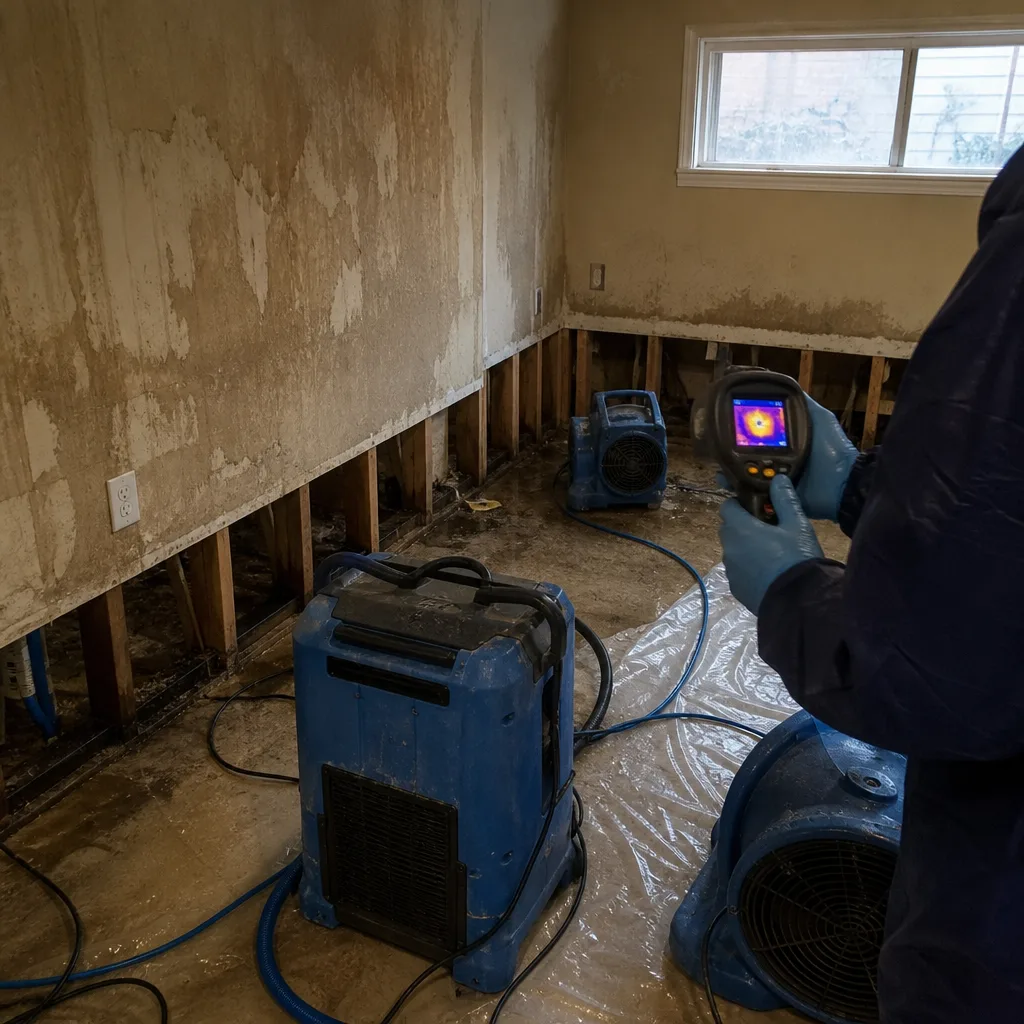 Before
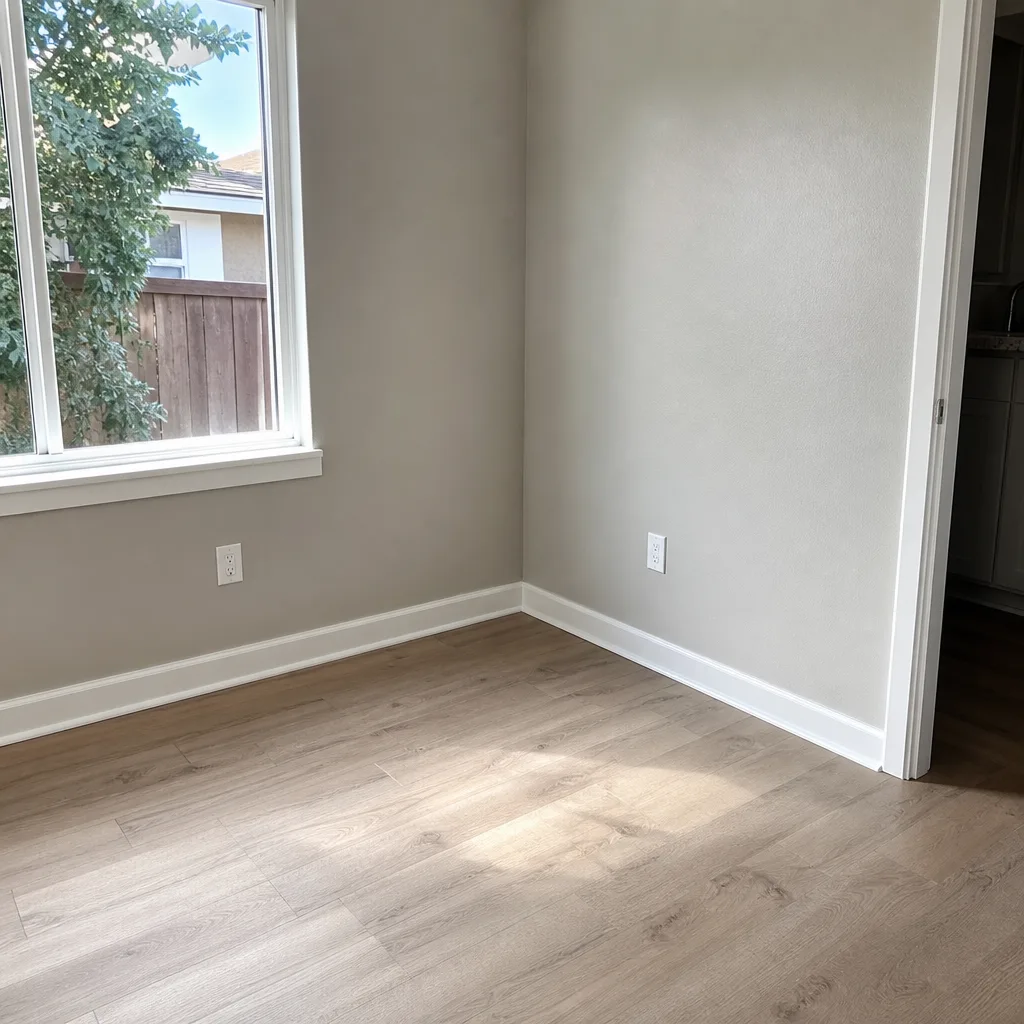 After
After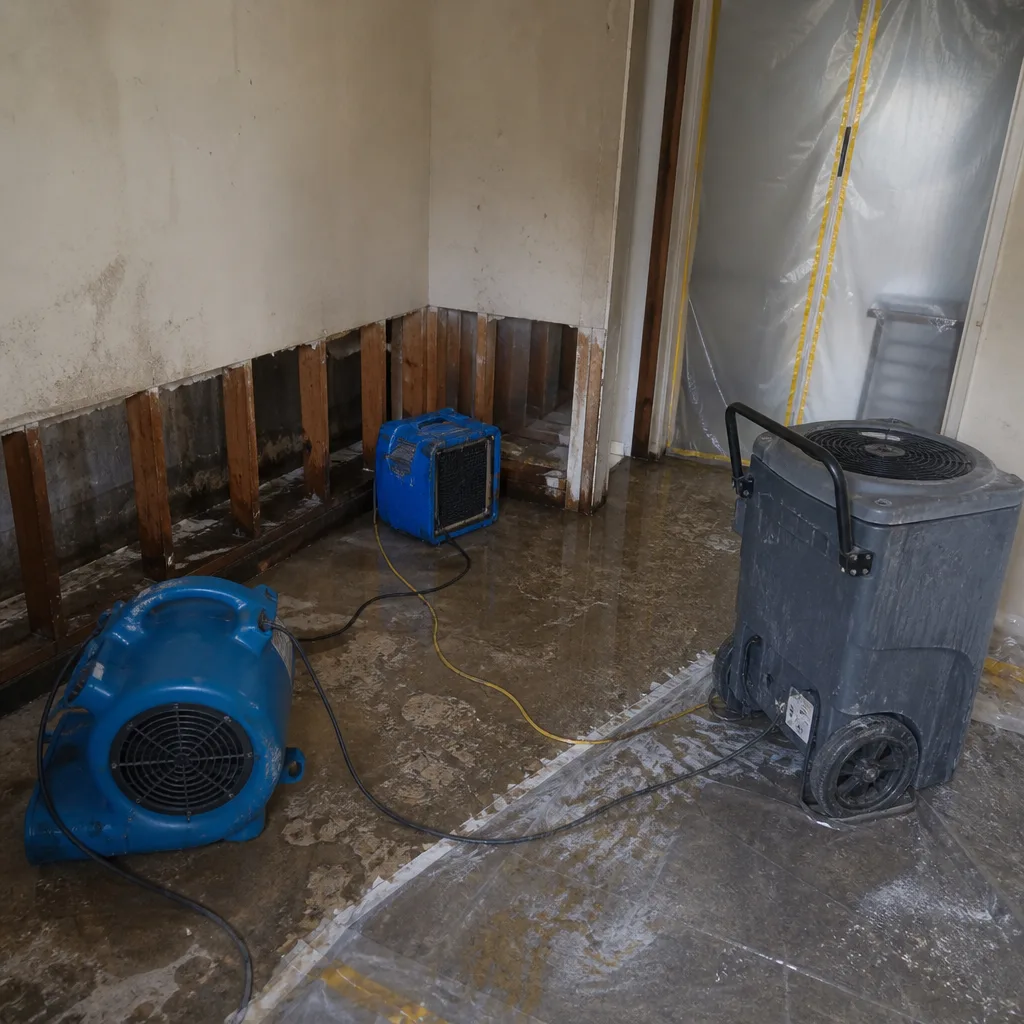 Before
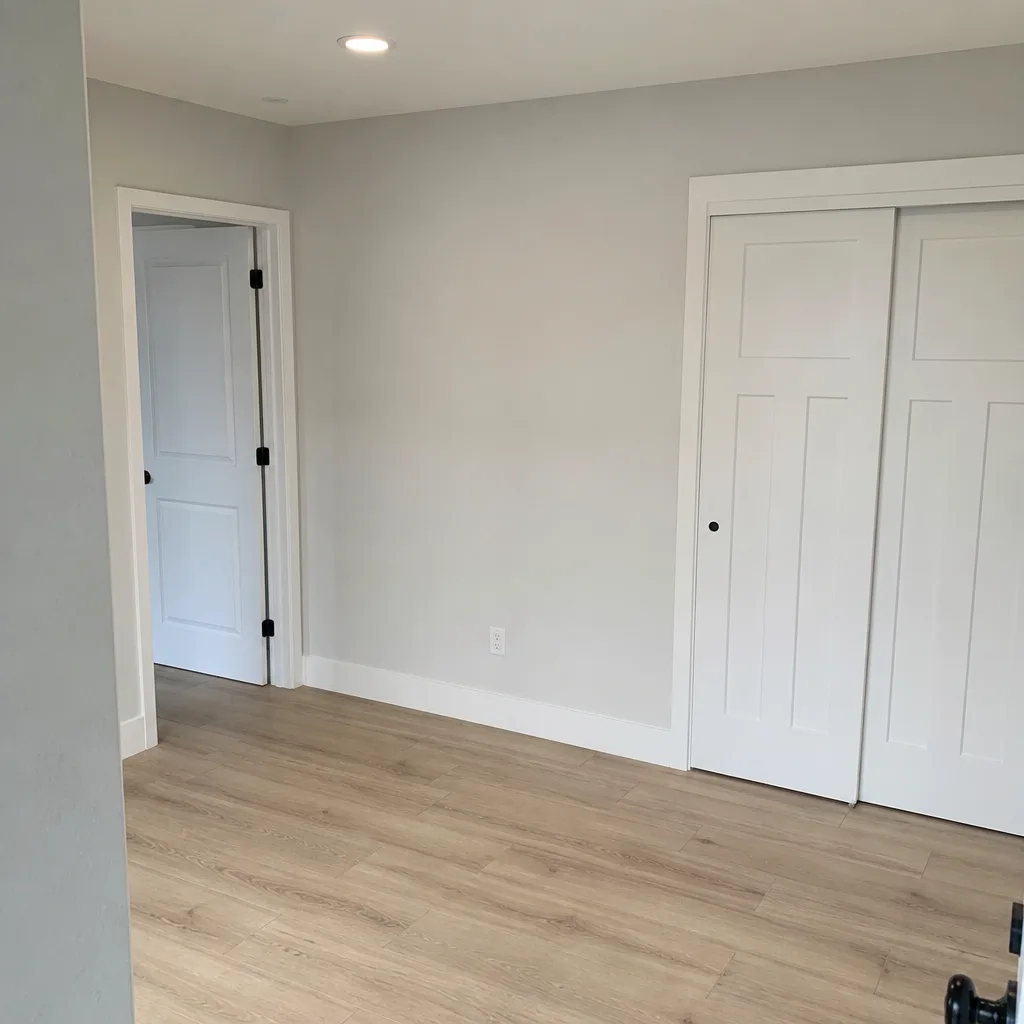 After
After24/7 Emergency Mold Remediation in El Cajon
Call (858) 428-2364 now and a live person answers. We dispatch crews across El Cajon within 45 minutes of your call, including to the older stucco corridors off Main Street, the rental blocks near Ballantyne Street, and the hillside homes above Fletcher Parkway. Mold does not wait for business hours. In El Cajon’s valley heat, a slab leak or rainwater intrusion that would still be a manageable drying job in Pacific Beach can colonize mold in 24-48 hours. The first hour determines whether we are containing a contained cavity or remediating an entire wall system. We arrive with moisture meters, thermal imaging, and containment materials already on the truck. Every visit starts with a free visual inspection and ends with a written scope before any work begins.
Understanding Mold Remediation Severity in El Cajon Properties
We classify mold contamination by affected square footage, material porosity, and the category of water that initiated growth. Category 1 water, a clean supply line break, typically produces limited colonization on non-porous surfaces like tile or sealed concrete. Category 2 water, from washing machines or dishwasher drains, carries enough organic load to accelerate mold growth on porous materials like drywall and carpet pad. Category 3 water, sewage or ground intrusion, demands full removal of affected porous materials and aggressive antimicrobial treatment.
El Cajon’s housing stock complicates every category. The post-WWII single-family homes and 1950s-1970s apartment complexes that dominate this city were built with stucco exteriors and minimal vapor barriers. Water that penetrates these walls has nowhere to dry. We regularly find wall cavities at 28% wood moisture equivalent behind intact tile in 1960s duplexes near Lexington Avenue, the paper facing on drywall already hosting black mold while the surface still looks clean. Tertiary drying, the final phase where we use vapor pressure differential to pull bound moisture from deep inside structural materials, takes longer here than in newer coastal builds because there is no exterior drainage plane to assist evaporation. Our crews document every reading, every day, until the cavity reads below 16% WME and passes clearance testing.
Why El Cajon Property Owners Choose DryMark Restoration El Cajon
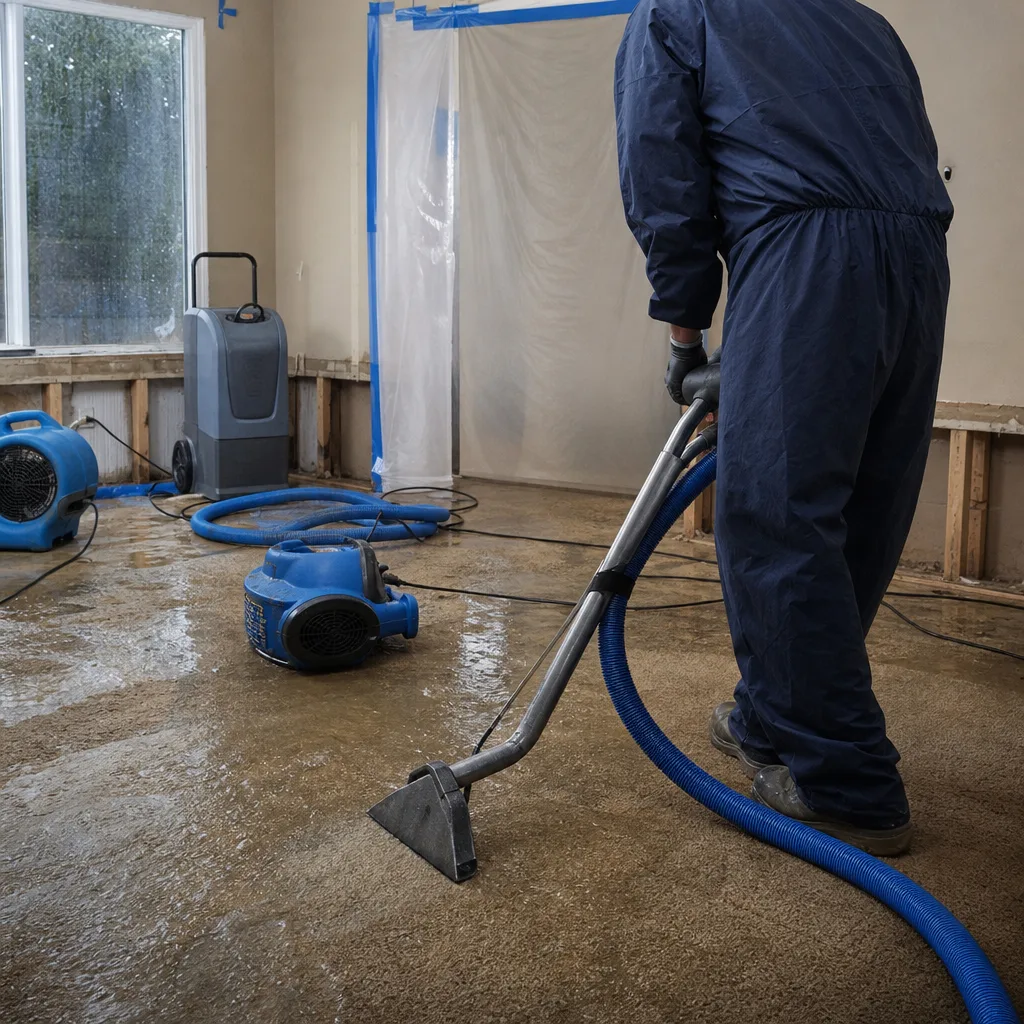
- 45-minute response commitment to any address inside El Cajon city limits, including the apartment corridors along Mollison Avenue and the hillside developments above Jamacha Boulevard.
- 24/7 live answer by a real person, never an automated system or voicemail tree - emergency lines are staffed around the clock because mold colonies do not observe business hours.
- IICRC-certified crews holding WRT (Water Damage Restoration Technician), AMRT (Applied Microbial Remediation Technician), and FSRT (Fire and Smoke Restoration Technician) credentials, with license numbers verified before any technician enters your property.
- Free visual inspection on every call, including moisture mapping of suspect wall cavities and thermal imaging to locate hidden water sources behind stucco.
- Direct insurance billing with photo-documented estimates, daily drying logs, and room-by-room moisture readings that turn restoration invoices into payable claims.
- One team from containment to reconstruction - no handoffs between remediation and rebuild crews, no gaps in documentation, no disputed scope items.
 Before
 After
AfterOur Mold Remediation Process
1. Inspection & Assessment
We moisture-map every suspect surface with pin and pinless meters, then confirm with thermal imaging. In El Cajon’s 1960s stucco rentals, we specifically probe behind tile and baseboards where minimal vapor barriers trap water. You receive a written scope with line-item pricing before any work begins, per Haven Standard, Clause 1.
2. Containment & Air Filtration
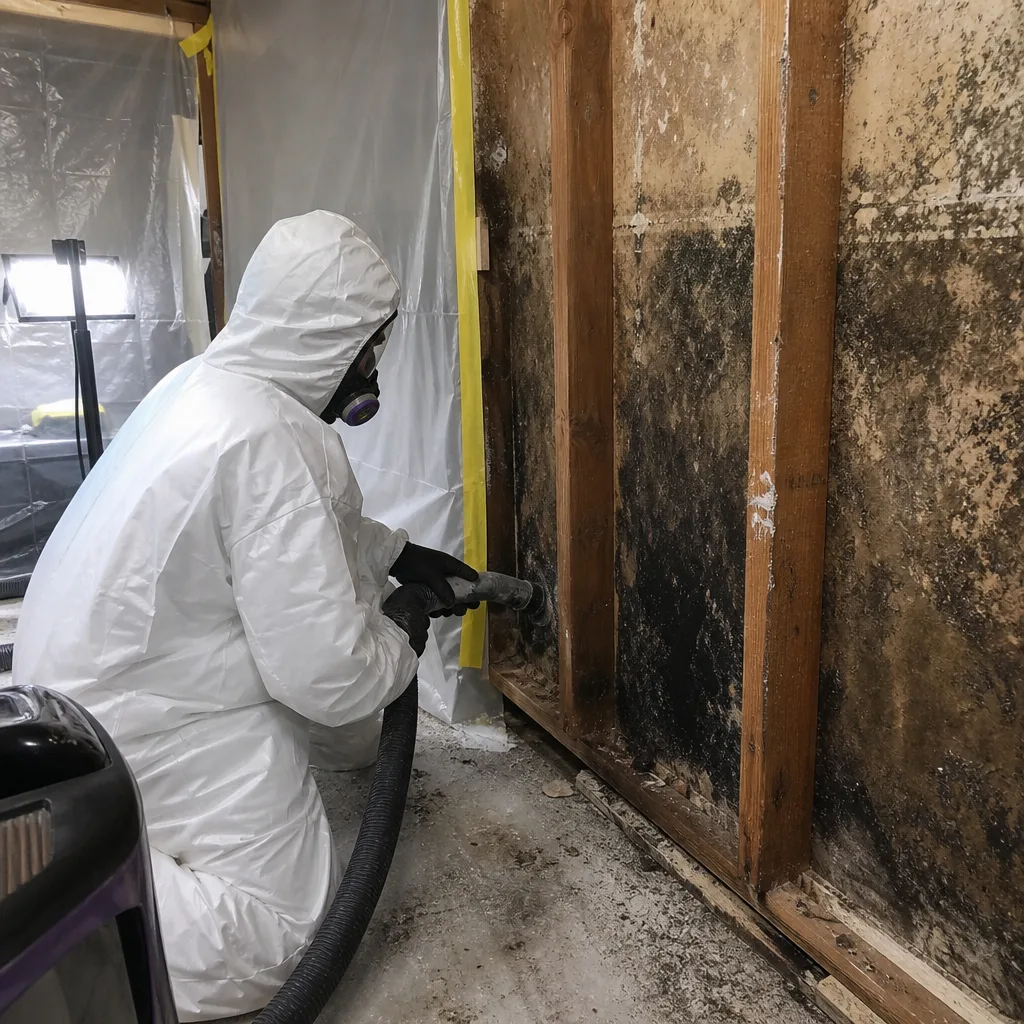
We establish negative-pressure containment with 6-mil polyethylene barriers and run HEPA air scrubbers at 4-6 air changes per hour. This prevents cross-contamination into adjacent units, a critical concern in El Cajon’s dense multi-family housing stock.
3. Drying & Dehumidification
We deploy Dri-Eaz and Phoenix LGR dehumidifiers alongside Injectidry cavity-drying systems to pull moisture from inside wall voids. In El Cajon’s valley heat, we run continuous psychrometric monitoring because ambient temperatures above 85°F accelerate mold growth even as they speed surface evaporation.
4. Cleaning & Antimicrobial Treatment
Non-porous surfaces receive HEPA vacuuming followed by EPA-registered antimicrobial application. Porous materials exceeding safe moisture thresholds are removed and disposed of per RIA and IFA protocols, with photo documentation at every stage.
5. Smoke-Trap Assessment & Ductwork Inspection
Because El Cajon’s valley topography traps wildfire smoke and ash, we inspect HVAC ductwork and attic insulation on every mold job. Soot particulate in blown-in insulation feeds musty odors that get misdiagnosed as simple mold. We scope the real problem so antimicrobial treatment addresses the complete contamination profile.
6. Clearance Testing & Restoration
Third-party clearance testing confirms airborne spore counts at or below outdoor baseline levels. Only then do we begin reconstruction, matching original finishes and providing a 365-Day Done Right Promise backed by The Haven Standard.
Need Emergency Mold Remediation in El Cajon Now?
Crews minutes away, answering live 24 hours a day. The sooner we start, the less it costs.
Working With Your Insurance Company
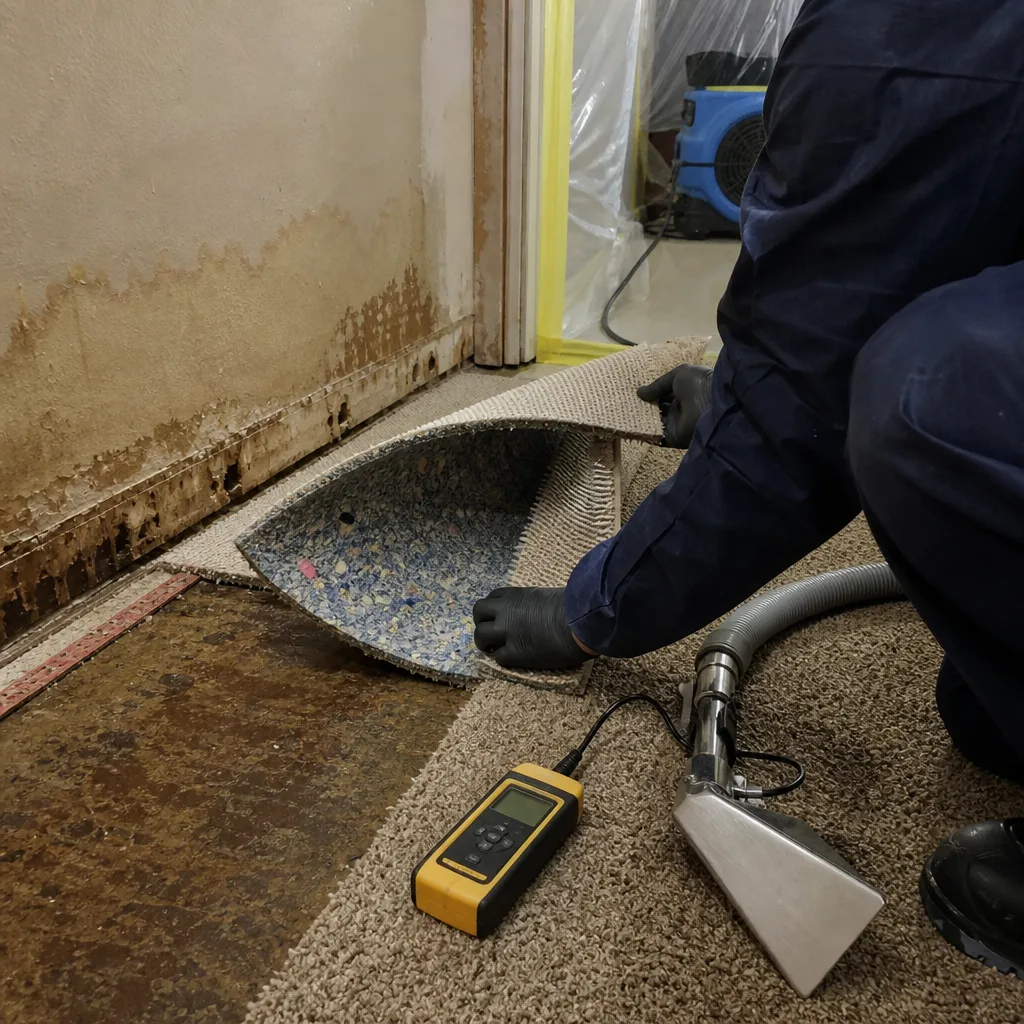
We built our documentation system around what adjusters actually need to approve a claim. From the first hour on site, we photograph every affected room, record moisture readings on a room-by-room grid, and maintain daily drying logs that track temperature, relative humidity, and specific humidity against our drying goals. Our estimates follow industry-standard Xactimate pricing with line-item detail, not lump-sum guesses. We coordinate directly with your adjuster, providing the photo record, moisture logs, and written scope as a single documented package. Most El Cajon homeowners never handle the back-and-forth themselves.
What We Provide Your Insurer
- Thorough documentation of the loss
- Photos of all damage, room by room
- Moisture readings and drying logs
- A detailed, line-item scope of work
- Direct coordination with your carrier
Built for El Cajon’s Loss Calendar
El Cajon’s mold season runs counter to what most San Diego County residents expect. January through March atmospheric river events funnel stormwater off surrounding hillsides into the valley floor, flooding structures with no flood-proofing and no historical precedent for water intrusion. April and May bring the first sustained heat, and any moisture trapped in 1960s stucco walls during winter rains activates mold colonization. June through September, the valley runs 15-20°F hotter than the coast; slab leaks from aging copper or galvanized supply lines in older apartment complexes become mold jobs in 48 hours because the heat, not the water volume, sets our clock. October and November Santa Ana wind events push wildfire smoke deep into the valley, and we see a secondary wave of calls where soot-contaminated HVAC systems and insulation produce musty smells that owners mistake for mold, or actual mold that grows on smoke-deposited organic material inside ductwork. December brings the next rain cycle. We plan our crew rotations and equipment staging around this calendar.
Mold Remediation Across El Cajon’s Neighborhoods
El Cajon’s geography and housing stock create distinct mold risk profiles by area, and our response protocols adapt to each.
Central El Cajon and the Main Street corridor hold the city’s densest concentration of 1950s-1970s multi-family rentals. Deferred maintenance is common, and we regularly respond to Category 2 water upgrades in shared laundry facilities where a washing machine drain backup seeps through minimal vapor barriers into adjacent units. Containment here means protecting multiple tenant spaces while maintaining habitability in non-affected units.
The apartment blocks near Ballantyne Street and Lexington Avenue sit in a low drainage area where winter stormwater pools against slab foundations. We pulled up to a 1962 stucco duplex near this corner after a renter reported a musty smell the landlord blamed on a dirty AC filter. Moisture mapping showed the wall cavity behind the bathroom tile at 28% WME and black mold already climbing the paper facing. Our tech set containment, ran an Injectidry system into the cavity, and logged drying logs against the hallway’s pre-loss condition while the appliance crew pulled category 2 water from the shared laundry slab. Because that unit also sat downwind of the valley’s smoke trap, we scoped the ductwork and attic insulation too, so the tenant’s complaint got fixed as a moisture problem instead of masked as an odor problem.
Hillside homes above Fletcher Parkway and Jamacha Boulevard face different pressures. These 1970s-1990s builds have better vapor barriers but more complex rooflines where Santa Ana wind-driven rain penetrates flashing. We find mold in attic insulation and soffit cavities, often concurrent with smoke particulate from regional fire events that the valley trapped against these eastern slopes.
The corridor toward Gillespie Field and the industrial edge includes mixed commercial-residential properties where aging flat roofs and HVAC package units create chronic condensation issues. Mold here often follows long-term humidity problems rather than acute water events, requiring whole-building moisture and humidity control solutions rather than single-area remediation.
Specialized Mold Remediation Services We Offer in El Cajon
Mold Inspection & Testing
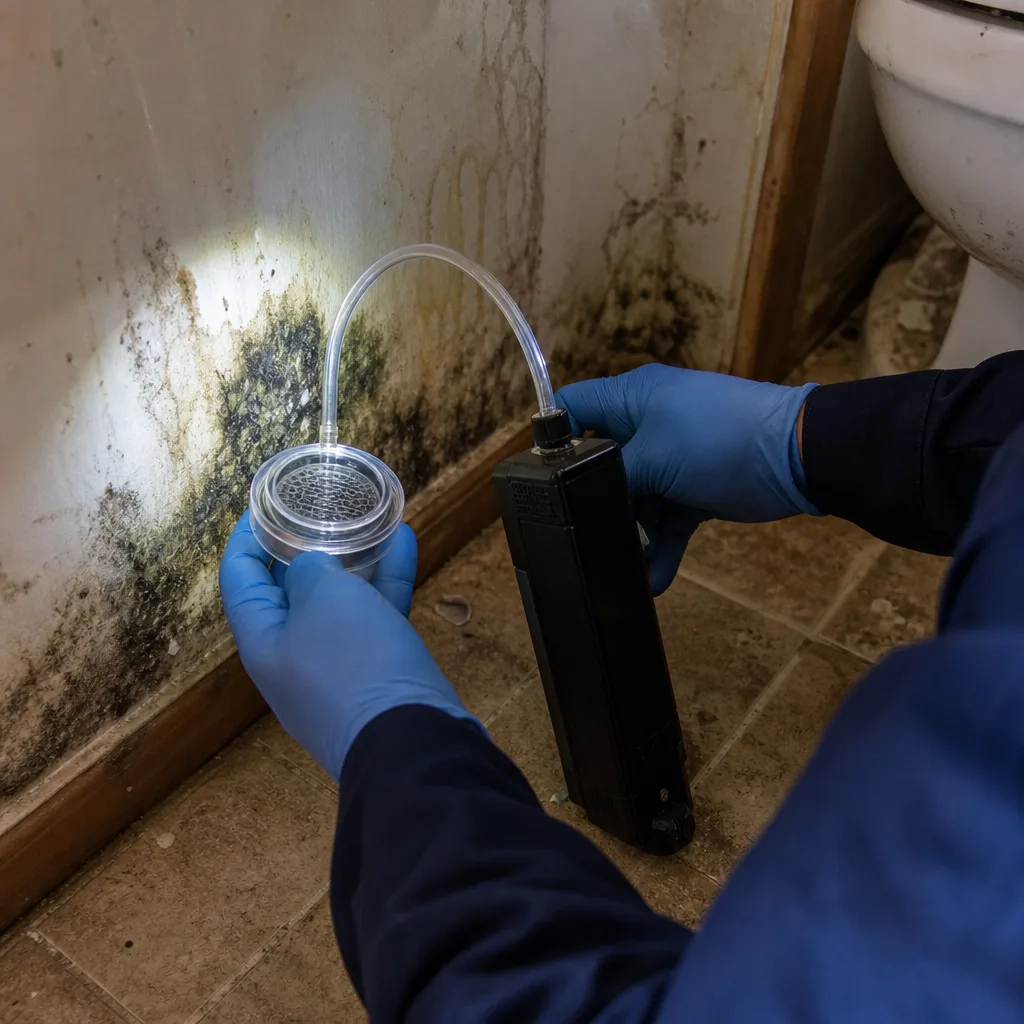
We do not guess. Every inspection includes moisture mapping, thermal imaging, and air sampling analyzed by an independent laboratory. In El Cajon’s 1960s rental stock, we specifically probe wall cavities behind intact tile and baseboards where visual inspection shows nothing. You receive the lab report, the moisture readings, and a written scope with line-item pricing before any remediation begins.
Mold Removal
Removal follows IICRC S520 standards for microbial remediation: containment, negative air pressure, HEPA filtration, and controlled demolition of non-salvageable materials. In El Cajon’s heat, we run dehumidification continuously through removal to prevent spore dispersal into drier areas where they would activate later.
Black Mold Remediation
Stachybotrys chartarum and other toxigenic species require enhanced containment with double-layer polyethylene and dedicated decon chambers for equipment and personnel. We treat these jobs with the same documentation rigor as any other: photo record, moisture logs, and clearance testing before reconstruction.
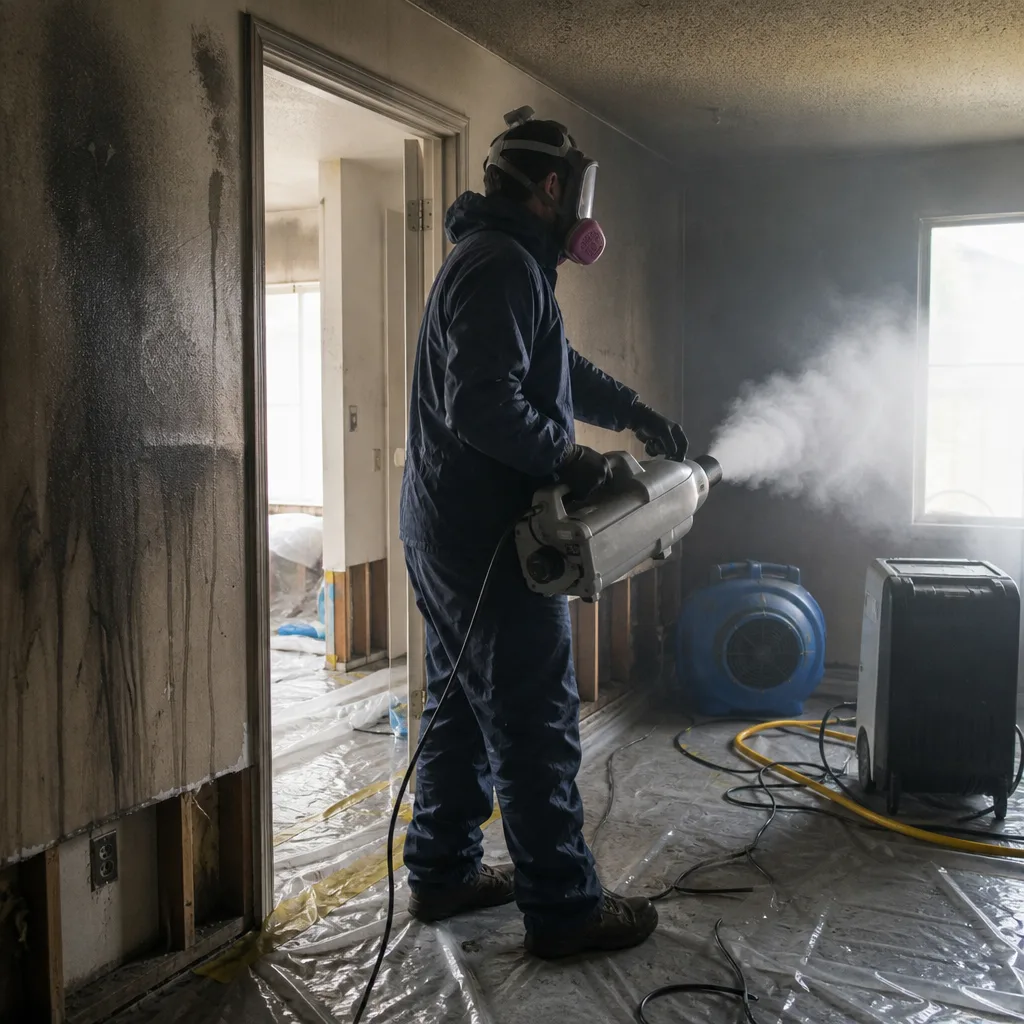
Air Quality Restoration
El Cajon’s smoke-trap geography means we frequently restore air quality after concurrent mold and wildfire smoke events. This requires HEPA scrubbing of particulate load, antimicrobial treatment of organic deposits, and ductwork cleaning or replacement. We scope the complete contamination profile, not just the visible mold.
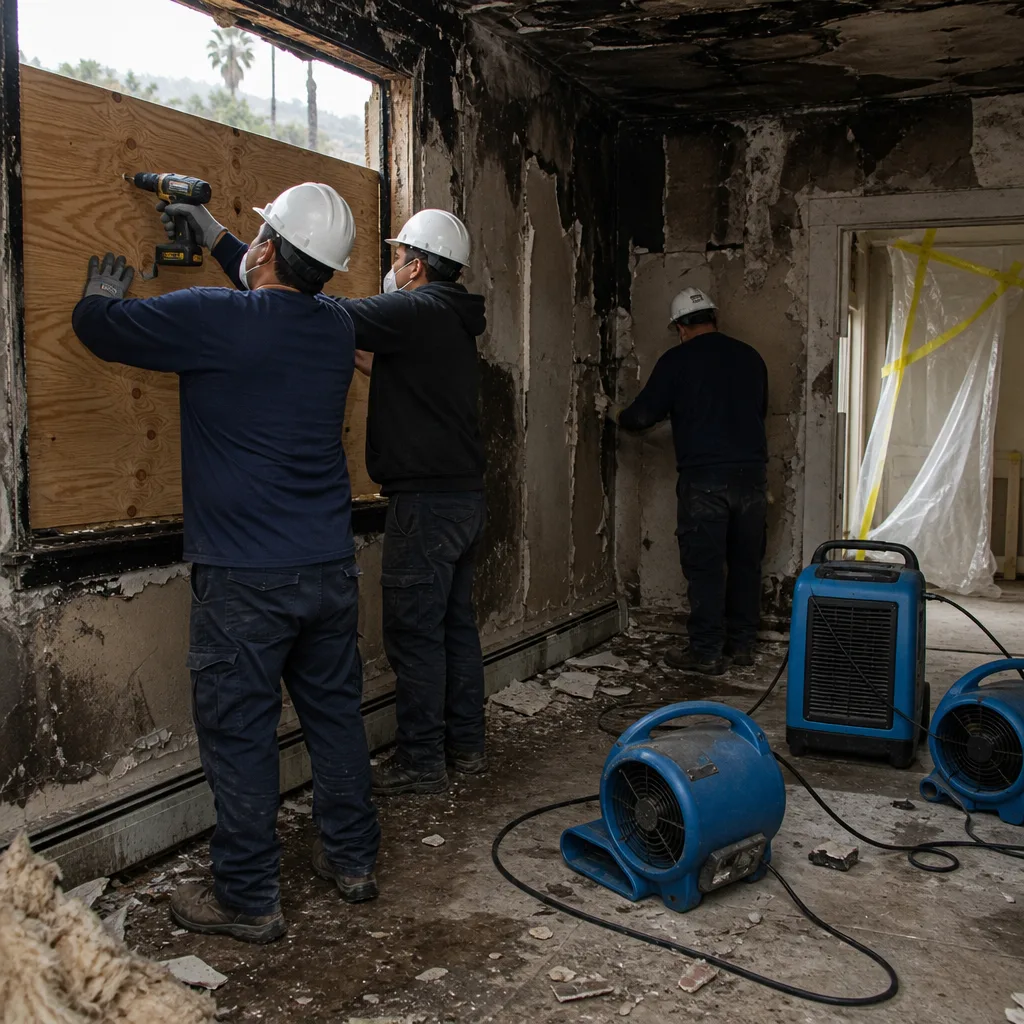
Crawl Space Treatment
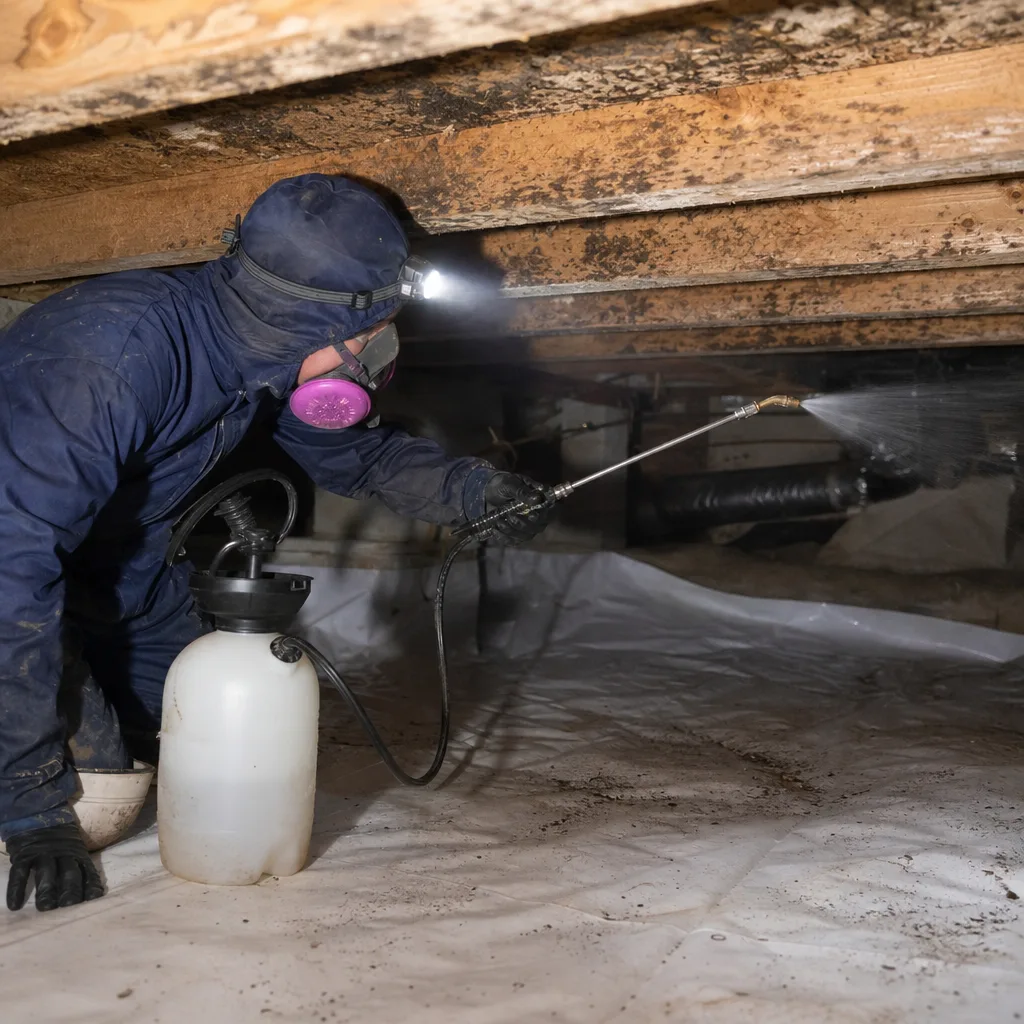
El Cajon’s older homes and hillside builds often have vented crawl spaces where summer heat creates condensation on cooler ductwork and floor joists. We seal and dehumidify these spaces, install vapor barriers where absent, and treat existing mold with containment-appropriate methods. Unlike coastal neighborhoods where marine air moderates crawl space temperatures, El Cajon’s valley heat makes these spaces active mold incubators year-round.
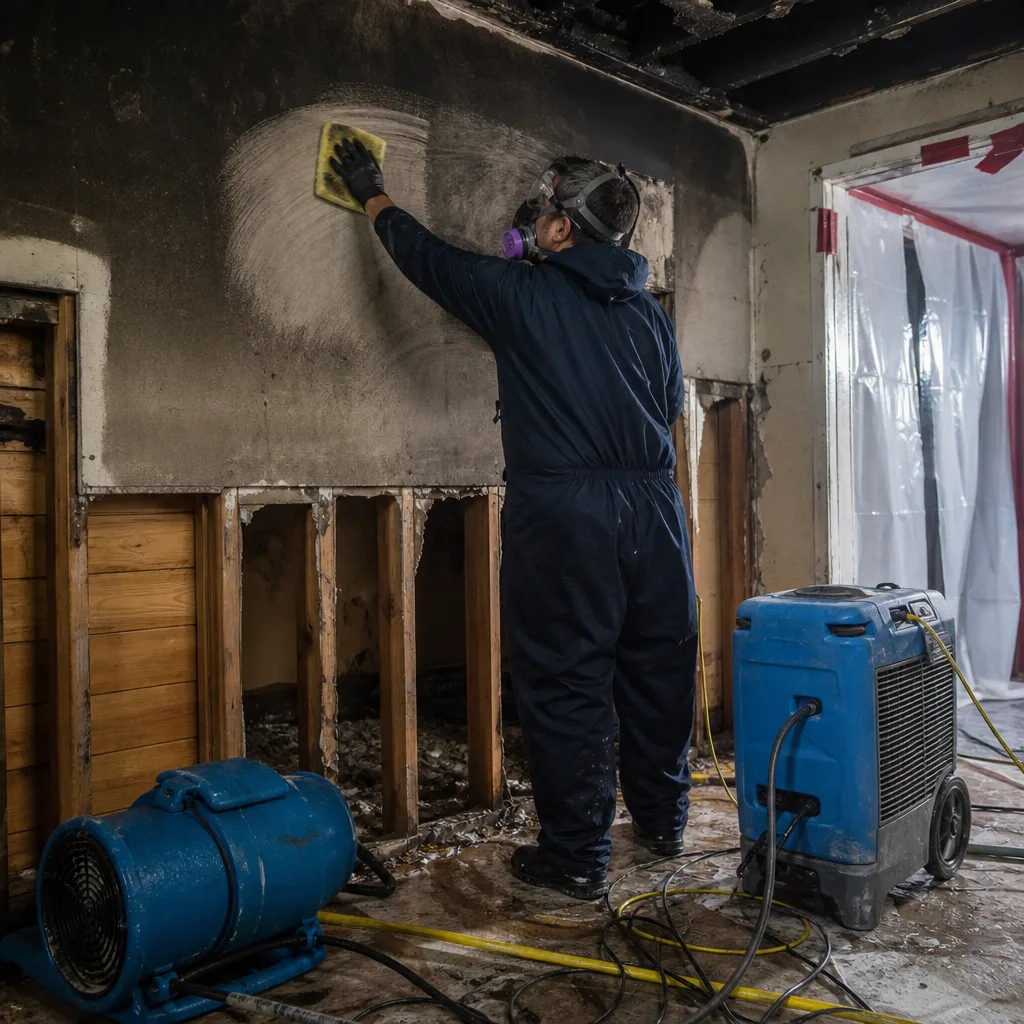
Moisture & Humidity Control
Long-term mold prevention in El Cajon requires managing the valley’s extreme temperature differentials. We install permanent dehumidification, improve ventilation in attic and crawl spaces, and recommend vapor barrier upgrades specific to stucco-over-frame construction. Our goal is drying the structure so thoroughly that mold cannot reestablish.
What happens when you call
- 1
A real person answersNo phone trees - you reach a local pro.
- 2
You get an upfront price rangeHonest numbers before anyone is dispatched.
- 3
A background-checked tech heads outLicensed & insured, dispatched right away.
- 4
You approve before work beginsNothing starts until you say go.
Mold Remediation Costs in El Cajon, CA
Honest pricing for El Cajon’s market:
- Small contained area (under 10 square feet, bathroom or closet): $1,200-$2,800
- Moderate room-level remediation (10-100 square feet, single room with contained water source): $2,800-$6,500
- Whole-room or multi-room with HVAC contamination (100-300 square feet, including ductwork inspection and potential cleaning): $6,500-$14,000
- Large-scale remediation with reconstruction (whole-unit or structural drying in multi-family with deferred maintenance): $14,000-$35,000+
What moves the price: the category of initiating water, the age and porosity of affected materials, whether containment must protect multiple units, and whether smoke-trap ductwork or insulation requires concurrent treatment. Insurance typically covers mold remediation when it results from a covered water loss, but policies vary on mold-specific limits. Our free inspection produces a written scope with firm pricing before you commit, per Haven Standard, Clause 1. Bring a competitor’s written estimate and we will review it at no charge.
We Also Serve Cities Near El Cajon
Our crews respond throughout eastern San Diego County, including Mold Remediation in El Cajon and surrounding communities: Spring Valley to the west, Lakeside to the north, La Mesa to the southwest, and Santee to the northwest. Dispatch and scheduling are coordinated from our San Diego office; crews serve each city locally with the same 45-minute commitment and documentation standards.
Serving El Cajon, CA - Our Local Coverage Area
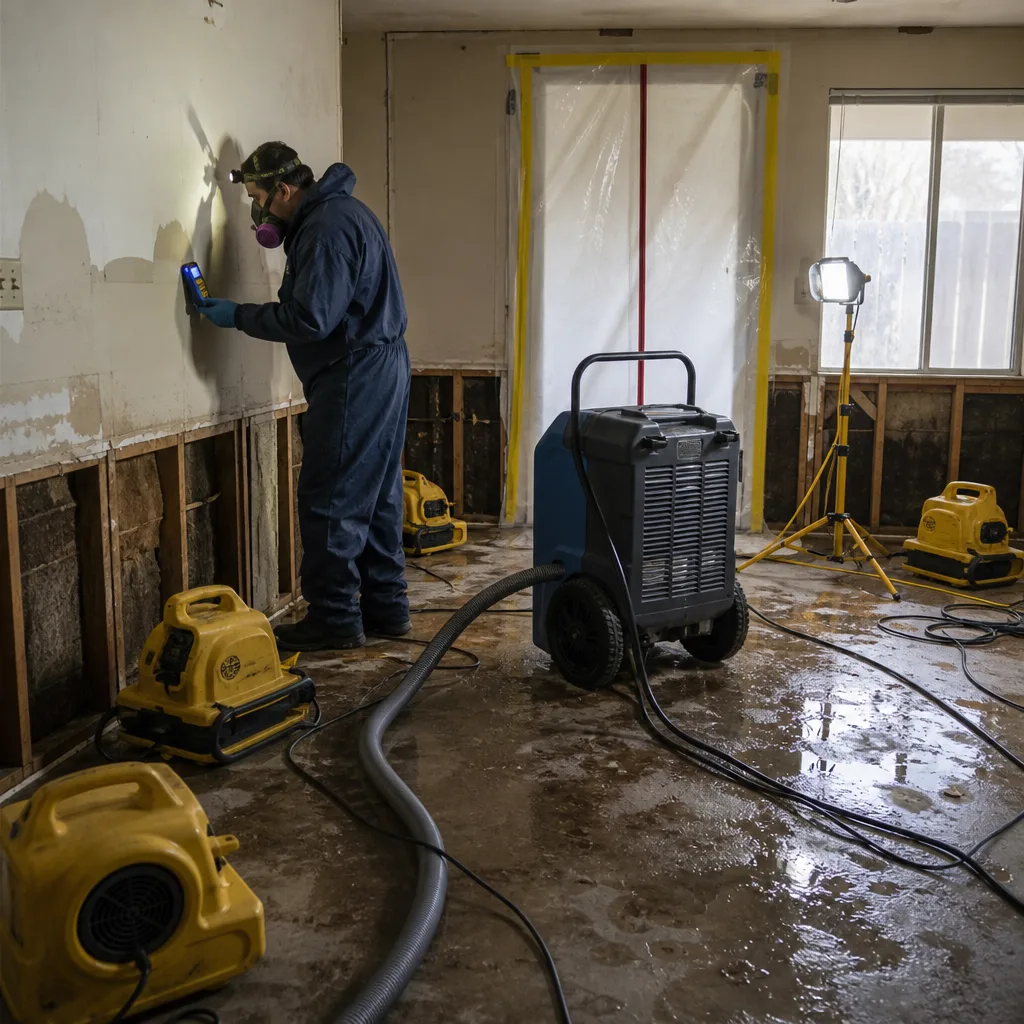
We’re based in the El Cajon area and know this community well. Use the map below to see our service coverage - if you’re nearby, we can almost certainly help.
El Cajon Mold Remediation Questions, Answered
Why does mold show up so fast in El Cajon rentals compared to coastal San Diego?
El Cajon runs 15-20°F hotter than the coast, and that heat accelerates mold colonization exponentially. A wall cavity at 20% wood moisture equivalent in Pacific Beach might take a week to show mold growth; in a 1960s stucco rental off Main Street with minimal vapor barrier, the same moisture level produces visible colonization in 24-48 hours. The heat sets our clock. Call (858) 428-2364 for a free inspection and moisture mapping.
A tenant says the smell is just smoke from a wildfire season. Should we still test?
Yes. El Cajon’s valley topography traps smoke and ash from regional fires, and that particulate load embeds in ductwork and blown-in insulation, producing musty odors that get misdiagnosed as simple smoke damage or masked as mold. We test for both: moisture mapping to confirm or rule out active mold growth, and particulate inspection of HVAC systems to determine whether the odor source is biological, combustion-based, or both. Call (858) 428-2364 and we will scope the complete contamination profile.
Does an older El Cajon apartment complex need a different scope than a single-family home?
Yes. Multi-family buildings from the 1950s-1970s have shared wall cavities, minimal vapor barriers, and higher deferred-maintenance rates that expand both the affected area and the containment challenge. Our scope includes protecting adjacent units, coordinating with property management, and documenting habitability status for each unit. Single-family homes of similar age may have more complex rooflines but simpler containment. The inspection determines the specific protocol. Call (858) 428-2364 for a written scope tailored to your building.
What is the difference between drying a Category 1 leak and a Category 2 or 3 leak in El Cajon?
Category 1, clean water from a supply line, typically allows salvage of porous materials if drying begins within 24 hours and the structure reaches below 16% WME. Category 2, gray water from appliances or sump failures, requires removal of carpet pad and affected porous materials because organic loading accelerates mold growth beyond what drying alone can control. Category 3, black water from sewage or ground intrusion, demands full removal of all porous materials and aggressive antimicrobial treatment. In El Cajon’s heat, Category 2 water often upgrades to Category 3 conditions within 48-72 hours if not properly contained and dried. Call (858) 428-2364 for immediate assessment.
Do you treat crawl spaces differently in El Cajon than in coastal neighborhoods?
Yes. Coastal crawl spaces benefit from moderate marine air temperatures that reduce extreme condensation cycles. El Cajon’s crawl spaces face summer temperatures exceeding 95°F with humidity spikes during monsoonal flow, creating ideal mold conditions on cooler ductwork and floor joists year-round. We emphasize permanent dehumidification, sealed crawl space conversion where appropriate, and vapor barriers rated for high-temperature installation. The equipment and protocols differ from coastal markets. Call (858) 428-2364 for crawl space-specific inspection and scope.
How fast can you actually get to my property in El Cajon?
We commit to 45 minutes from call to arrival anywhere inside El Cajon city limits, including the Main Street corridor, Ballantyne Street area, and hillside developments above Fletcher Parkway. A live person answers every call, 24 hours a day, and crews carry containment materials, moisture meters, and thermal imaging on every truck. Call (858) 428-2364 now and we will confirm ETA to your specific address.
Will my insurance cover mold remediation?
Most homeowner and commercial policies cover mold remediation when it results from a sudden, covered water loss like a burst pipe or appliance failure. They typically do not cover mold from long-term maintenance issues or unresolved leaks. We document the loss from the first hour, produce industry-standard estimates, and coordinate directly with your adjuster to establish coverage. Our photo record and drying logs are designed specifically to support claim approval. Call (858) 428-2364 and we will review your situation and insurance documentation requirements.
Can we stay in the home during mold remediation?
It depends on the contamination extent and the presence of toxigenic species. Small contained areas with negative air pressure and HEPA filtration may allow occupants to remain in unaffected portions of the structure. Whole-room or multi-room remediation, or any job involving black mold, typically requires temporary relocation until clearance testing confirms safe airborne levels. We specify habitability status in your written scope before work begins, per Haven Standard, Clause 1. Call (858) 428-2364 for assessment of your specific situation.
Written by Alicia Brennan, Owner at Back to Dry Restoration, serving El Cajon since 2011.
Mold Remediation in Nearby Areas