
Free visual inspection and a written scope of work before any mitigation begins - photos, moisture readings, and drying logs go in your claim file
The scope we write is the scope we bill. Anything new gets shown to you, in writing, before we touch it.
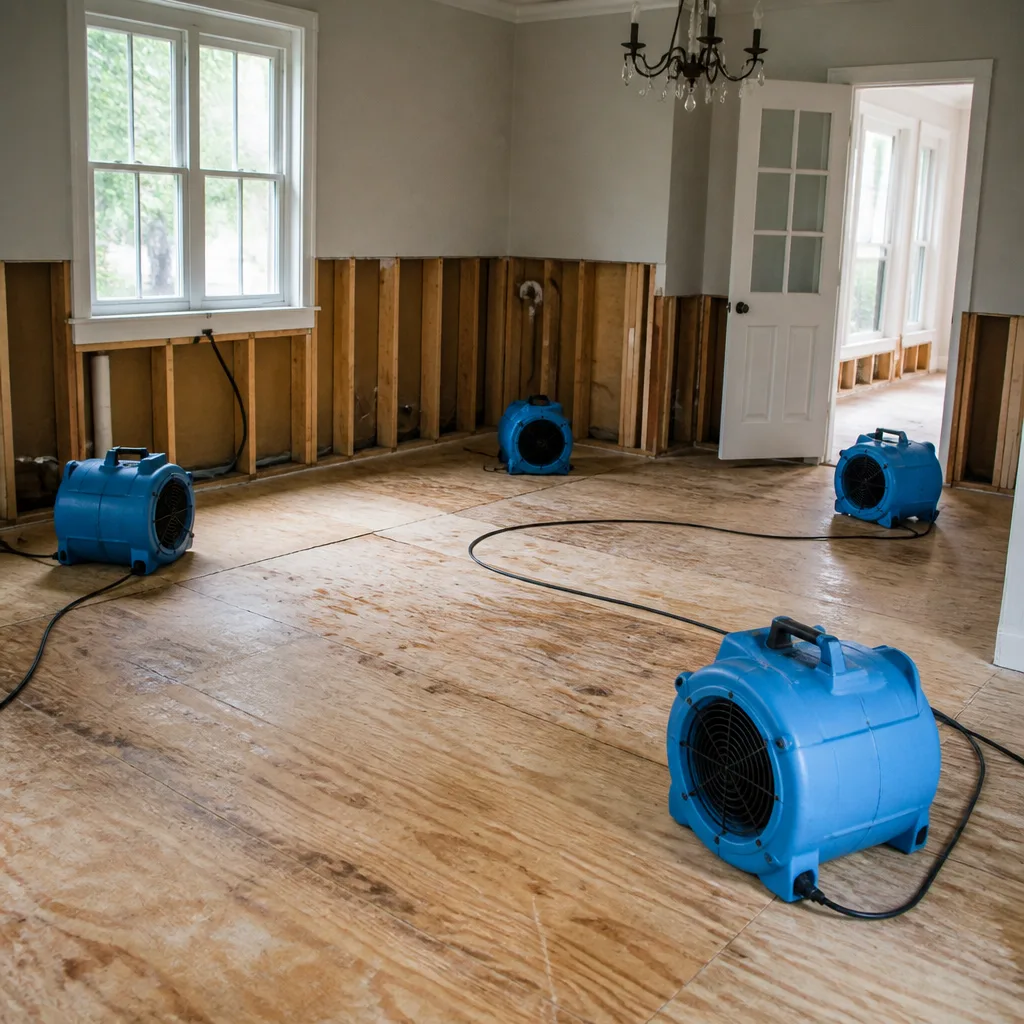
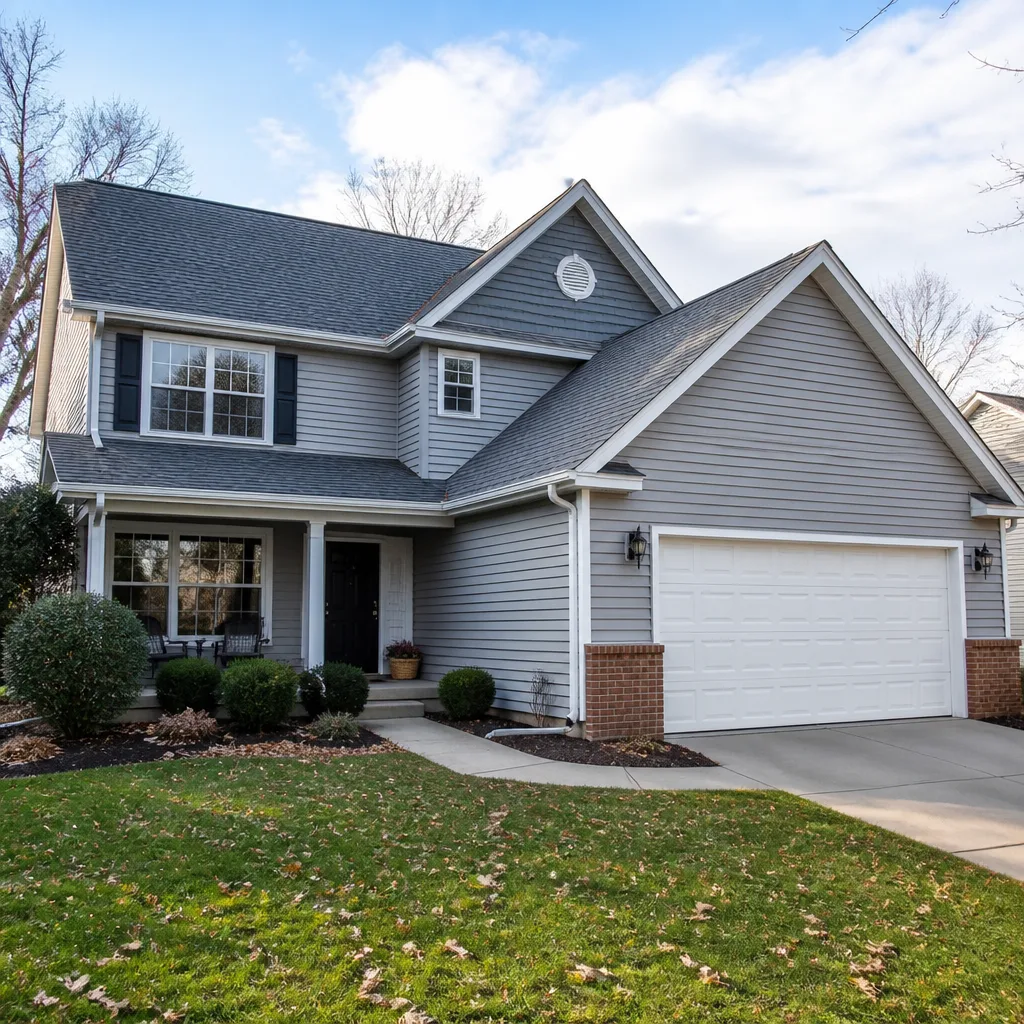
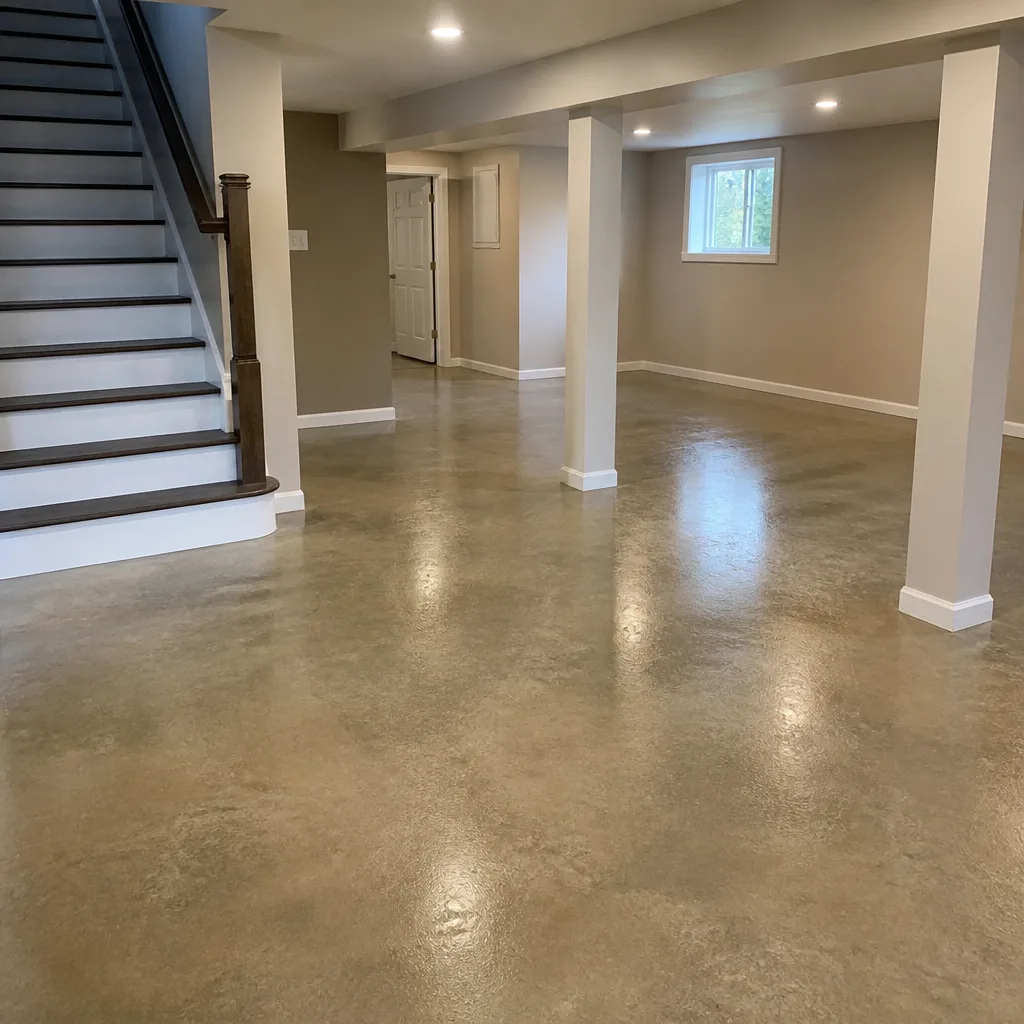
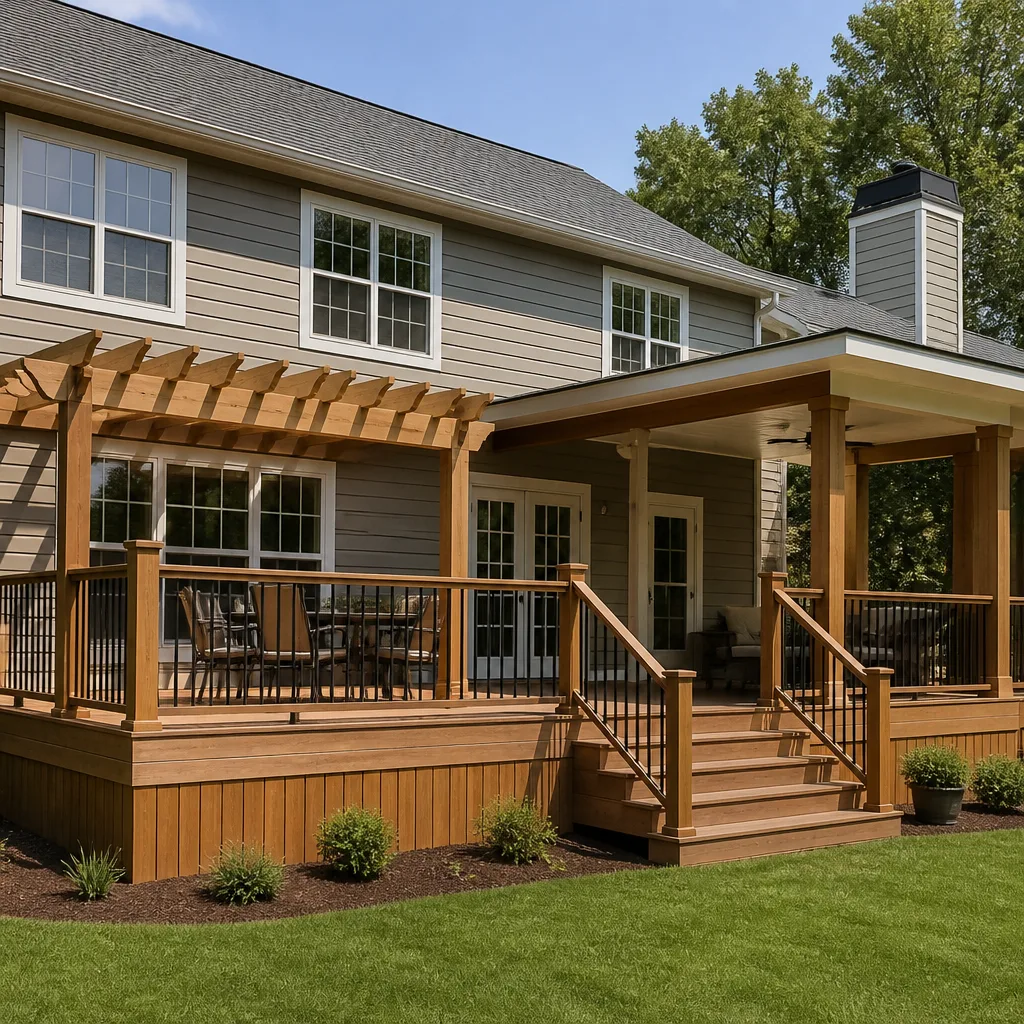
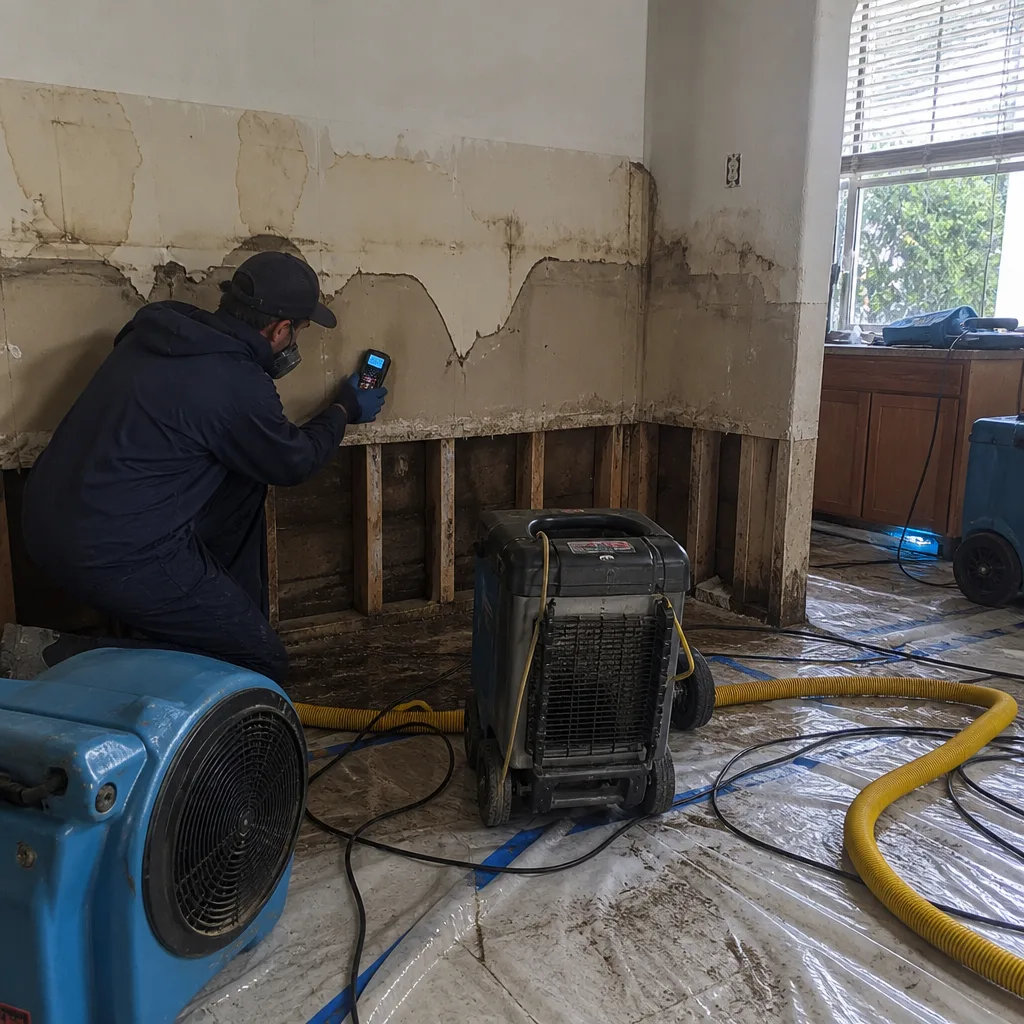 Before
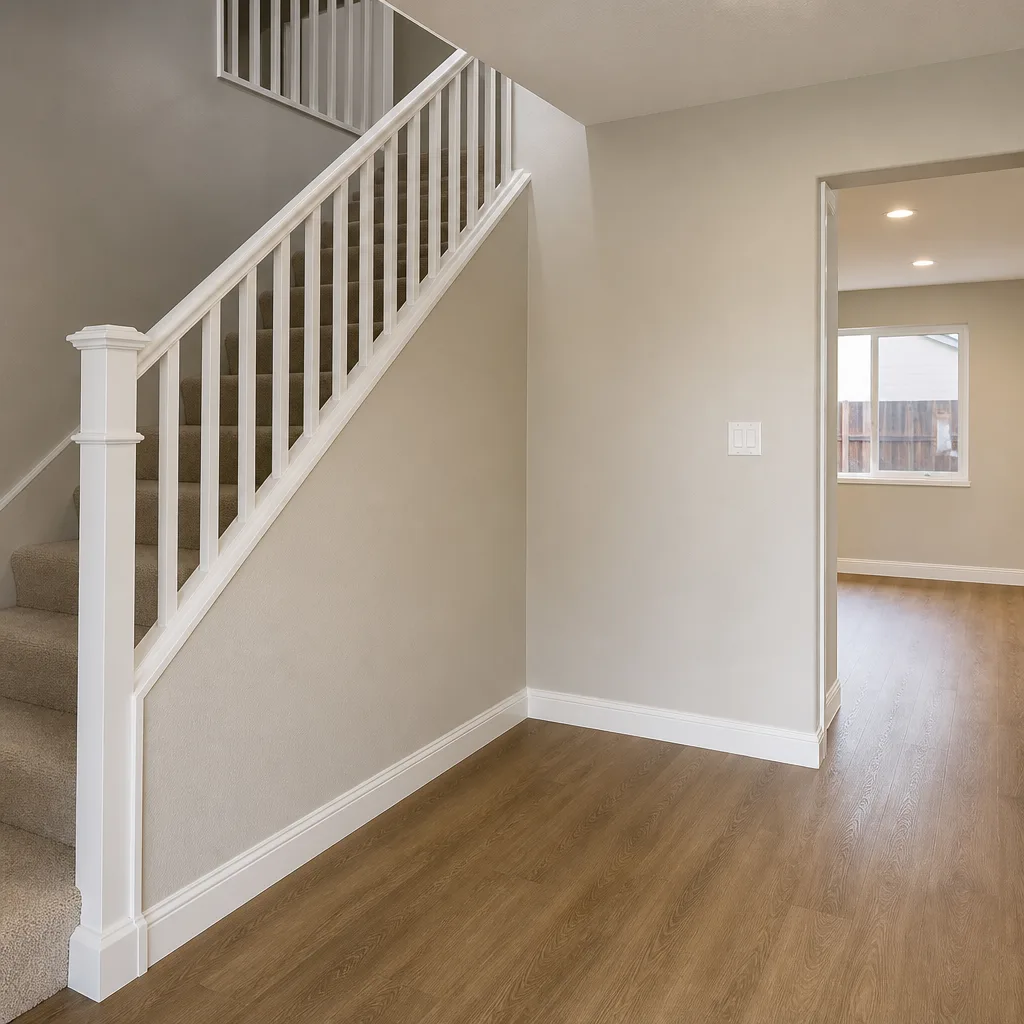 After
After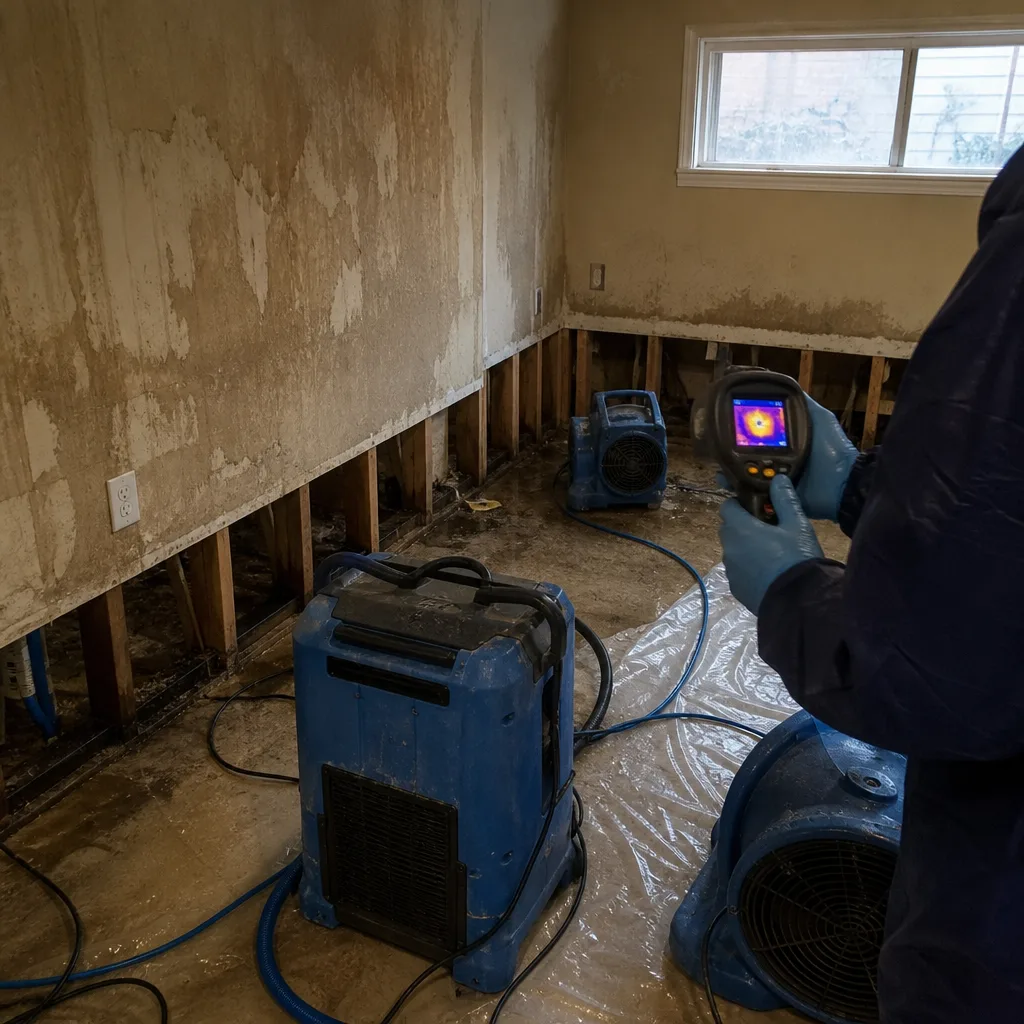 Before
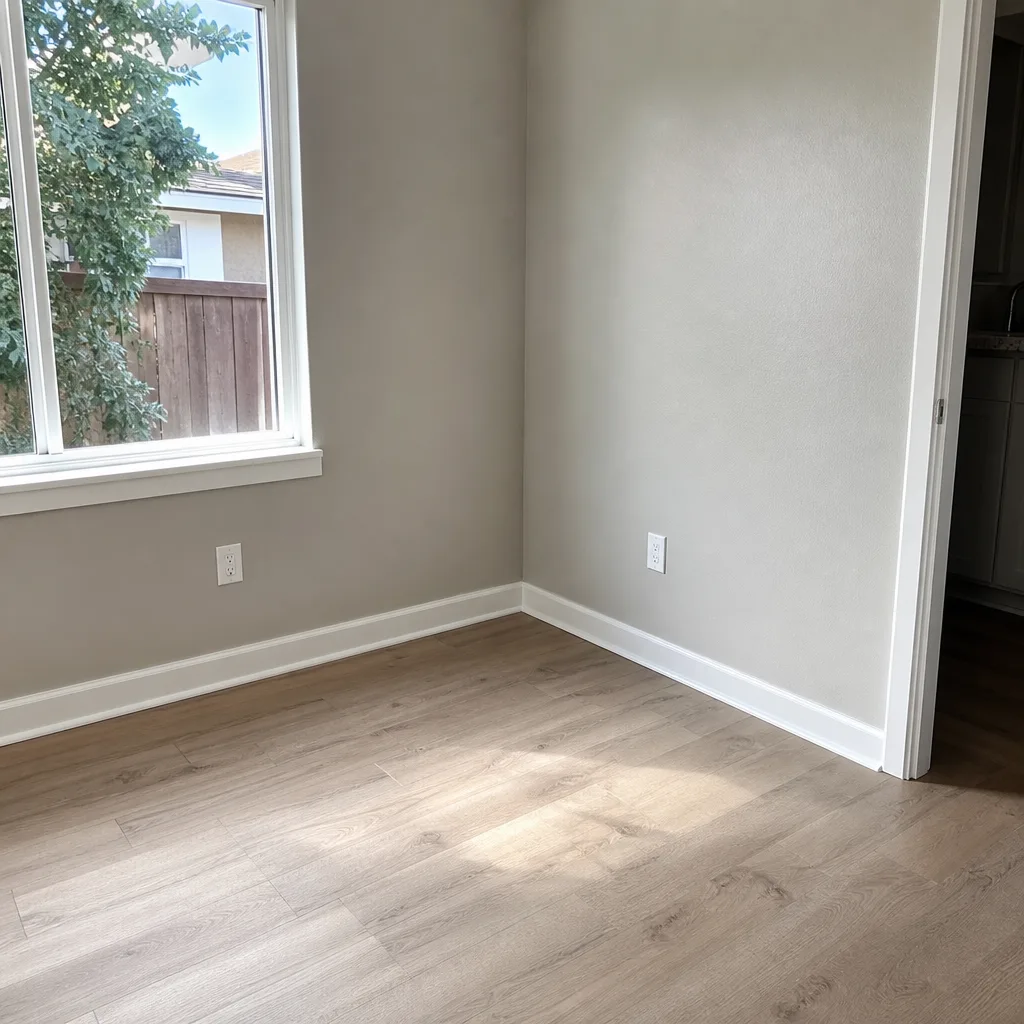 After
After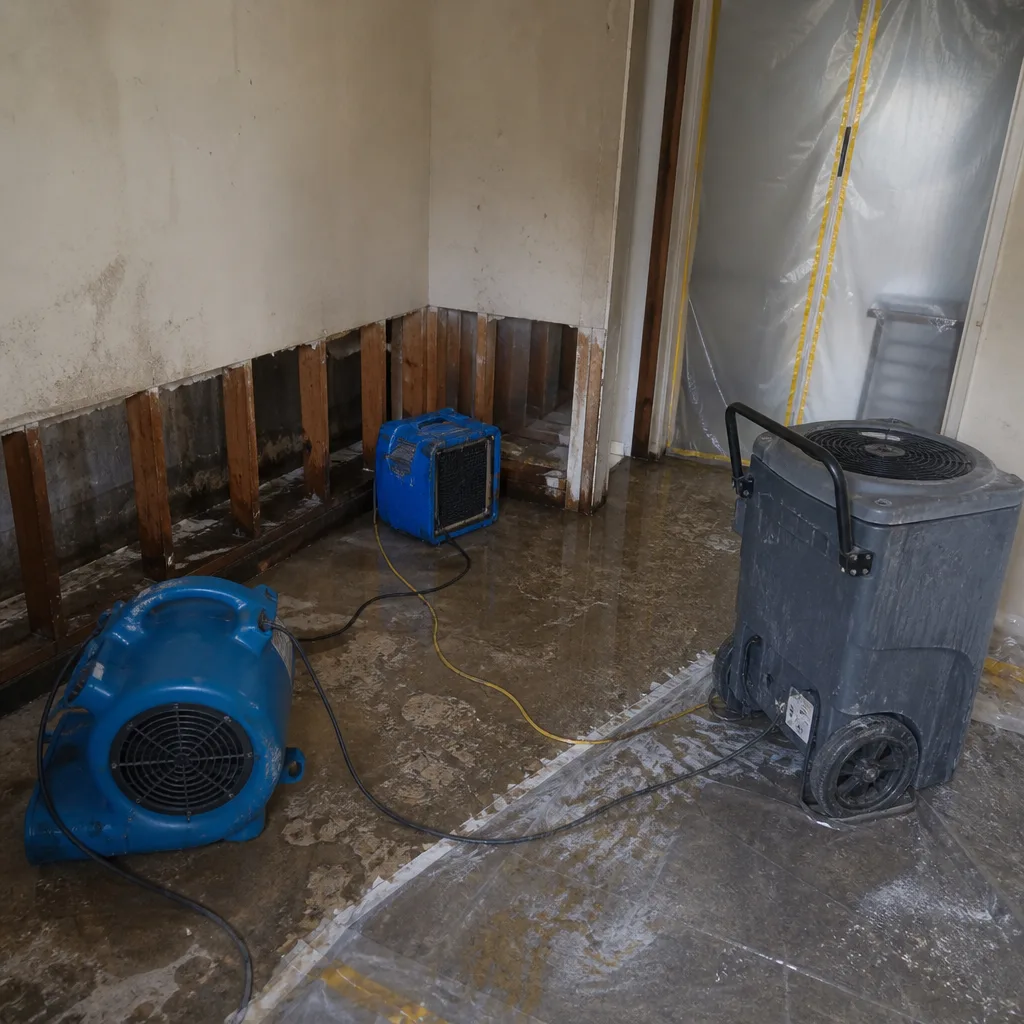 Before
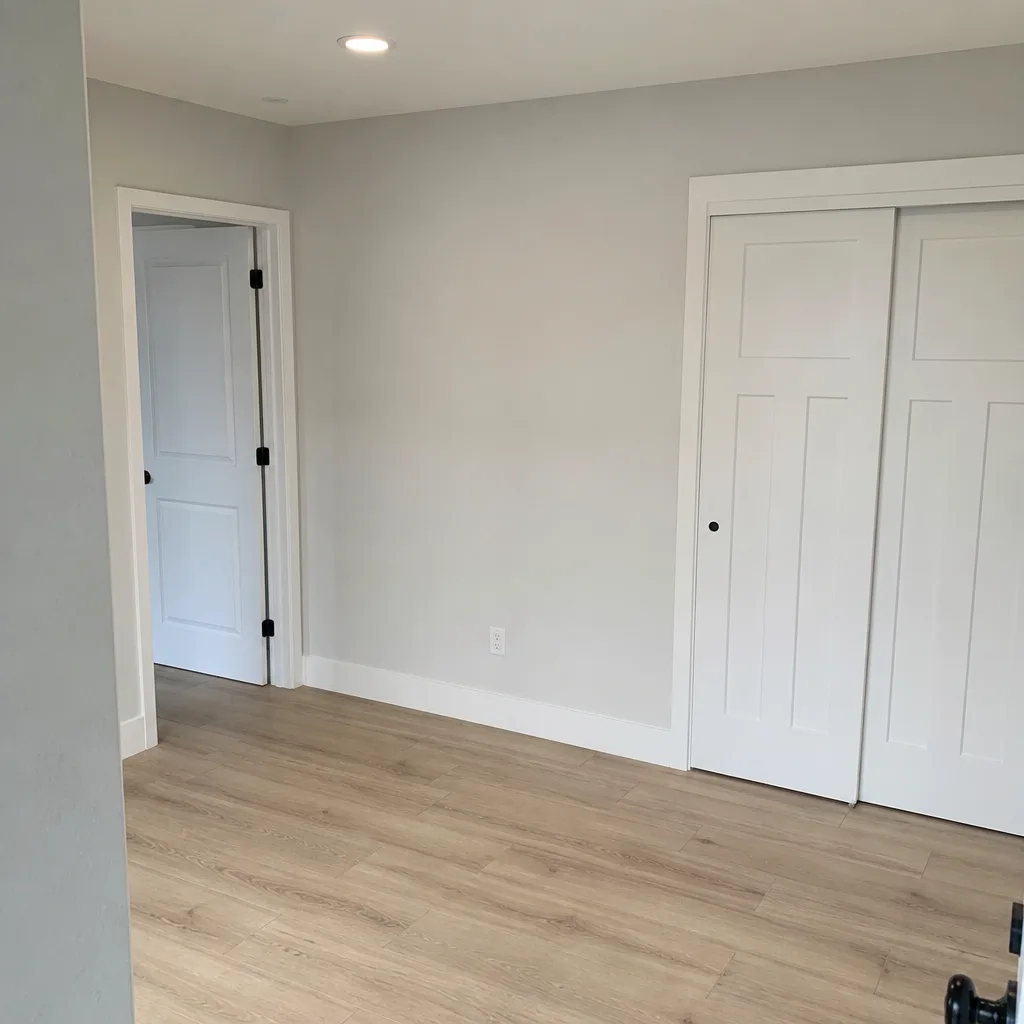 After
After24/7 Emergency Fire & Smoke Damage Restoration in Ramona
Fire and smoke damage restoration in Ramona typically costs $3,200-$18,500 depending on the fire’s reach and the smoke’s penetration into HVAC systems and wall cavities. Most emergency board-ups and initial stabilizations begin within 45 minutes of your call, with full restoration timelines running 3 days to 6 weeks based on structural involvement. Call (858) 428-2364 now - a live person answers, 24 hours a day, every day, with no voicemail trees.
Ramona sits in a Very High Fire Hazard Severity Zone where Santa Ana winds drive ember cast and oily soot deep into homes that never face direct flame. The first hour after any fire event, even a nearby wildfire, determines whether smoke particulates settle into porous materials or can still be extracted before permanent bonding. Our crews dispatch from the San Diego office with thermal imaging, HEPA air scrubbers, and containment materials sized for Ramona’s ranch-style homes and large-lot properties.
Understanding Fire & Smoke Damage Restoration Severity in Ramona Properties
Fire damage in Ramona follows patterns distinct from coastal San Diego. The housing stock - wood-frame ranch and semi-rural single-family homes built largely between 1970 and 1990 - features open attic spaces, wood or composite siding, and older HVAC ductwork that acts as a smoke distribution network. We classify every Ramona loss by three factors: flame contact (direct structural char), smoke migration (thermal-driven deposition through the structure), and soot residue type (dry, wet, or protein-based, each requiring distinct cleaning chemistry).
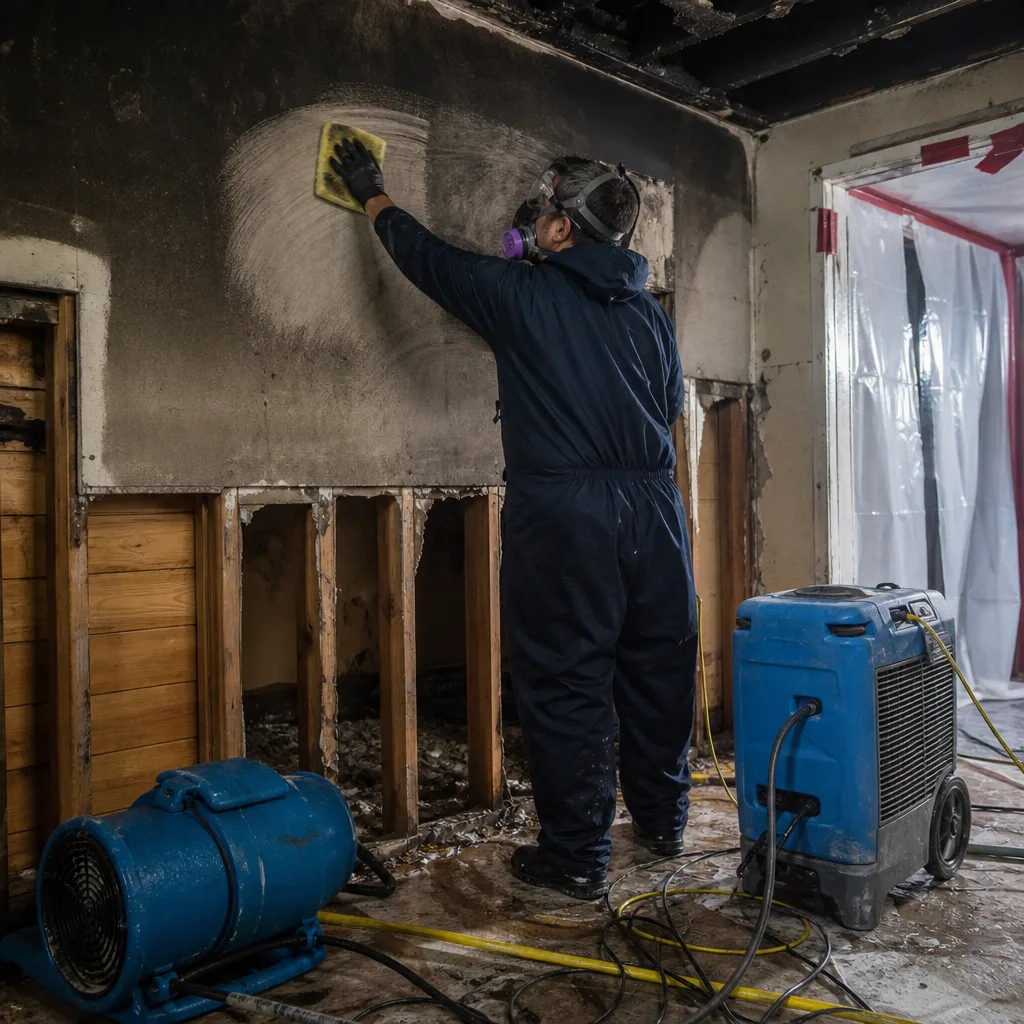
Dry smoke residue, common after fast-burning wildfire events fueled by Santa Ana winds, leaves a powdery, non-smeary film that responds to dry cleaning sponges and HEPA vacuuming. Wet smoke residue, typical of slow-burning synthetic materials in modern furnishings, is sticky, odorous, and requires solvent-based cleaning agents that must be matched to the substrate - painted drywall versus unfinished wood versus textile. Protein fires from kitchen incidents produce nearly invisible but pungent residues that etch polished surfaces and demand enzymatic cleaners.
The critical variable in Ramona is smoke migration through the thermal envelope. Santa Ana wind events create positive pressure differentials that force smoke into wall cavities, behind baseboards, and through the return-air plenum of central HVAC systems. Our crews map smoke migration with thermal imaging and borescope inspection, then establish containment zones with negative air pressure to prevent cross-contamination during remediation. Every affected square foot is documented with pre-loss photos, moisture readings where water was used in suppression, and material classifications by trade name - the documentation that turns restoration invoices into payable insurance claims.
Why Ramona Property Owners Choose DryMark Restoration El Cajon
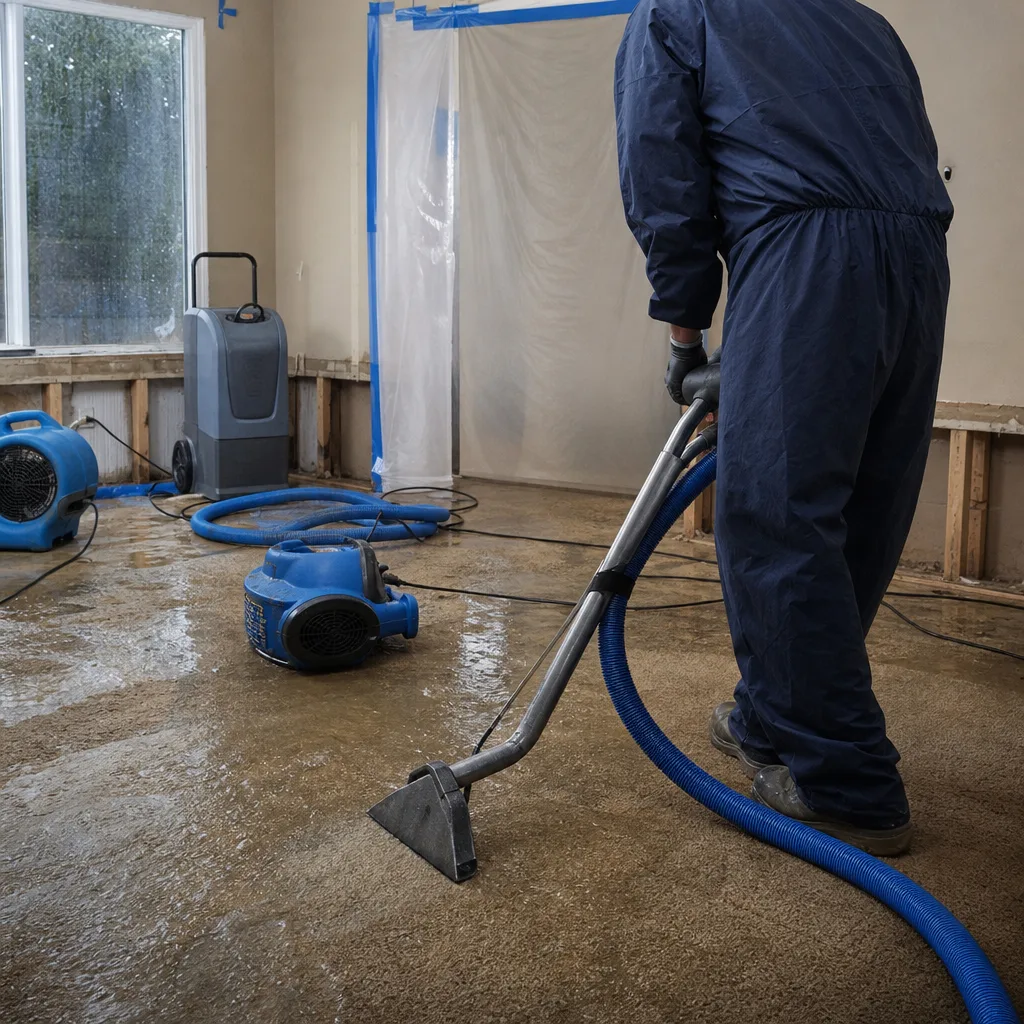
- 45-minute response commitment to Ramona addresses and surrounding blocks - our dispatch coordinates from the San Diego office with crews already positioned for backcountry valley calls.
- 24/7 live answer: a real person, never an automated system or voicemail tree, because fire and smoke events don’t observe business hours and neither do Santa Ana wind-driven ember cast.
- IICRC-certified crews holding FSRT (Fire and Smoke Restoration Technician) and WRT (Water Damage Restoration Technician) credentials - the dual certification matters when suppression water complicates smoke damage, as it routinely does.
- Free visual inspection with a written scope and price before any work begins, per Haven Standard, Clause 1 - no exceptions, no scope-creep additions once the crew is inside.
- Direct insurance billing with photo-documented assessments and daily drying logs where water intrusion is present - we coordinate with your adjuster, not just submit paperwork.
- One team from emergency board-up through structural fire repair and final walkthrough - no handoffs to subcontractors you’ve never met.
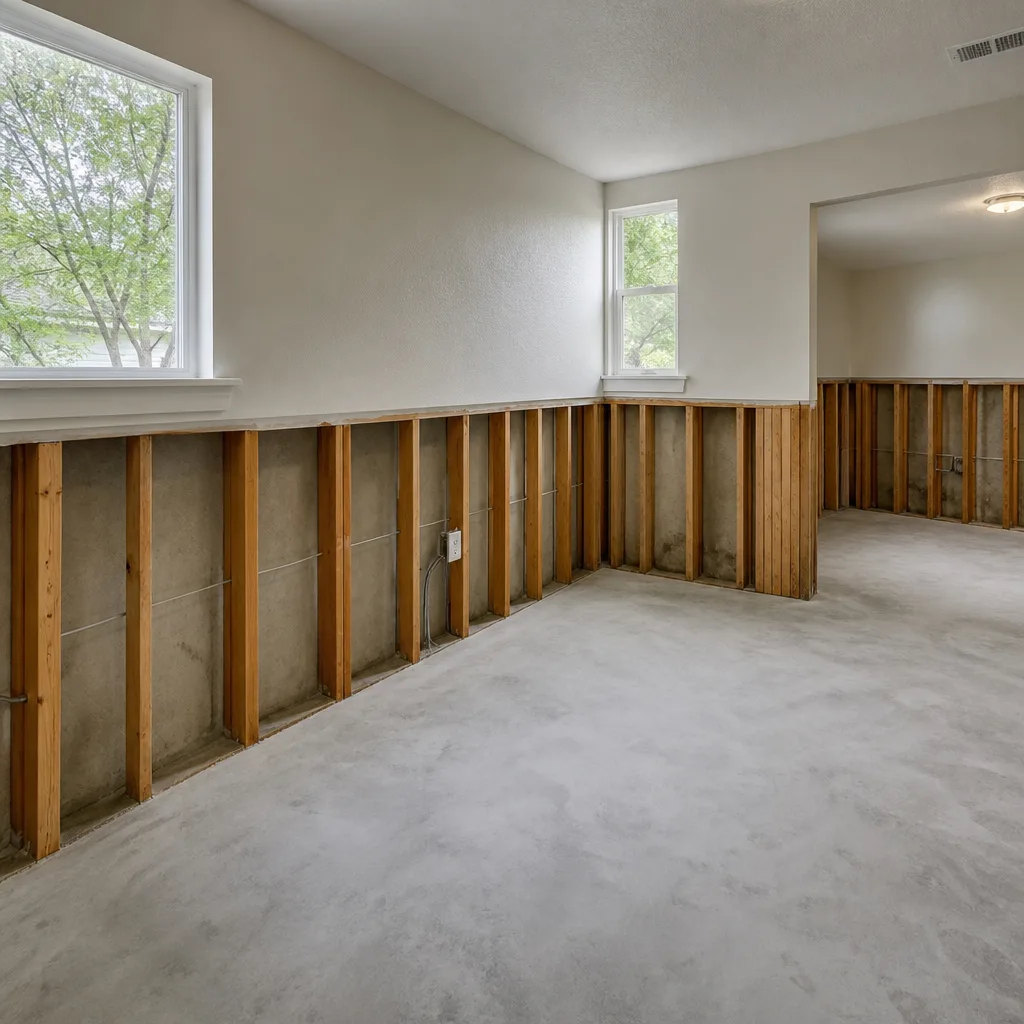
 Before
 After
AfterOur Fire & Smoke Damage Restoration Process
1. Inspection & Assessment
We arrive with thermal imaging cameras, moisture meters, and borescope tools to map flame contact, smoke migration paths, and suppression water intrusion. Every room is photographed in its pre-loss condition. In Ramona, we pay particular attention to HVAC return vents and attic spaces, where Santa Ana-driven smoke halos often hide.
2. Emergency Board-Up & Tarping
Compromised windows, doors, and roofing receive temporary weatherproofing and security sealing. For Ramona’s wood-frame exteriors, we use wind-rated materials that withstand follow-on Santa Ana events. This step prevents secondary water intrusion and protects contents during pack-out.
3. Smoke & Soot Extraction
HEPA air scrubbers establish negative pressure containment while technicians apply dry cleaning sponges, solvent-based agents, or enzymatic treatments matched to the identified residue type. Ductwork is inspected with borescope cameras - in Ramona, we routinely find heavy soot loads in return-air plenums even when exterior flame contact is zero.
4. Contents Cleaning & Pack-Out
Salvageable contents are inventoried, photographed, and transported to our cleaning facility for ultrasonic, ozone, or specialized textile restoration. Non-salvageable items are documented for insurance replacement with pre-loss photos. For Ramona properties on private wells and septic, we coordinate water and waste logistics during this phase.
5. Odor Removal & Deodorization
Surface cleaning removes visible soot; odor removal requires vapor-phase neutralization. We deploy thermal fogging, ozone generators, or hydroxyl generators depending on the contamination depth and occupancy status. Duct insulation that has absorbed oily wildfire smoke is often non-restorable and must be removed and replaced - we document this with photo evidence for the claim.
6. Structural Fire Repair & Restoration
Charred framing is replaced per code, finishes are restored to pre-loss condition, and final air quality testing confirms particulate levels below IICRC thresholds. Our 365-Day Done Right Promise under The Haven Standard covers this work - if it’s not done right, we make it right, in writing.
Need Emergency Fire & Smoke Damage Restoration in Ramona Now?
Crews minutes away, answering live 24 hours a day. The sooner we start, the less it costs.
Working With Your Insurance Company
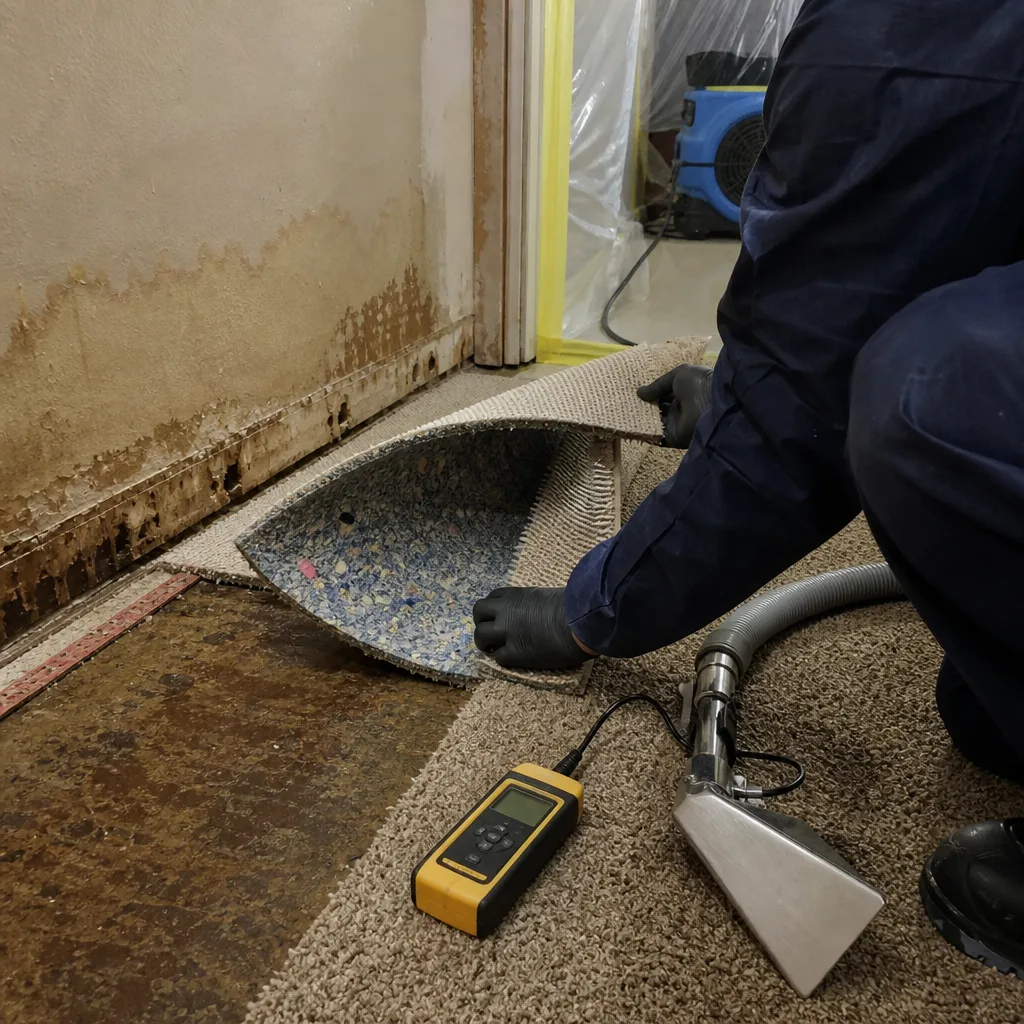
Fire and smoke claims succeed or fail on documentation quality. We begin building the file from the first hour: pre-loss photos, moisture mapping where suppression water is present, material classifications by trade name, and a line-item scope of work with unit pricing. Our estimates follow industry-standard formats that adjusters recognize immediately.
Direct adjuster communication is standard, not an upsell. We provide the daily drying logs, psychrometric data, and vapor pressure differential readings that justify equipment deployment days. Where competitors offer reassurance, we offer evidence - a documented record that turns restoration invoices into claims that get paid without dispute.
What We Provide Your Insurer
- Thorough documentation of the loss
- Photos of all damage, room by room
- Moisture readings and drying logs
- A detailed, line-item scope of work
- Direct coordination with your carrier
Built for Ramona’s Loss Calendar
Ramona’s fire and smoke damage calendar runs on wind, not seasons. October through April brings Santa Ana wind events and Red Flag Warnings, the period when ember cast travels miles ahead of flame fronts and deposits oily soot in homes across the valley. January hard freezes, uncommon in coastal San Diego but routine at Ramona’s 1,300-1,500 foot elevation, burst pipes in homes whose owners assumed frost-free conditions - suppression water then complicates smoke damage from heating-system fires or space-heater incidents.
Summer monsoon patterns drop heavy rain on dry chaparral, generating flash-flood runoff that can damage structures on low-lying lots near Santa Maria Creek or San Vicente Creek. The debris and mud that enter homes in these events often carry ash from prior burns, creating a combined contamination that standard water-damage protocols miss. Our crews adjust antimicrobial treatment decisions for Ramona’s private-well water chemistry, which differs materially from municipal supplies.
The defining pattern, though, is the smoke halo. After every significant wildfire within miles of Ramona - a pattern repeated across the Witch Creek Fire footprint and subsequent burns - we pre-schedule duct inspections on surrounding blocks. The HVAC systems in Ramona’s 1970s-1990s housing stock pull fine, oily ash through return vents for days after the visible smoke clears. Homeowners assume the danger has passed. The particulate readings tell a different story.
Fire & Smoke Damage Restoration Across Ramona’s Neighborhoods
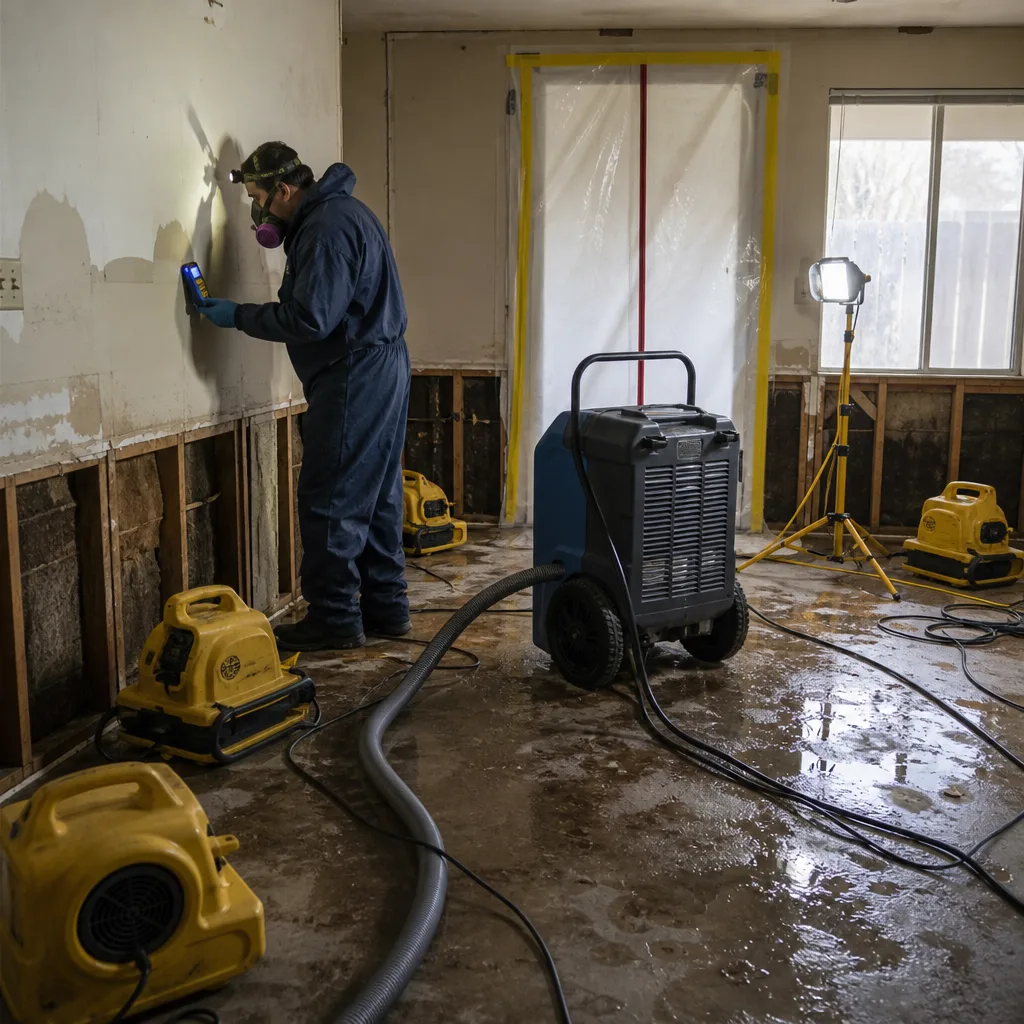
Highland Valley Road and the surrounding ranch properties present distinct challenges: large-lot separations mean ember cast travels farther between structures, but the rural water supply and septic systems complicate suppression and cleanup logistics. We stage water extraction and contents cleaning equipment for longer deployment cycles in these areas, and our pack-out protocols account for limited access during Santa Ana wind events.
The central Ramona corridor along Main Street and the older neighborhoods near Mount Woodson include more compact 1970s-1980s tract homes with shared wall assemblies and interconnected attic spaces. Smoke migration in these properties moves horizontally through soffit vents and vertically through plumbing chases - our containment strategy must seal multiple units’ air pathways simultaneously. We’ve documented cases where a kitchen fire in one unit deposited protein residue in three adjacent attics.
San Diego Country Estates and the semi-rural properties on the valley’s eastern edge sit in heavier chaparral exposure with longer response routes. These homes often have wind-rated door requirements that predate current code, and we routinely find failing door seals that allowed ember intrusion during near-miss fire events. Our structural fire repair scope in this area includes seal replacement and reinforcement verification as standard, not optional.
Properties near the Ramona Airport and the flatter terrain toward Santa Maria Creek face flash-flood risk during summer monsoons, but the same low-lying position also means smoke pooling during temperature inversions after wildfires. We adjust our deodorization protocols for these microclimates, where particulate settlement patterns differ from hillside properties.
Specialized Fire & Smoke Damage Restoration Services We Offer in Ramona
Fire Damage Cleanup
Structural cleanup after flame contact requires char removal, substrate evaluation, and replacement of compromised framing. In Ramona’s wood-frame housing stock, we frequently find that composite siding and eaves have sustained hidden pyrolysis - chemical decomposition from radiant heat - that weakens structural integrity without visible char. Our inspection includes pull-testing of suspect members, documented with photos for the insurance file.
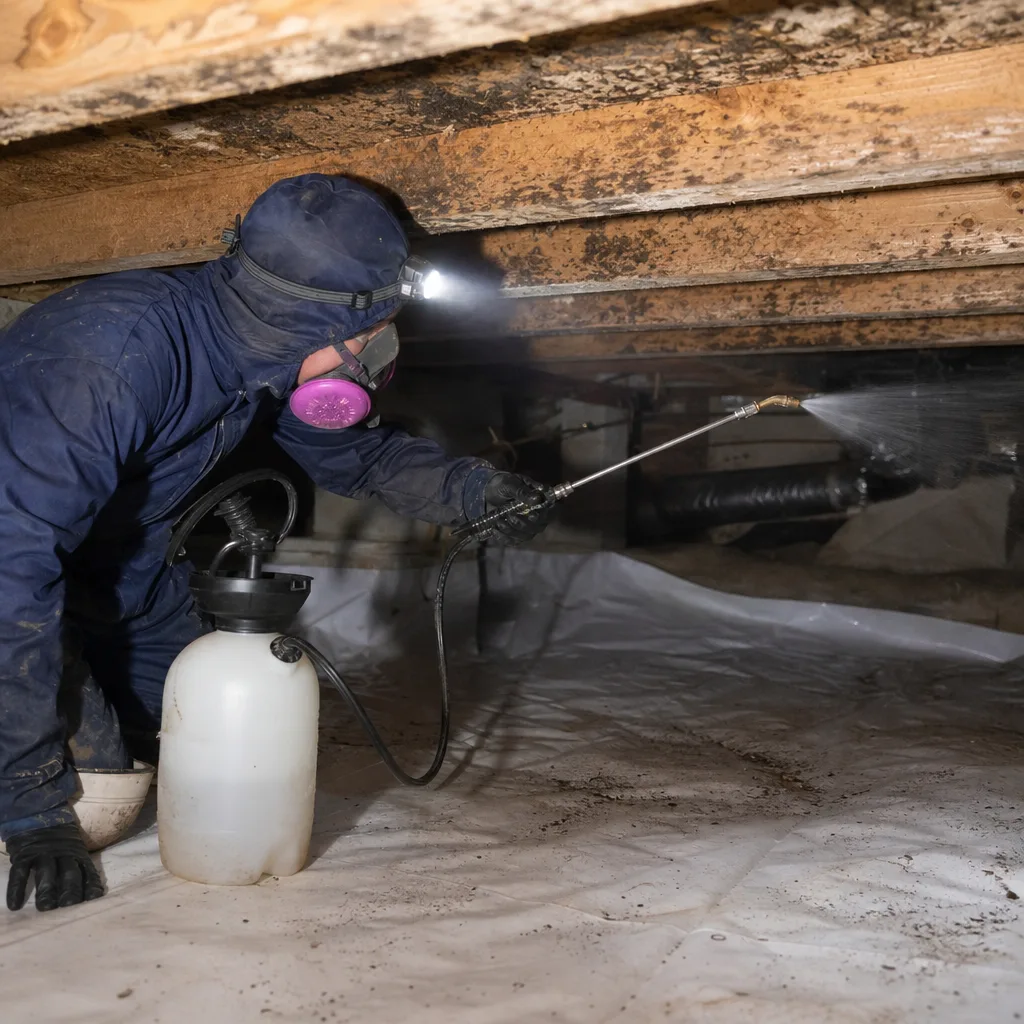
Smoke & Soot Removal
This is the core Ramona specialty. After the 2007 Witch Creek Fire, we responded to a ranch-style home off Highland Valley Road where the exterior showed no flame contact, but our tech found heavy oily soot inside the return-air plenum and duct insulation. We ran moisture mapping and smoke readings - the homeowner was stunned that the HVAC had been circulating ash through the house for days. We set containment, performed a full pack-out of contents, applied antimicrobial treatment to the ductwork, and logged the scope of work for the insurance claim. The pre-loss condition photos we took on day one ended up being the key evidence that the smoke intrusion was real, not just a smell complaint.
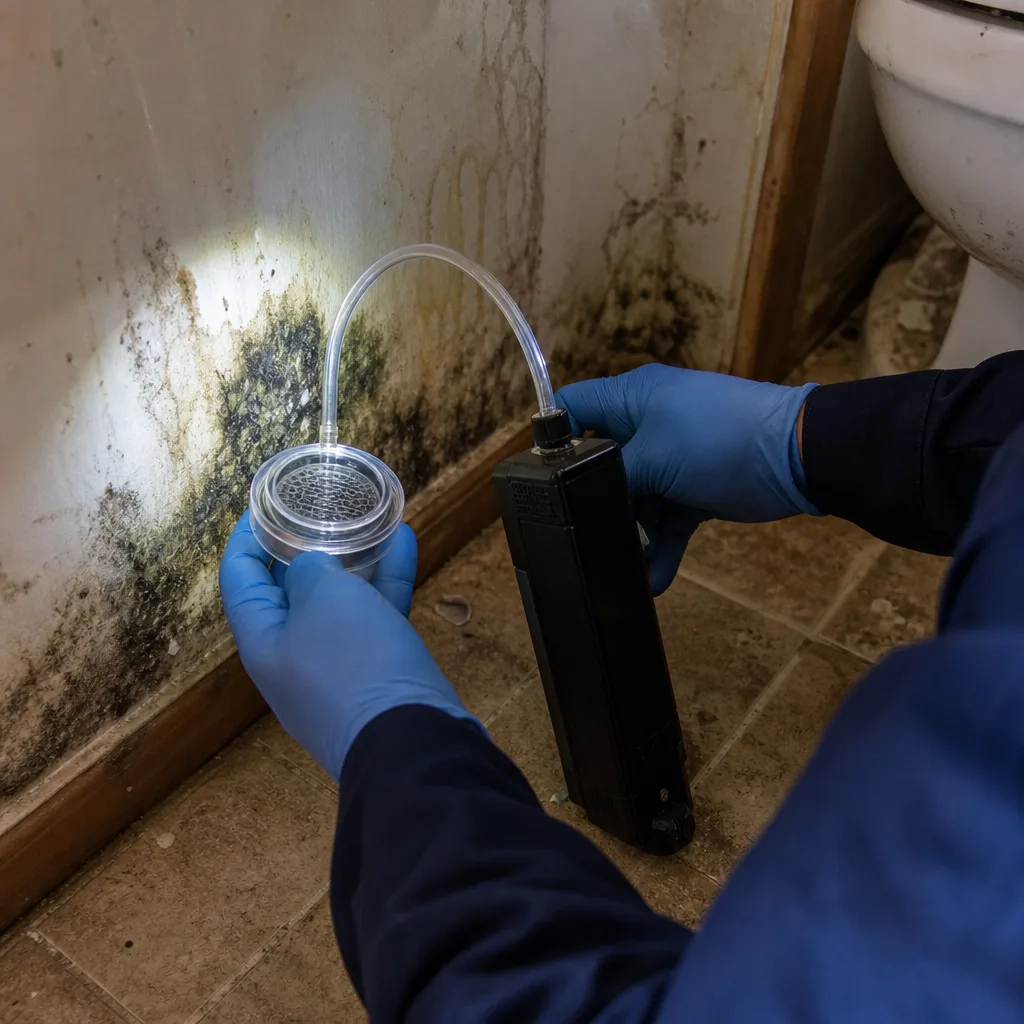
Odor Removal & Deodorization
Surface cleaning addresses visible residue; odor removal requires reaching the vapor-phase contaminants that have bonded with porous materials. In Ramona’s smoke halo scenarios, duct insulation, drywall backing, and subflooring often require direct treatment or replacement. We deploy Dri-Eaz and Phoenix hydroxyl generators for occupied structures, ozone for unoccupied properties, and thermal fogging for heavy contamination - each choice documented in the scope with the rationale.
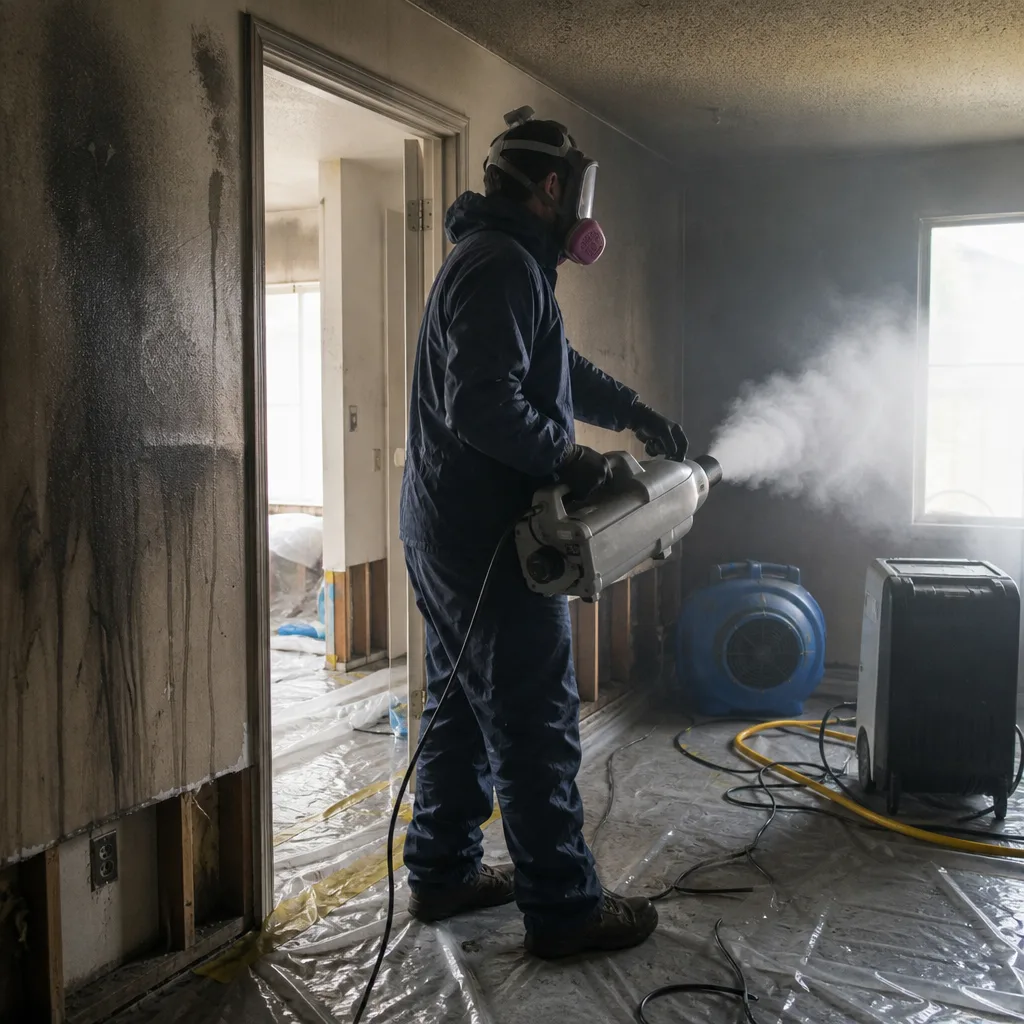
Contents Cleaning & Pack-Out
Ramona’s large-lot properties often hold substantial contents - ranch equipment, agricultural tools, and inherited furnishings that carry replacement-value disputes. Our pack-out includes itemized photo inventory, ultrasonic cleaning for non-porous items, and specialized textile restoration for smoke-impacted fabrics. For properties on private wells and septic, we coordinate water supply and waste handling during the cleaning process.
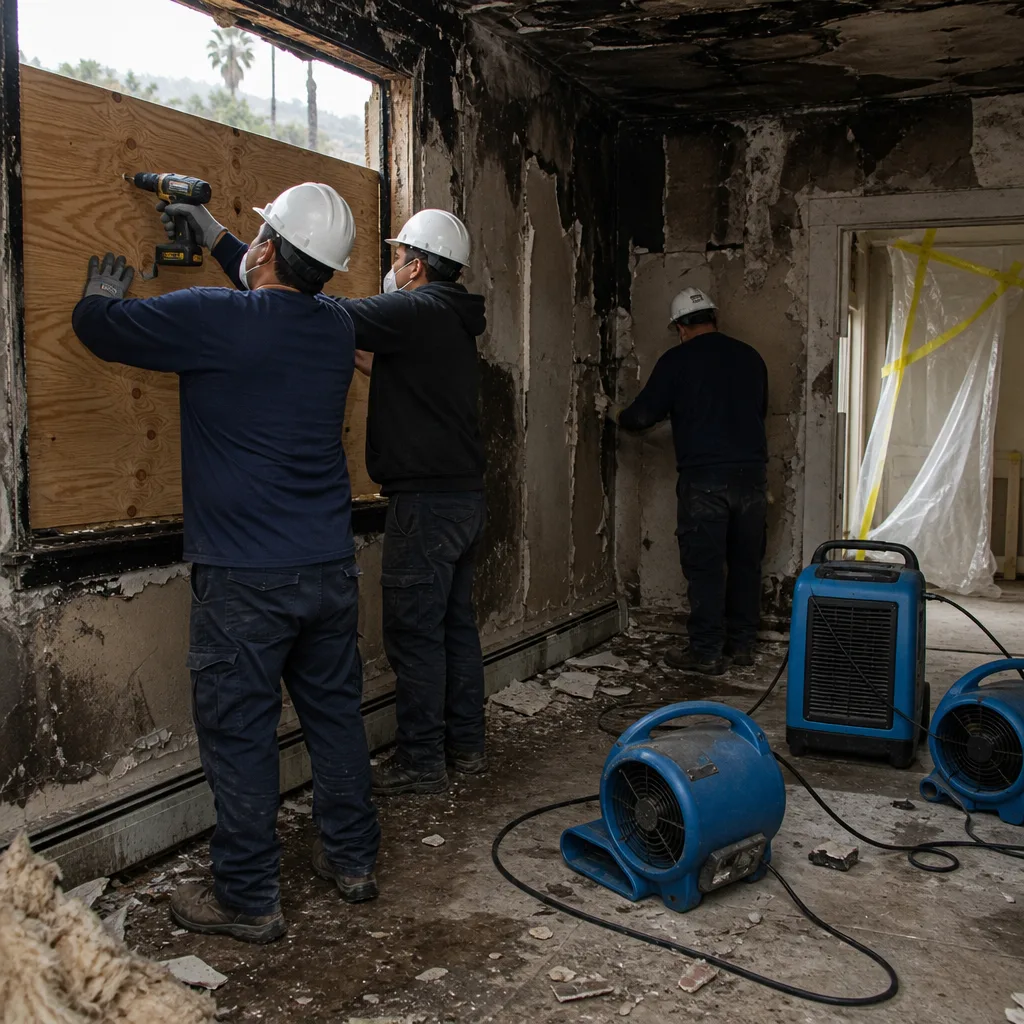
Emergency Board-Up & Tarping
Temporary securing of fire-damaged structures in Ramona must account for follow-on Santa Ana wind loads. Standard plywood boarding fails; we use wind-rated fastening patterns and materials specified for the valley’s exposure. This is particularly critical for homes in the Very High Fire Hazard Severity Zone, where a damaged structure may face additional weather events before permanent repairs begin.
Structural Fire Repair
Permanent restoration of fire-compromised structure in Ramona requires attention to wind-rated door and window replacement, ember-resistant vent screening, and in some cases, upgraded exterior materials that meet current Very High Fire Hazard Severity Zone requirements. We scope these upgrades separately from the restoration baseline, with clear documentation of code-required versus optional improvements for the insurance adjuster.
What happens when you call
- 1
A real person answersNo phone trees - you reach a local pro.
- 2
You get an upfront price rangeHonest numbers before anyone is dispatched.
- 3
A background-checked tech heads outLicensed & insured, dispatched right away.
- 4
You approve before work beginsNothing starts until you say go.
Fire & Smoke Damage Restoration Costs in Ramona, CA
Emergency board-up and stabilization in Ramona typically runs $800-$2,400 depending on the structure’s size and the wind-rated materials required. Smoke and soot removal for a single-family home with no structural fire damage ranges $3,200-$7,800; this covers HEPA containment, surface cleaning, duct inspection, and deodorization. Full structural fire repair, including charred framing replacement and finish restoration, ranges $12,500-$18,500 for Ramona’s typical 1,500-2,500 square foot ranch homes.
What moves the price: the extent of smoke migration into HVAC systems and wall cavities (the smoke halo pattern), the presence of suppression water requiring dual fire-and-water protocol, the residue type (wet smoke from synthetics requires more labor than dry wildfire smoke), and whether contents pack-out is needed. Insurance typically covers direct fire and smoke damage plus necessary remediation; upgrades beyond pre-loss condition are out-of-pocket unless code requirements mandate them.
Every job starts with a free visual inspection and a written price before work begins - Haven Standard, Clause 1. No exceptions. Call (858) 428-2364 for an exact quote on your property.
We Also Serve Cities Near Ramona
Our crews respond throughout the backcountry valley and surrounding communities: Ramona, Poway, Lakeside, Santee, and El Cajon. Dispatch and scheduling are coordinated from our San Diego office with crews positioned for rapid response across this service area.
Serving Ramona, CA - Our Local Coverage Area
We’re based in the Ramona area and know this community well. Use the map below to see our service coverage - if you’re nearby, we can almost certainly help.
Ramona Fire & Smoke Damage Restoration Questions, Answered
My Ramona home didn’t burn in a wildfire, but the smell of smoke won’t go away. What’s happening?
Your HVAC system likely pulled fine, oily soot through return vents during the fire event, depositing it on duct insulation and inside wall cavities - what we call a “smoke halo.” This happens constantly in Ramona’s Very High Fire Hazard Severity Zone, where Santa Ana winds drive ember cast and smoke miles from active flame fronts. The particulates are small enough to pass standard filters and bond with porous surfaces over days of circulation. We inspect ductwork with borescope cameras and run air quality readings to confirm the contamination depth. Call (858) 428-2364 for a free inspection - the sooner we contain and extract it, the less replacement is needed.
Does Ramona’s Very High Fire Hazard Severity Zone change how you handle fire and smoke damage restoration?
Yes. The VHFHSZ designation means we assume smoke migration into attic and wall cavities even when exterior flame contact is zero, and we pre-schedule duct inspections on blocks within several miles of any fire. Our emergency board-up uses wind-rated materials and fastening patterns that withstand follow-on Santa Ana events, not standard plywood. Structural repair scopes include ember-resistant vent screening and seal verification that would be optional in lower-hazard zones. These are not upsells; they are baseline protocols for Ramona’s documented fire behavior. Call (858) 428-2364 to discuss your property’s specific exposure.
What should I do about my doors and windows before a Red Flag Warning in Ramona?
Check door seals and weatherstripping for gaps that embers can penetrate - a failing seal turns a survivable near-miss into a total smoke and soot loss. Verify that garage door perimeters are sealed and that any wind-rated door certifications are current; Ramona’s building code requirements for Very High Fire Hazard Severity Zones include specific ember-resistant standards that predate some 1970s-1990s construction. If your doors or windows are already damaged from prior events, emergency board-up with rated materials is the correct interim step. We include seal condition assessment in every Ramona fire damage inspection. Call (858) 428-2364 to schedule a pre-event check.
How quickly do you need to start smoke and soot removal after a fire near Ramona?
Within the first 24-72 hours for optimal results. Oily wildfire soot begins to bond permanently with painted drywall and textile fibers after about 72 hours of exposure, and the acid content in some residues etches metal and glass within 48 hours. For Ramona’s smoke halo pattern, where homeowners often delay calling because the exterior looks fine, we still achieve strong results at 5-7 days, but the scope shifts from cleaning to replacement for more materials. Our 45-minute response commitment applies to emergency board-up; full smoke remediation begins with the written scope and price, typically same day. Call (858) 428-2364 to start the clock.
Can you handle a pack-out and contents cleaning for a Ramona home on a private well and septic system?
Yes. We coordinate water supply for contents cleaning operations and manage waste stream logistics for properties not on municipal utilities - a routine requirement in Ramona’s semi-rural areas. Our pack-out includes itemized photo inventory, ultrasonic cleaning for non-porous items, and specialized textile restoration. For agricultural equipment and ranch tools common in Ramona properties, we assess smoke impact on mechanical systems and electrical components separately from household contents. The written scope addresses water and waste handling explicitly. Call (858) 428-2364 for a free inspection and detailed plan.
Will my insurance cover smoke damage if my home never caught fire?
Typically yes, under the “smoke” peril in standard homeowner policies, but documentation is critical. Insurers frequently dispute smoke halo claims as “odor complaints” rather than structural damage. Our borescope photos of duct insulation contamination, particulate readings, and pre-loss condition documentation provide the evidence that smoke intrusion is real and measurable. We coordinate directly with your adjuster and provide the line-item scope in industry-standard format. The key is proving the contamination path and extent, not just the smell. Call (858) 428-2364 - we handle the documentation that gets claims paid.
How long does full fire and smoke restoration take in Ramona?
Emergency board-up and stabilization: same day. Smoke and soot removal without structural damage: 3-7 days. Full structural fire repair with framing replacement and finish restoration: 4-6 weeks, depending on material availability and any code-mandated upgrades for Very High Fire Hazard Severity Zone compliance. The smoke halo pattern common in Ramona often extends timelines by 2-3 days for duct inspection and potential insulation replacement. Every phase is documented with daily logs and photo records. Call (858) 428-2364 for a timeline specific to your loss.
Can we stay in the home during smoke and soot removal?
Sometimes, for limited smoke damage with hydroxyl generator treatment, but not for heavy contamination or ozone deployment. Hydroxyl generators are safe for occupied spaces; ozone requires evacuation for 24-48 hours after treatment. In Ramona’s smoke halo scenarios, where duct contamination is common, we often recommend temporary relocation during the initial containment and extraction phase to prevent exposure to disturbed particulates. We discuss occupancy status explicitly in the written scope, with no assumptions. Call (858) 428-2364 and we’ll assess your specific contamination level.
Back to Dry Restoration provides Fire & Smoke Damage Restoration across Ramona and surrounding communities. Every job is quoted in writing before work begins, documented with a photo record on every visit, and covered by the 365-Day Done Right Promise under The Haven Standard. Founded in 2011 by a former claims adjuster, we’ve restored 12,000+ homes with the documentation-first approach that turns restoration invoices into paid claims.
Written by Alicia Brennan, Owner at Back to Dry Restoration, serving Fire & Smoke Damage Restoration in Ramona and surrounding communities since 2011.